

Quick Summary
A good organic fabric company alternative is one that verifies its certifications, prices by the full unit, and offers swatches before you commit. Check that GOTS, OEKO-TEX, GRS, or FSC certificates name the specific fabric and facility, then compare hand, drape, and color with physical samples.
- Ask for the certificate holder's name, number, scope, and validity dates before trusting any badge.
- Confirm whether prices are per yard, per meter, or per half unit before comparing two stores.
- Order swatches in the actual production dye lot, since cut fabric is usually non-returnable.
- Match fiber to project: organic cotton fleece for hoodies, twill for trousers, linen or lyocell for dresses.
- Simplifi Fabric has curated eco-friendly textiles since 2012 and ships worldwide from Ontario.
Table of Contents
- Why Makers Are Seeking an Organic Fabric Company Alternative
- How to Vet Organic Fabric Suppliers for Certifications and Traceability
- The Best Natural Fabric Alternatives to Conventional Cotton and Synthetics
- Top Polyester Alternatives for Sewing: Breathable, Biodegradable, and Durable
- What to Look for When Shopping for Sustainable Fabric Online
- Comparing Fabric Performance: Use-Case Matching for Your Next Project
- Start Your Next Project with Simplifi Fabric's Curated Collection
- Frequently Asked Questions
Why Makers Are Seeking an Organic Fabric Company Alternative
Most sewing enthusiasts don't leave their usual organic fabric company because of one bad order.
The stakes are higher than they look. Fabric is the single largest cost in most garment projects, and it's the one purchase you can't return once it's cut.
Below, we break down seven angles on finding an alternative: what to verify, which natural fibers to consider, how to compare performance, and where to shop with confidence. The throughline is simple: a good alternative isn't just cheaper or prettier, it's more transparent.
How to Vet Organic Fabric Suppliers for Certifications and Traceability
Organic fabric is textile made from fibers grown without synthetic pesticides or fertilizers and processed under a certified chain of custody. The certification, not the marketing copy, is what makes the claim real. Most competing guides stop at naming GOTS and OEKO-TEX; the useful part is knowing what each one actually covers and how to check it.
What the main textile certifications cover
- GOTS (Global Organic Textile Standard) covers the fiber through processing: organic fiber content, chemical inputs, wastewater treatment, and social criteria at certified facilities. It applies to named products from named certified entities, not to a store's whole inventory.
- OEKO-TEX Standard 100 tests finished articles for harmful substances (OEKO-TEX® STANDARD 100). It says nothing about whether the fiber was grown organically, so it is a chemical-safety claim, not an organic claim.
- GRS (Global Recycled Standard) covers recycled content and chain of custody for recycled fibers, with social and environmental criteria at processing stages.
- FSC applies to wood-pulp fibers such as lyocell and modal, confirming the pulp comes from responsibly managed forests.
A fabric can legitimately carry more than one: GOTS for the organic fiber chain plus OEKO-TEX for chemical safety is a common pairing. What matters is that each badge maps to the specific bolt you are buying.
How to verify a certificate before you buy
- Ask for the certificate holder's name and certificate number. A logo on a product page is not verification; a certificate number is.
- Check the scope. Certificates list the products and facilities covered. Confirm your fabric and the supplier's facility appear in that scope.
- Check the validity dates. Certificates expire and are renewed annually; an expired certificate is not proof of current compliance.
- Cross-check with the certifying body. GOTS, OEKO-TEX, GRS, and FSC each publish online certificate databases or verification tools. A supplier that cannot point you to a verifiable record is asking you to take the claim on faith.
- Request the transaction certificate for the specific order. For GOTS and GRS, a transaction certificate ties a specific shipment to a certified supply chain, this is the document that closes the loop from farm to bolt.
Traceability questions worth asking
A supplier that can trace a fabric from farm to finished bolt, and say where each stage happened, is far more accountable than one that simply resells. Ask: Where was the fiber grown? Where was it spun, woven, and finished? Which facility holds the certificate? A reseller may legitimately not know every stage, but a transparent one will tell you that plainly rather than invent an answer.
For a step-by-step walkthrough of checking certificates against a supplier's claims, see how to verify fabric organic certifications.
The Best Natural Fabric Alternatives to Conventional Cotton and Synthetics
Natural fabric alternatives are plant- and animal-based textiles that replace conventional cotton or synthetic fibers in a project. The main options for sewists are linen, hemp, merino wool, and organic cotton itself, each with a different hand, drape, and care routine.
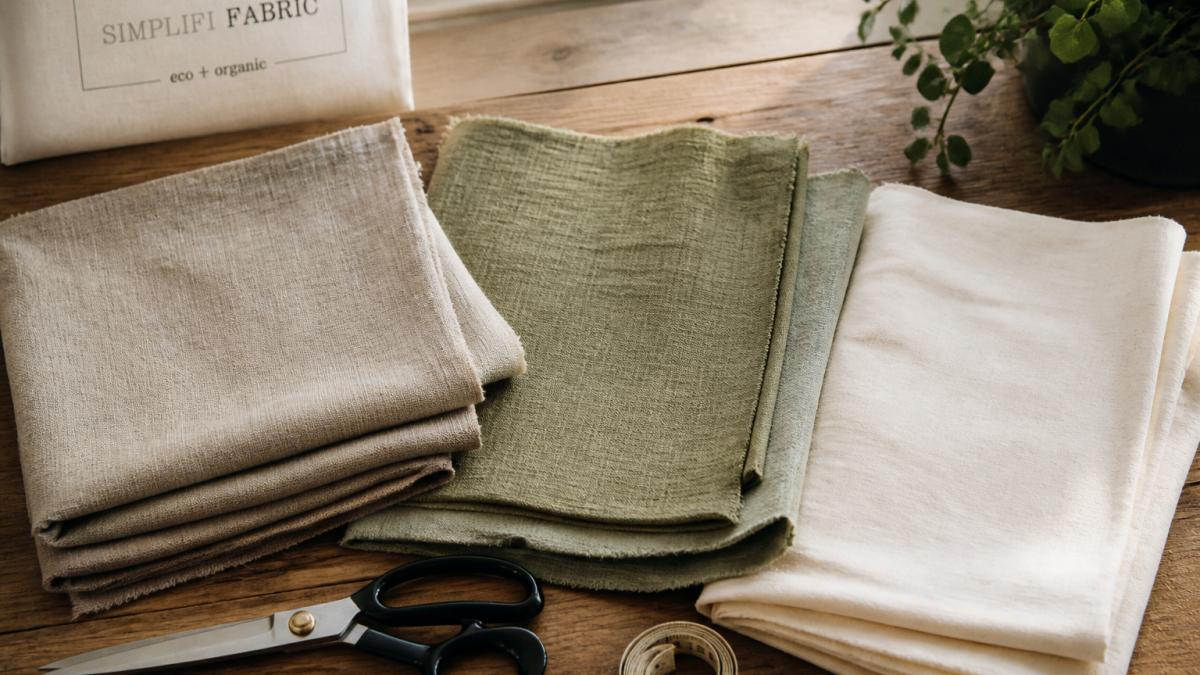
Here's how they compare in practice:
- Linen drapes beautifully and gets softer with every wash, but wrinkles readily and needs a little patience at the machine.
- Hemp is strong and durable, ideal for bags, trousers, and workwear, though it can feel stiff until broken in.
- Merino wool regulates temperature and resists odor, making it a strong choice for base layers, but it demands gentler care.
- Organic cotton remains the most versatile all-rounder for garments and quilting.
For a deeper look at natural fiber options beyond this list, the natural fabric alternatives for apparel guide covers the trade-offs in more detail. The honest limitation: no natural fiber wins on every measure. Linen beats cotton on breathability, hemp beats it on durability, and wool beats both on warmth.
Top Polyester Alternatives for Sewing: Breathable, Biodegradable, and Durable
Polyester alternatives for sewing are fibers that replace petroleum-based polyester with breathable, biodegradable, or recycled options. The leading choices are lyocell (sold as Tencel), modal, bamboo fabric, and recycled fibers.
Lyocell and other regenerated cellulose fibers are made from wood pulp in a closed-loop process that recovers the solvent. That's the key difference from generic "bamboo" fabric, which is often just rayon under a greener name.
Recycled fibers, including recycled polyester, divert plastic waste from landfill but still shed microplastics in the wash. For sewists weighing Tencel specifically, the Tencel fabric benefits for sewing guide explains how it behaves under the needle.
What to Look for When Shopping for Sustainable Fabric Online
Buying sustainable fabric online comes down to a handful of checks that most material explainers skip entirely: unit pricing, sample and swatch options, minimum order quantities, shipping and lead times, and returns terms. Get these right and the sustainability claims become a secondary filter rather than the whole decision.
Lightweight Organic Cotton Fleece - Grown & Made in USA - PEROXIDE WHITE (PFD) →
Read the unit before you compare prices
The pricing trap catches most beginners. Many shops list fabric per half yard or half meter, so a listed price on a lightweight organic cotton fleece may be the cost of half a yard, not a full one. Before comparing two stores, confirm whether the price is per yard, per meter, per half unit, or per fat quarter, and whether the listing is for a cut length or a precut bundle. A cheaper-looking listing at half the unit is not cheaper at all.
Ask about samples and swatches
Cut fabric is usually non-returnable, so a swatch is cheap insurance against an expensive mistake. Ask three things: Does the store sell swatches or sample packs? How large are they? Can you order a swatch of the exact colorway you plan to buy? A store that offers samples in the actual production dye lot is far easier to buy from blind than one that only shows edited studio photos.
Check minimums, lead times, and shipping terms
- Minimum order quantity (MOQ): Some shops sell by the yard with no minimum; others set a minimum cut length or a minimum order value. Confirm before you plan a project around a fabric.
- In-stock versus backorder: Listings that say "pre-order" or "restocking" carry a lead time. Ask how long, and whether the dye lot will match a previous order.
- Shipping and duties: For cross-border orders, confirm who pays duties and brokerage, and whether the shipping quote at checkout includes them. A quote that doubles at checkout is usually a duties or brokerage surprise, not a price change.
- Returns: Confirm the policy for cut goods, remnants, and sale items before ordering. Most stores treat cut fabric as final sale.
Judge color accuracy honestly
Product photos shot in natural light with a color reference card are far more reliable than heavily edited studio shots. Ask whether the store photographs the actual bolt or a stock image, and whether it will send a photo of the current lot on request. Screen calibration varies, so treat any photo as an approximation and rely on a physical swatch for color-critical projects.
If you are new to buying this way, the sustainable fabric sourcing for beginners guide walks through the whole process.
Comparing Fabric Performance: Use-Case Matching for Your Next Project
Fabric performance should drive the choice, not the label. The right material for a structured jacket is the wrong one for a baby blanket.
| Project | Best Fiber Match | Weight Guide | Key Property |
|---|---|---|---|
| Hoodies, sweat shirts | Organic cotton fleece | Light to medium | Softness, warmth |
| Trousers, dungarees | Organic cotton twill | 8oz to 12oz | Structure, durability |
| Dresses, skirts | Linen or lyocell | Lightweight | Drape, breathability |
| Base layers | Merino wool | Lightweight | Temperature control |
| Bags, workwear | Hemp | Medium to heavy | Abrasion resistance |
The pattern you're sewing should decide the fabric, not the other way around. A gathered-waist dress needs drape; a pair of dungarees needs body. Match the two before you buy, and pre-wash everything to allow for shrinkage.
Start Your Next Project with Simplifi Fabric's Curated Collection
Simplifi Fabric has curated eco-friendly textiles since 2012, shipping worldwide from Ontario, with a collection built around exactly the trade-offs covered above. If you want a starting point, the lightweight organic cotton fleece in peroxide white is a soft, versatile option for hoodies, baby blankets, and light jackets.

The range goes deeper than one fabric. You'll find 8oz and 12oz organic cotton sanded twills for structured garments, plus a curated lineup of indie sewing patterns and notions for makers at every skill level.
Frequently Asked Questions
What should I look for in an organic fabric company alternative?
Look for transparent certification, such as GOTS or OEKO-TEX, which verify organic status and chemical safety. Check if the supplier provides detailed fiber content and origin information. A good alternative will also offer samples, have clear return policies, and provide accurate product photos. Finally, assess their shipping costs and times, especially if you are ordering internationally from a Canadian or US-based shop.
What are the best natural fabric alternatives to polyester for sewing?
For sewists avoiding polyester, consider Tencel (lyocell), which is a regenerated cellulose fiber known for its breathability and soft drape. Other excellent natural fabric alternatives include linen for its durability and cooling properties, hemp for its strength, and merino wool for temperature regulation. Organic cotton is also a strong choice for its versatility and lower environmental impact compared to conventional cotton.
How can I tell if a fabric is sustainably and ethically made?
Look for third-party certifications like GOTS (Global Organic Textile Standard), Fair Trade, or OEKO-TEX. These standards verify everything from organic farming to fair labor practices and chemical use. A transparent sustainable fabric online retailer will often detail its supply chain, from fiber origin to the mill. If a company makes vague claims without proof, it is a red flag.
Is organic cotton better for quilting than conventional cotton?
Yes, for several reasons. Organic cotton is grown without synthetic pesticides or fertilizers, making it a more environmentally conscious choice. For quilters, it also offers a superior feel, often becoming softer with each wash. Its natural fibers produce a beautiful drape and are gentle on the skin, making it an ideal material for heirloom-quality quilts and baby blankets.
Where can I find a sustainable fabric online store that ships internationally?
Many boutique fabric shops now ship worldwide. When evaluating a sustainable fabric online store, check their shipping page for rates and estimated delivery times to your location. Look for shops that are transparent about customs fees and use reliable carriers. Ordering fabric samples first is a smart way to check quality and color accuracy before committing to a larger international order.
The real test of any organic fabric company alternative isn't a lower price tag. It's whether the supplier can prove what they sell and stand behind it when a bolt arrives wrong. Simplifi Fabric built its collection around that standard: ethically sourced textiles, a curated range of indie sewing patterns, and worldwide shipping from Ontario. Get started with Simplifi Fabric and sew your next project with materials you can actually trust.
