

Last Updated: November 7, 2026
Quick Summary
To extend the life of handmade clothes, wash them less often in cold water, inside out, on a gentle cycle, and air dry rather than tumble dry. Turn garments inside out, use a mesh bag for delicate seams, and hand wash embellished pieces. Store knits folded flat and mend loose seams early.
- Extending a garment's lifespan by nine months can cut its carbon, water, and waste footprints by 20%.
- Skip fabric softener, which coats natural fibers, and use a mild, pH-neutral detergent.
- Never tumble dry handmade garments; heat shrinks wool, distorts seams, and fades dye.
- Always dry knits flat, since hanging a wet knit stretches shoulders and lengthens the body.
- Store handmade clothes in breathable cotton bags, not sealed plastic, in a cool, dark place.
Table of Contents
- Why Handmade Clothes Deserve a Different Care Routine
- Start With the Care Label and the Fiber Type
- How to Wash Handmade Clothes Without Wearing Them Out
- Drying and Reshaping Knits and Wovens
- Clothing Repair and Mending Techniques for Handmade Garments
- How to Store Handmade Clothes to Prevent Damage
- Clothing Repair and Repurposing When a Garment Has Had Its Day
- Build a Care Kit From Our Notions and Supplies
- Frequently Asked Questions
Why Handmade Clothes Deserve a Different Care Routine
Handmade clothes carry something a factory seam never will: a maker's time, a chosen fabric, and a fit built for one body. Research from WRAP's work on clothing durability found that extending a garment's lifespan by just nine months can cut its carbon, water, and waste footprints by 20%.
At Simplifi Fabric, we hear the same question from makers again and again: how do you keep a hand-sewn garment looking new without wearing it out? Below, we'll show you exactly how to extend the life of handmade clothes with nine practical habits, from washing to mending to storage.
The core difference comes down to construction. Handmade garments often use natural fibers, fine seams, and no industrial finishing. They reward gentle handling.
Start With the Care Label and the Fiber Type
Care starts with two pieces of information: what the label says and what the fabric is made of. A 2022 study in Extending the Lifetime of Clothing through Repair and Repurpose separates repair and alteration, which extend a garment's technical life, from upcycling, which can prolong its use. Both begin with knowing the fiber.
Most care guides stop at the fiber name. Handmade clothes need one more layer: how the fiber was spun, dyed, and sewn. A hand-dyed wool sweater and a mass-produced wool sweater may share a fiber content, but the dye method, seam allowance, and stitch structure change how you should wash and dry them.
Fiber-by-Fiber Care for Handmade Garments
- Linen: Wrinkles easily, softens with washing, and tolerates warm water better than wool. Hand-sewn linen seams can fray, so turn the garment inside out and use a mesh bag if machine washing. Our guide on how to wash sustainable linen fabric walks through water temperature, soap choice, and drying for linen step by step.
- Wool and knitwear: Needs cool water, minimal agitation, and flat drying. Hand-dyed wool yarns can bleed, so wash separately the first few times. Avoid wringing, which distorts stitch loops.
- Cotton: Sturdy, but shrinks with heat and fades in strong sun. Hand-sewn cotton seams benefit from a gentle cycle and low heat. Pre-washed cotton is less likely to shrink, but always check the label.
- Silk and delicate blends: Hand wash only, no wringing. Silk embroidery and appliqué can pucker if soaked too long, so spot clean when possible and dry flat away from direct sun.
Construction Details That Change the Care Routine
- Hand-dyed yarn and fabric: Color bleeding is common in the first few washes. Test a small corner in cool water before washing the whole garment, and use a color catcher sheet if you machine wash.
- Delicate seams and stitch structure: Hand-sewn seams with a small seam allowance can unravel faster than serged factory seams. Turn the garment inside out and use a mesh laundry bag. For knitwear, avoid hanging, which stretches shoulder seams.
- Embellishments and mixed materials: Beadwork, embroidery, and appliqué can snag or loosen in agitation. Hand wash or spot clean, and dry flat. Garments combining fibers with different care needs, such as a wool body with a silk trim, should follow the most delicate fiber's requirements.
Watch out: A care label that says "dry clean only" may be there because of a trim or lining, not the main fabric. If you plan to hand wash, test an inconspicuous area first and accept that you may need to press the garment afterward to restore its finish.
How to Wash Handmade Clothes Without Wearing Them Out
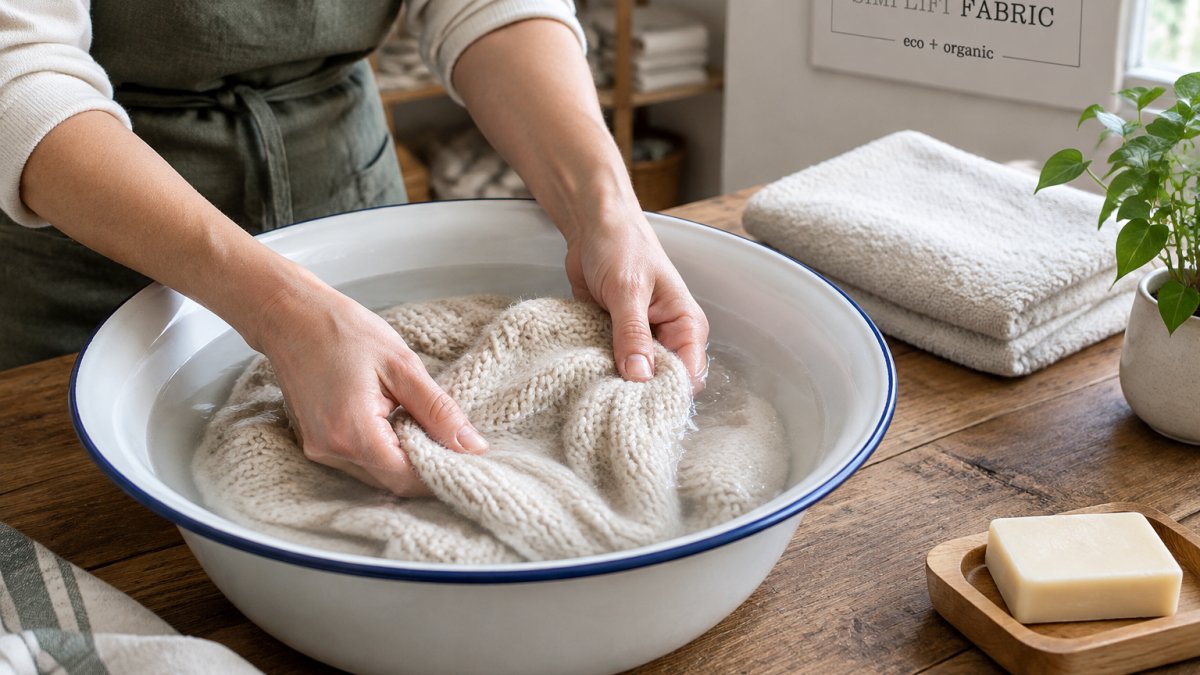
The safest way to wash handmade clothes is less often, in cold water, inside out, on a gentle cycle. This one habit prevents most of the wear that shortens a garment's life.
Wash Less, Spot Clean More
Every wash breaks down fibers a little. Spot cleaning a stain instead of washing the whole garment saves both fabric and time. Treat spills right away with a damp cloth and a drop of mild soap, then air dry.
Cold Water, Inside Out, Gentle Cycle
When a full wash is needed, follow these steps:
- Turn the garment inside out to protect the outer surface.
- Choose cold water and the gentlest cycle available.
- Use a mild, pH-neutral detergent.
- Skip fabric softener, which coats natural fibers.
- Hand wash delicates and anything with embellishments.
Here is the gentle washing routine that prevents most of the wear that shortens a handmade garment's life.
| Step | What to do | Note |
|---|---|---|
| 1 | Turn the garment inside out | Protects the outer surface |
| 2 | Choose cold water and gentlest cycle | Cold water is the safest wash |
| 3 | Use a mild, pH-neutral detergent | Skip fabric softener, which coats natural fibers |
| 4 | Hand wash delicates and embellished pieces | Beadwork and embroidery can snag in agitation |
| 5 | Spot clean stains instead of washing | Saves both fabric and time |
Drying and Reshaping Knits and Wovens
Never tumble dry a handmade garment if you can avoid it. Heat is the fastest way to shrink wool, distort seams, and fade dye. Air drying protects garment shape and fabric structure, but how you air dry matters as much as whether you do it.
Air-Drying Wovens and Heavy Pieces
Hang wovens on a padded hanger or dry flat for heavy pieces. A wet linen dress can stretch under its own weight on a thin wire hanger, so use a broad wooden or padded hanger and smooth the seams by hand before drying. Dry away from direct sun, which fades dye and weakens natural fibers.
Blocking and Reshaping Knits and Crochet
Blocking is the step most care guides skip, and it is the one that keeps handmade knitwear fitting the way it did on the needles. The goal is to support the wet fabric, restore its dimensions, and let it dry without stretching or distortion.
- Wash gently and remove excess water. After hand washing in cool water, press the garment between two towels to remove water. Do not wring or twist.
- Lay flat on a blocking mat or towel. Use a clean towel or blocking mats on a flat surface. Spread the garment to its intended measurements, using a tape measure to check width and length against the pattern.
- Pin or pat into shape. For lace and openwork, pin the edges to open the stitch pattern. For stockinette and crochet, pat the fabric into shape with your hands. Mist lightly with water if the fabric has dried too much to reshape.
- Dry away from direct sun and heat. Let the garment dry completely before moving it. Turning it over once can help thick seams dry evenly.
Watch out: Hanging a wet knit, even on a padded hanger, will stretch the shoulders and lengthen the body. Always dry knits flat, and if you must hang a damp garment, use a hanger with wide support and check it after an hour.
Drying Embellished and Mixed-Material Garments
Beadwork, embroidery, and appliqué should dry flat with the embellished side up so the weight of the garment does not pull on the stitching. If a garment combines fibers with different drying needs, dry it flat and away from heat, and check the most delicate area first.
Clothing Repair and Mending Techniques for Handmade Garments
Clothing repair and mending techniques keep a handmade piece out of the landfill. A loose seam or small tear is a ten-minute fix, not a reason to retire the garment. Catching damage early is the whole game.
A ready-made kit makes this easy. The Rapid Repair Kit from Merchant & Mills packs black and white thread bobbins, needles, pins, safety pins, shirt buttons, a paper tape measure, and monogrammed scissors into one etched silver tin, so a repair never waits for a shopping trip.

Fixing Loose Seams, Rips and Tears
Match the repair to the damage:
- Loose seam: Turn inside out and backstitch along the original line.
- Small rip: Use a fine needle and thread to close it with small stitches.
- Hole in knitwear: Darning with matching yarn blends the repair into the fabric.
- Frayed edge: Fold under and stitch to seal the raw edge.
How to Store Handmade Clothes to Prevent Damage
How to store handmade clothes matters as much as how you wash them. Poor storage causes stretching, moths, and yellowing. Fold knits flat, hang wovens on padded hangers, and keep everything clean and dry.
- Store in a cool, dark place away from damp.
- Use breathable cotton bags, not sealed plastic.
- Fold heavy knits to avoid shoulder stretch.
- Add cedar or lavender to deter moths.
- Air garments before storing after wear.
Clothing Repair and Repurposing When a Garment Has Had Its Day
Clothing repair and repurposing give a worn garment a second chapter. When a piece is beyond mending, upcycling turns it into something new and keeps textile waste out of landfill. Our guide on how to reduce fabric waste in sewing shows how to plan a repurpose with minimal offcuts.
Transforming an old handmade piece into a fresh design deserves a finishing touch. The "I AM A TRANSFORMER" woven label pack contains six centre-folded labels that can be sewn inside a garment or proudly shown on an outside seam.

Build a Care Kit From Our Notions and Supplies
A care kit turns good intentions into a routine. The Selected Notions Box from Merchant & Mills gathers nine essential notions in one embossed box, with removable inserts so it can be used for life as a sewing box.

Add a small bottle of mild detergent, a soft brush for spot cleaning, and a breathable storage bag.
The challenge is simple: every handmade garment deserves care that matches the effort behind it.
Frequently Asked Questions
How often should you wash handmade clothes to make them last longer?
Wash handmade clothes only when they actually need it. Air garments between wears, spot clean small marks, and wash after several wears or when visibly soiled. Frequent laundering breaks down fibers and fades dyes faster than wear itself. For knitwear and delicate natural fibers, a wash every four to five wears is often enough. Turning garments inside out and using a cold, gentle cycle protects the fabric structure each time you do wash.
How do you repair a seam that is coming apart on a handmade garment?
Turn the garment inside out and match the original seam line. Thread a needle with matching thread and backstitch over the loose section, working a few stitches past each end of the gap so the repair holds. For knits, use a stretch stitch or duplicate stitch so the seam keeps its give. Press the seam flat afterward. A small repair kit with needles, thread and pins makes this a five-minute job instead of a reason to stop wearing the piece.
What is the best way to store handmade garments?
Store handmade clothes clean, fully dry and away from direct light. Fold knits flat rather than hanging them, since hangers stretch shoulders and distort garment shape over time. Hang woven garments on padded hangers. Use breathable cotton bags instead of sealed plastic, keep storage cool and dry, and add cedar or lavender to deter pests. Check stored pieces each season for loose seams or moths before damage spreads.
Can you mend handmade clothes without changing how they look?
Yes. Invisible mending matches thread color and fabric weave so repairs blend in. Darning over a small hole with matching yarn, re-stitching a seam from the inside, and reinforcing worn elbows with a patch behind the fabric all keep the repair hidden. For visible fixes, decorative darning or a contrast stitch turns the mend into a feature. Either way, repairing early stops small rips and tears from growing into unrepairable damage.
