

Table of Contents
- Why Ethical Fabric Sourcing Matters for Small Makers
- Understanding Sustainable Textile Certifications for Small Business
- How to Vet Fabric Suppliers for Ethical Practices
- Questions to Ask Fabric Manufacturers About Labor Standards
- Navigating MOQ and Cost Barriers for Ethical Sourcing
- Organic Fibers and Natural Materials: What Works for Small Production
- Building Your Ethical Sourcing Strategy
- Frequently Asked Questions
Last Updated: September 18, 2026
Why Ethical Fabric Sourcing Matters for Small Makers
Small businesses entering the textile space face a fundamental choice: source fabrics the conventional way, or build an ethical supply chain from the ground up. The difference isn't academic. Clothing items made with regenerative textile fibers surged by nearly 90% according to Sheng Lu Fashion's 2026 Apparel Sourcing and Trade Outlook, signaling that conscious makers aren't just a niche anymore, they're reshaping how the industry operates.
Small producers increasingly recognize that ethical fabric sourcing is a competitive advantage. Your products carry a story that mass-produced alternatives can't match.
The global sustainable fashion market is projected to grow from $12.44 billion in 2026 to $27.96 billion by 2034 according to Fortune Business Insights' Sustainable Fashion Market Report, expanding at a compound annual growth rate of 10.1%. That growth isn't hypothetical, it's driven by makers like you who refuse to compromise on values.
Most small businesses stumble because they lack supplier networks, certification literacy, and negotiating leverage that larger brands take for granted. Supply chain complexity remains a significant obstacle.
This guide walks through exactly how to build an ethical fabric sourcing strategy that works for limited budgets and small production runs.
Understanding Sustainable Textile Certifications for Small Business
Certifications are the language suppliers speak. Without understanding them, you're shopping blind.
GOTS and OEKO-TEX Standards
Global Organic Textile Standard (GOTS) certification guarantees strict environmental and social criteria from fiber production through finished textile. OEKO-TEX Standard 100 focuses on chemical safety, testing for harmful substances rather than farming practices or labor conditions.
A fabric can be OEKO-TEX certified yet come from conventionally grown cotton harvested under questionable labor conditions. GOTS audits the entire supply chain, including farmer wages and pesticide use.
GOTS costs more upfront but eliminates additional labor audits. OEKO-TEX suits chemical-safety concerns, especially for children's clothing.
Fair Trade and Regenerative Agriculture Labels
Fair Trade certification ensures living wages and safe conditions. Regenerative agriculture labels indicate farming practices actively improve soil health and biodiversity.
These certifications often overlap. Verify both independently; a single label isn't enough to confirm the full ethical picture.
How to Vet Fabric Suppliers for Ethical Practices
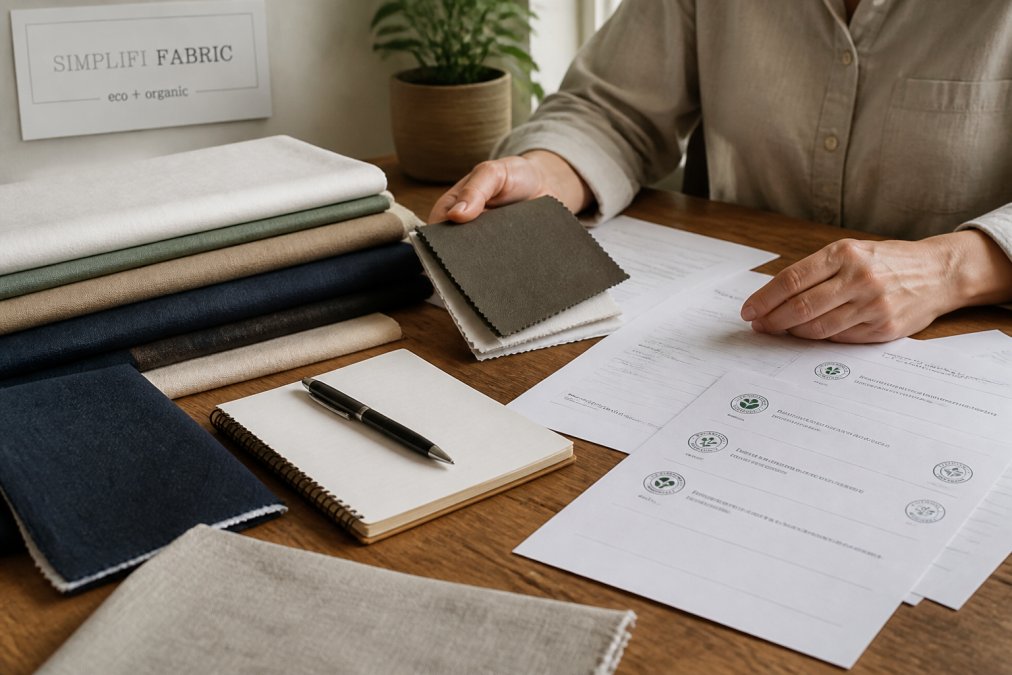
Certification badges tell part of the story; direct supplier vetting reveals the rest and protects you from greenwashing.
Assessing Supply Chain Transparency: The Documentation Trail
Request a transparency report or supply chain map. Legitimate producers name mills, farms, and dyeing facilities with specific locations. Vague answers about "multiple sources" are a red flag.
Ask in writing: Where is fiber grown? Which mills process it? Who dyes the fabric? What chemicals are used? How is wastewater treated?
Confident suppliers answer without hesitation and provide documentation. Many ethical mills publish annual transparency reports.
Red flags: Cannot name mill or farm, inconsistent answers, reluctance to document, vague language, no traceability beyond one step.
Evaluating Third-Party Audit Reports
Request third-party audit reports. Legitimate suppliers undergo regular audits by independent organizations and make reports available for review.
Look for: current audit dates (within 18 months), scope covering labor and environmental practices, findings with corrective actions, and no major violations.
Ask when the last audit occurred. If they hesitate or claim "self-certified" status, that's a warning sign.
Evaluating Labor Standards and Social Compliance
Assess working conditions directly. Ask about healthcare access, paid leave, grievance mechanisms, and wage structure above local minimums.
Understand actual working conditions; small operations aren't automatically ethical.
Request worker references. Reputable suppliers facilitate confidential conversations; refusal is a red flag.
Verifying Certifications Independently
Don't take a supplier's word for certifications. Verify them:
- GOTS: Search the GOTS Directory by supplier name
- Fair Trade: Check the Fair Trade Directory or relevant certifier
- OEKO-TEX: Verify on the OEKO-TEX certificate database
- Regenerative Organic Certified (ROC): Search the ROC directory
If a supplier claims certification but doesn't appear in the official database, ask for their certificate number and contact the certifier directly. Fake or expired certifications are rare but do occur.
Building a Supplier Scorecard
Create a simple evaluation matrix for each supplier:
| Criteria | Weight | Supplier A | Supplier B |
|---|---|---|---|
| Transparency (supply chain documentation) | 25% | ✓ Full documentation | ✗ Vague responses |
| Third-party audits (current, no major findings) | 25% | ✓ GOTS audited 2025 | ✓ Fair Trade audited 2024 |
| Labor practices (wages, benefits, grievance) | 20% | ✓ Above-minimum wages, union | ✓ Competitive wages, no union |
| Certification verification | 15% | ✓ All verified | ✓ Partial verification |
| Communication & responsiveness | 15% | ✓ Replies within 48 hours | ✗ Replies in 1+ week |
Score each supplier on a scale (✓ = full points, ◐ = partial, ✗ = zero). This framework prevents emotional decision-making and ensures consistency across orders.
Questions to Ask Fabric Manufacturers About Labor Standards
Direct conversation with manufacturers reveals what certifications alone cannot. Prepare these questions before your first call:
-
Who audits your labor practices, and how frequently? Listen for third-party verification, not self-assessment.
-
What is the average tenure of workers at your facility? High turnover signals dissatisfaction; stability suggests reasonable conditions.
-
Do workers have access to formal grievance mechanisms? Ethical producers create channels for workers to raise concerns without fear of retaliation.
-
What is your approach to minimum order quantities for small producers? This question reveals whether they genuinely support small businesses or merely tolerate them.
-
Can you provide references from other small brands you've worked with? Contact those references. Ask about responsiveness, quality consistency, and willingness to accommodate custom requests.
-
How do you handle fabric waste and chemical disposal? Environmental responsibility extends beyond fiber sourcing to production practices.
Navigating MOQ and Cost Barriers for Ethical Sourcing
Minimum order quantities represent the largest barrier for small makers. A typical ethical supplier requires 500-1,000 yards per order, but MOQ barriers are negotiable.
Understanding MOQ Tiers and Negotiation Leverage
Ethical fabric suppliers operate on tiered pricing models. A mill might quote:
- 500 yards at $18/yard
- 1,000 yards at $16/yard
- 2,500 yards at $14/yard
Request the full pricing schedule upfront. Ask what minimum order accesses lower-price tiers. Many suppliers reduce MOQ if you commit to consistent quarterly orders.
Leverage comes from order consistency, payment terms, and lead time flexibility. Standing orders reduce supplier inventory risk and justify lower minimums. Longer lead times often yield 10-15% MOQ reductions.
Collaborative Ordering and Shared Minimums
Partner with 2-3 other makers to reach MOQ collectively. Use a spreadsheet to track yardage, color, and payment. Many suppliers welcome group orders.
Before proposing a collaborative order, confirm the supplier allows it. Some mills require a single invoice and shipper; others accept multiple drop-ship locations. Clarify this in writing.
Testing and Graduated Scaling
Request a first-order discount or sample exception. Phrase it as a commitment to long-term partnership. Reputable suppliers often agree.
After 2-3 orders over 6 months, revisit MOQ. Suppliers are far more likely to negotiate with proven customers.
Inventory Management and Deadstock Strategy
Track which fabrics sold fastest and prioritize reordering those. Avoid ordering "just in case" fabrics that sit for months.
For deadstock, establish a disposal plan upfront. Some suppliers offer buyback programs for unused rolls.
Organic Fibers and Natural Materials: What Works for Small Production
Organic Cotton, Hemp, and Linen
Organic cotton eliminates synthetic pesticides. Hemp grows with minimal inputs and produces strong fabric. Linen requires fewer pesticides and creates breathable material.
Organic cotton offers the easiest transition; mills are abundant and certifications standardized. Hemp and linen demand different techniques but offer distinctive aesthetics.
Regenerative and Recycled Options
Regenerative fibers come from farming systems that restore soil and sequester carbon. The 90% surge reflects growing availability and falling costs.
Recycled polyester and nylon divert waste from landfills and require no new petroleum extraction. Request samples before larger orders.
Bio-based textiles like Tencel and bamboo viscose occupy a middle ground but require careful sourcing to ensure production isn't environmentally damaging.
Building Your Ethical Sourcing Strategy
Define your non-negotiables: labor practice, environmental impact, chemical safety, or fiber type. Clarity on priorities guides supplier selection.
Build a sourcing matrix listing suppliers, certifications, minimums, pricing, and lead times. Rate each against your priorities.
Connect with other makers through sustainable fashion communities.
| Certification | Primary Focus | Best For | Verification Method |
|---|---|---|---|
| GOTS | Organic + labor + environment | Holistic ethical sourcing | Third-party audit reports |
| OEKO-TEX | Chemical safety | Sensitive applications | Lab testing results |
| Fair Trade | Worker wages + conditions | Labor-focused sourcing | Certification body database |
| Regenerative | Soil health + carbon | Environmental impact | Farm practice documentation |
Frequently Asked Questions
What certifications should I look for when sourcing ethical textiles?
Look for GOTS (Global Organic Textile Standard) for organic fiber verification, OEKO-TEX for chemical safety, and Fair Trade certifications for labor standards. Many ethical fabric suppliers now display these credentials publicly. Start by asking suppliers which certifications they hold and request copies of audit reports.
How can small businesses balance affordability with ethical fabric sourcing?
Negotiate minimum order quantities (MOQs) with suppliers, explore deadstock or end-of-roll fabrics, and consider forming buying groups with other small makers to share orders. The global sustainable fashion market is projected to grow from $12.44 billion in 2026 to $27.96 billion by 2034, reflecting increasing availability of ethical options at various price points. Start with one or two core suppliers and build relationships over time to access better pricing as your volume grows.
What questions should I ask a fabric supplier to verify ethical practices?
Ask about their supply chain transparency, worker wages, facility audits, and environmental impact assessments. Inquire whether they can trace materials back to the farm or mill, what labor certifications they hold, and how they manage textile waste. Request documentation of social compliance audits and ask specifically about their approach to fair trade practices. Suppliers committed to ethical practices will provide detailed answers and supporting documentation.
Where can I find ethical fabric sources for small-batch production?
Boutique fabric retailers specializing in sustainable textiles, direct relationships with ethical mills, and online platforms offering certified organic and fair trade fabrics are key sources. Many curated suppliers now focus on serving small makers with flexible ordering and transparent sourcing. Look for retailers that document their supplier relationships and provide certifications. Building direct relationships with textile artisans and small mills can also provide unique, traceable materials for your projects.