

Table of Contents
- What Sustainable Fabric Sourcing Means for Beginners
- Sustainable Fabric Types: Natural, Recycled, and Regenerated Fibers
- How to Verify Sustainable Fabric Claims
- Ethical Fabric Certifications That Matter
- Questions to Ask Fabric Suppliers Before You Order
- Your Responsible Fabric Sourcing Checklist
- Common Mistakes Beginners Make When Sourcing Fabric
- Frequently Asked Questions
Last Updated: October 9, 2026
What Sustainable Fabric Sourcing Means for Beginners
Sustainable fabric sourcing is the practice of choosing textiles based on how their fibers are grown or made, how they are processed, and how the people who produce them are treated.
That third question is the one most guides skip. A fabric can be organic and still be sewn in a facility with unsafe conditions. The three pillars below keep all of it in view, and this guide from Simplifi Fabric walks through fiber types, verification, certifications, and supplier questions so a first-time buyer can order with confidence.
The Three Pillars: Fiber, Process, and People
Fiber covers the raw material: organic cotton, hemp, linen, wool, silk, or a recycled and regenerated alternative. Process covers what happens between raw fiber and finished yardage, including water use, chemical inputs, and dyeing. People covers labor practices at every stage, from field to mill to cut-and-sew.
A fabric only counts as responsible sourcing when all three hold up. Strong fiber with poor labor conditions is not a sustainable choice, and neither is a fair-wage mill working with a heavily polluting dye process.
Sustainable Fabric Types: Natural, Recycled, and Regenerated Fibers
Natural fibers come from plants or animals, recycled fibers are made from existing textile waste, and regenerated fibers are manufactured from natural cellulose, usually wood pulp. Each category carries different trade-offs in durability, care, and end-of-life.
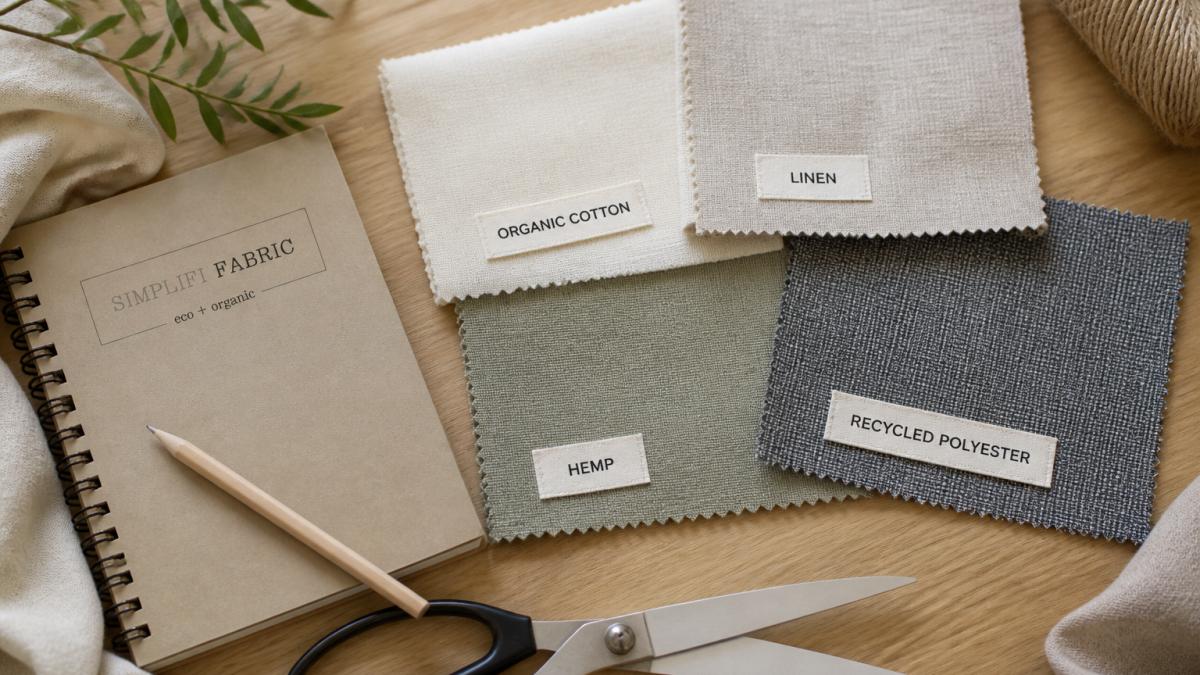
Natural Fibers: Organic Cotton, Hemp, Linen, Wool, and Silk
Organic cotton is grown without synthetic pesticides and is one of the easiest sustainable fabrics for a beginner to find and sew. Hemp and linen are durable, need less water than conventional cotton, and soften with every wash. Wool and silk add warmth and drape, though animal welfare standards vary widely by farm, so ask suppliers where the fiber originates.
Recycled and Regenerated Fibers: rPET, Recycled Cotton, Lyocell, and TENCEL
Recycled polyester, often labeled rPET, is made from post-consumer plastic bottles. Recycled cotton comes from textile offcuts and worn garments, which keeps waste out of landfill. Lyocell and TENCEL are regenerated cellulose fibers produced in a closed-loop process that recovers most of the solvent used. Researchers from IPCB-CNR and the University of Plymouth have compared microplastic release across polyester garments, a reminder that recycled synthetics still shed fibers over their lifetime.
Comparing Fibers Across the Full Life Cycle
A fiber that looks sustainable at the farm gate can lose ground at the dye house or the landfill. The table below compares common beginner options on the dimensions that actually shift a sourcing decision: water, energy, chemicals, durability, shedding, recyclability, and end-of-life.
| Fiber | Water Use | Energy Use | Chemical Inputs | Durability | Shedding | Recyclability | End-of-Life |
|---|---|---|---|---|---|---|---|
| Organic cotton | High, but rain-fed systems reduce irrigation demand | Moderate | Low, no synthetic pesticides | Good, softens with wash | Low | Recyclable as textile waste | Composts slowly; industrial recycling preferred |
| Hemp | Low | Moderate | Low | Excellent, strengthens with age | Low | Recyclable as textile waste | Biodegrades faster than cotton |
| Linen (flax) | Low | Moderate | Low | Excellent | Low | Recyclable as textile waste | Biodegrades |
| Wool | Moderate | Moderate to high | Variable, depends on scouring and dyeing | Excellent | Low | Recyclable, often re-spun | Biodegrades; avoid landfill |
| Silk | Moderate | High | Variable, depends on degumming and dyeing | Good | Low | Recyclable | Biodegrades |
| rPET | Low | Moderate to high | Low at fiber stage, dyes still used | Good | High, sheds microfibers | Recyclable in theory, rarely in practice | Persists in landfill |
| Recycled cotton | Low, avoids new growing | Low to moderate | Variable, depends on sorting and re-dyeing | Lower than virgin cotton, shorter staple | Low | Recyclable again | Biodegrades |
| Lyocell / TENCEL | Low | Low, closed-loop solvent recovery | Low, solvent recovered | Good, can pill | Low | Recyclable | Biodegrades |
Two patterns are worth internalizing. First, "natural" does not automatically mean low impact: conventional cotton is water-intensive, and silk and wool carry energy and chemical loads at processing.
Matching Fiber to Use
Fiber choice should follow the garment or project, not the other way around. A few common pairings:
- Everyday garments and quilting: organic cotton and linen for breathability and easy care.
- Workwear and bags: hemp and linen for abrasion resistance.
- Activewear and outerwear: rPET and lyocell blends for moisture management, accepting the shedding trade-off.
How to Verify Sustainable Fabric Claims
Verification means checking a claim against documentation, not taking a label at face value. Ask for the certificate number, the certifying body, and the scope of what was actually certified, because a mill certificate does not automatically cover the finished fabric.
Conflicting advice is common in this space. A published guide from The Fashion Business Coach on sourcing sustainable fabrics notes that recommendations often contradict each other, which is exactly why documentation beats opinion.
Ethical Fabric Certifications That Matter
Certifications are third-party audits that confirm a specific claim about a fiber, a process, or a facility. The ones worth knowing cover organic farming, recycled content, responsible forestry, and safe chemical use.
Researchers publishing in the International Journal of Fashion Design examined how sustainable fabric sourcing affects brand reputation, and the pattern holds: documented claims carry more weight than marketing language. A multi-phase study by N. Bhandari and co-authors on barriers to sustainable sourcing benchmarked why apparel brands struggle to source responsibly, and cost and supplier availability ranked among the recurring obstacles.
Reading a Certification: Chain of Custody and Scope
Chain of custody is the documented trail showing a certified fiber stayed certified through every stage of processing. Scope is the boundary of what a certificate covers, such as a single facility, a specific product line, or an entire supply chain.
ZW Bell Jacket - Birgitta Helmersson - PDF Pattern →
| What to Check | Why It Matters | What to Ask For |
|---|---|---|
| Certificate number | Confirms the claim is auditable | The number and issuing body |
| Chain of custody | Proves fiber stayed certified | Transaction certificates per shipment |
| Scope | Shows what is actually covered | The named facility or product line |
| Expiry date | Confirms the audit is current | The most recent audit date |
Questions to Ask Fabric Suppliers Before You Order
Ask about fiber origin, certification, minimum order quantity, lead time, and sampling before committing to a purchase order. A supplier who answers these clearly is usually easier to work with long term.
- Where is the fiber grown or produced, and can that be documented?
- Which certifications apply, and what is the certificate number?
- What is the minimum order quantity per colorway?
Minimum Order Quantities, Sampling, and Small-Batch Options
Minimum order quantity, or MOQ, is the smallest amount a supplier will sell. MOQs are the single biggest obstacle for beginners, because mills set them to cover setup costs on looms, dye baths, and print runs. A few patterns are common:
- Stock fabrics: sold by the meter or roll, with the lowest MOQs and the fastest lead times. Best for first projects.
- Custom dyeing or printing: MOQs usually start at a full roll per colorway, and setup fees apply per color.
- Custom weaving or knitting: the highest MOQs, often several rolls per design, because the mill must warp or program a machine.
If a supplier's MOQ is out of reach, ask about these alternatives before walking away:
- Stock colorways instead of custom dyeing.
- Sample yardage or development lengths, sometimes sold at a premium per meter.
- Deadstock and overruns from other brands, which are often available in small quantities.
What Samples and Testing Should Cover
A sample is not just a color check. Before you approve a fabric for production, test it the way the finished item will be used:
- Shrinkage: wash and dry a measured swatch, then re-measure. Expe
Your Responsible Fabric Sourcing Checklist
A responsible sourcing checklist turns the three pillars into a repeatable process. Work through it once per fabric, and it becomes a habit rather than a research project.
- Identify the fiber composition and origin
- Request the certificate number and issuing body
- Confirm chain of custody documentation
From Fabric Sampling to Purchase Order: A Beginner Workflow
- Write a brief covering fiber, weight, color, and intended use
- Contact three to five suppliers and request samples
- Compare samples on hand feel, drape, and wash performance
- Verify certification for the sample you choose
- Confirm minimum order quantity, price, and lead time in writing
- Place the purchase order and file all documentation
Common Mistakes Beginners Make When Sourcing Fabric
The most common mistake is buying on fiber alone and ignoring process and labor.
Buying in bulk before sampling is the second. A fabric that looks right in a photo can shrink, pill, or bleed once it is washed. Ordering a small quantity first costs less than a ruined project.
The third is treating a certification logo as proof. Logos get copied. Certificate numbers do not.
Sourcing responsibly takes more questions than a beginner expects, and the payoff is a wardrobe or quilt built on materials that hold up to scrutiny. Start with a pattern like the ZW Bell Jacket PDF Pattern, the beginner-friendly Picnic Square Quilt PDF Pattern, or the Zero Waste Poof PDF Pattern, which turns fabric offcuts into something useful.


Frequently Asked Questions
What does sustainable fabric sourcing mean?
Sustainable fabric sourcing means choosing textiles based on their environmental impact, how they were produced, and the labor conditions behind them. For beginners, it comes down to three questions: what fiber is it, how was it processed, and who made it? A fabric can be natural but still carry a heavy footprint if it used excessive water or chemicals. Equally, a recycled fiber can be a strong choice when the supply chain is traceable. Responsible sourcing is about weighing fiber, process, and people together rather than assuming natural always wins.
How do you verify a fabric supplier's sustainability claims?
Start by asking for documentation, not marketing language. Request certification certificates with a scope that covers the specific fabric you are buying, and check the certificate number with the issuing body. Ask for the fiber composition, the textile mill name, and where the fabric was finished. If a supplier cannot name the mill or produce a chain of custody document, treat the claim as unverified. A short video call or a sample order also tells you a lot about how a supplier communicates and whether their answers stay consistent.
Which fabric certifications should beginners look for?
Look for certifications that match your priority. For organic fiber content, organic certification with a chain of custody matters. For chemical safety in processing, standards that restrict harmful substances in textiles are relevant. For recycled content, a recycled claim should come with a verified chain of custody. The key point for beginners is that a logo alone is not enough: check what the certificate actually covers, which facility holds it, and whether it applies to the fabric you are ordering rather than the brand's overall operations.
Are natural fabrics always more sustainable?
No. Natural fibers like cotton, linen, and hemp can be excellent choices, but conventional cotton is water-intensive and often chemically farmed. Hemp and linen generally need less water and fewer inputs. On the other side, recycled polyester made from rPET diverts plastic waste and can reduce demand for new petroleum-based fiber, though it still sheds microplastics during washing. The honest answer is that fiber trade-offs exist across the full life cycle, so judge each fabric on how it was grown or made, how long it will last, and how you will care for it.
What should I check before ordering fabric samples?
Before ordering samples, confirm the fiber composition, fabric weight, width, and minimum order quantity so you know the sample reflects the real product. Ask about lead time and whether the sample is cut from current stock. When the sample arrives, check the hand feel, drape, color accuracy against the listing photos, and shrinkage after a wash test. Keep notes on each swatch, including supplier, price per metre, and certification status. That record becomes your sourcing reference for future orders and makes reordering far easier.
How can small fashion businesses source fabric ethically?
Small businesses have an advantage: fewer suppliers to manage and closer relationships. Start with a shortlist of two or three suppliers who can answer detailed questions about fiber origin and mill location. Ask about minimum order quantities and whether small-batch options exist, since many mills now offer lower minimums for independent makers. Build a simple supplier file with certifications, lead times, and past order notes. Visit or video-call where possible. Ethical sourcing for a small brand is less about perfect certification and more about consistent, documented effort over time.