

Table of Contents
- What Is Tencel Fabric and Why Sewists Choose It
- Key Benefits of Sewing with Tencel
- Pre-Washing Tencel Fabric: Essential Steps
- Best Sewing Needles for Tencel and Tension Settings
- How to Sew with Tencel: Handling Drape and Slipperiness
- Common Challenges When Sewing Tencel and Solutions
- Tencel Blends and Weight Classifications for Different Projects
- Frequently Asked Questions
- Conclusion: Create Responsibly with Tencel
Last Updated: October 2, 2026
What Is Tencel Fabric and Why Sewists Choose It
Tencel fabric benefits for sewing have made this material a favorite among eco-conscious makers. Tencel, also known as lyocell, is a cellulose fiber derived from sustainably managed wood pulp, processed through a closed-loop system that recovers 99.5% of the chemistry used in production. This makes it fundamentally different from conventional cotton or synthetic alternatives.
The appeal lies in its combination of performance and environmental responsibility. According to Lenzing Group's fiber innovation research, Tencel fibers provide enhanced moisture management and breathability compared to conventional cellulosic fibers. Sewists working with garment projects, home décor, and quilting increasingly turn to Tencel because it delivers both the softness of natural fibers and the durability needed for finished pieces that withstand repeated wear and washing.
What makes Tencel stand out in the sewing community is its hand-feel and drape characteristics. The fabric naturally resists degradation during repeated wash and dry cycles, a property that Portugal Clothing Factory's durability testing confirmed through comparative analysis against standard cotton. For sewists seeking sustainable alternatives without sacrificing quality or longevity, Tencel fabric benefits for sewing extend far beyond environmental credentials.
Tencel vs. Other Natural Fibers
Tencel's moisture-wicking capacity and softness appeal to sewists working on fitted garments and intimate apparel, unlike linen which wrinkles more readily and requires different handling during cutting and seaming.
Cotton remains the industry standard, yet Tencel absorbs roughly 50% more moisture than cotton of comparable weight, according to LouLouLollipop's fabric performance guide. This superior moisture management makes Tencel particularly valuable for activewear and summer garments. However, cotton offers greater stability for beginners, while Tencel's heavier drape demands more careful handling during cutting and assembly.
Tencel retains approximately 85% of its dry strength when wet, making it more resilient through washing than bamboo viscose alternatives.
Key Benefits of Sewing with Tencel
The practical advantages of working with Tencel extend across multiple dimensions of garment construction and finishing. Understanding these benefits helps sewists make informed fabric choices and approach projects with realistic expectations about what this material can deliver.
Moisture-Wicking and Breathability
Tencel's micro-denier structure absorbs and releases moisture, making it particularly valuable for summer garments and activewear.
This breathability regulates temperature without the clamminess of synthetics and supports faster drying times, reducing care requirements for wearers.
Durability and Strength When Wet
Tencel maintains approximately 85% of its dry strength in wet conditions, a critical advantage during washing and care cycles where seams face their greatest stress.
Tencel's strength profile helps finished pieces withstand repeated laundering without deterioration.
Sustainability and Ethical Production
The closed-loop production process recovers 99.5% of the chemistry used in manufacturing, making Tencel substantially more responsible than conventional cotton production, which relies heavily on pesticides and water-intensive practices. According to Environment and Climate Change Canada's reports on textile waste, reducing reliance on water-intensive crops is a key environmental goal.
The material biodegrades naturally at end-of-life, unlike synthetics that persist in landfills for decades.
Pre-Washing Tencel Fabric: Essential Steps
Pre-washing Tencel before cutting prevents unexpected shrinkage and stabilizes the fabric's hand-feel. Tencel exhibits moderate shrinkage potential. Addressing this before pattern cutting helps ensure finished garments maintain intended proportions.
Fill a basin with cool to lukewarm water and a gentle, pH-neutral detergent. Submerge the yardage for 15-20 minutes without agitation, which can encourage fiber distortion and pilling.
Rinse thoroughly in cool water until clear. Gently squeeze out excess moisture without wringing. Lay flat on a clean towel or hang in a shaded area to prevent uneven shrinkage and maintain hand-feel.
Once dry, press gently with a warm iron to restore drape and prepare for pattern layout. Allow 24 hours rest before cutting.
Best Sewing Needles for Tencel and Tension Settings
Needle Selection and Size
Use a universal needle in size 70/10 or 80/12 for lightweight Tencel, or size 90/14 for heavier-weight fabrics. Microtex needles offer precision for topstitching and decorative seaming, reducing skipped stitches caused by fabric shift.
For Tencel blends, test needle selection on scrap fabric first. Replace needles after 6-8 hours of continuous sewing, as recommended by sewing machine manufacturers to maintain stitch quality.
Tension Adjustment and Stitch Length
Begin with slightly looser upper thread tension than standard, reducing by 0.5 to 1 point. Test on scrap fabric, adjusting until stitches sit balanced. A balanced stitch is crucial for Tencel's smooth surface.
Worsted Merino Wool TENCEL™ Lyocell Stretch Jersey - Natural / Unbleached →
Use stitch length of 2.0-2.5 millimeters; shorter stitches can compress Tencel fibers and create puckering.
Reduce presser foot pressure by 10-15% when working with lightweight Tencel. This prevents the fabric from being stretched or distorted as it feeds through the machine.
Skipped stitches in Tencel usually signal a dull needle or tension imbalance, not fabric defect. Replacing the needle should be your first troubleshooting step.
How to Sew with Tencel: Handling Drape and Slipperiness
Cutting and Grainline Management
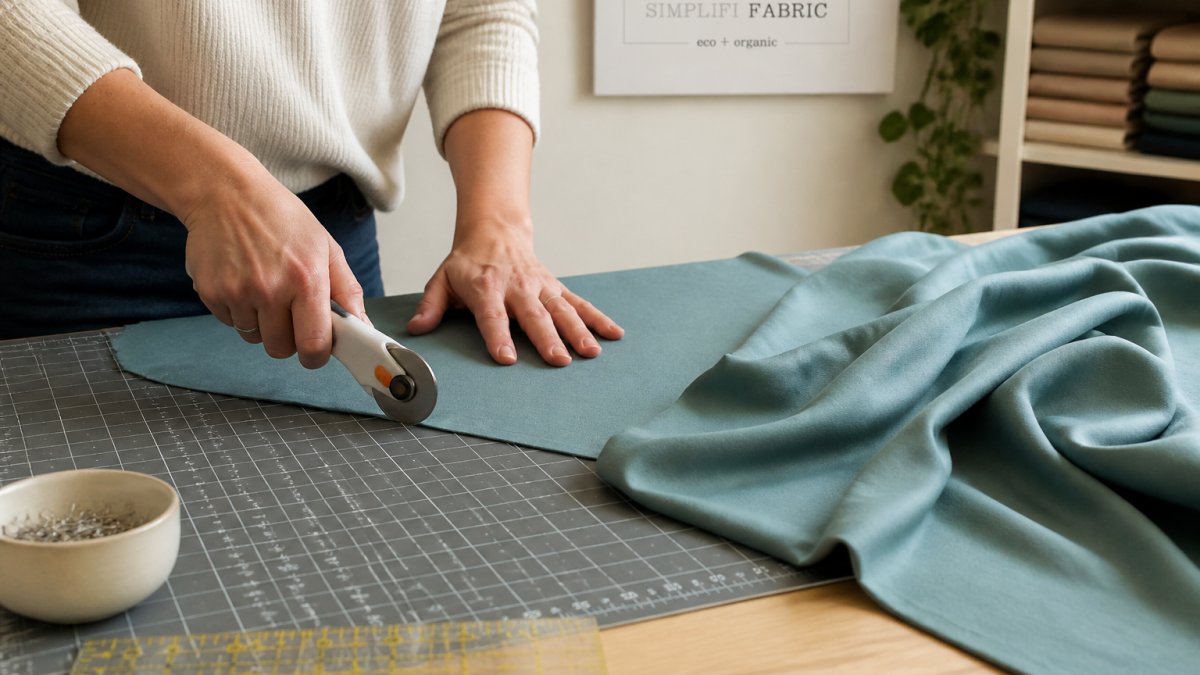
Secure Tencel to your cutting mat using pattern weights rather than pins, which can leave permanent holes. Place weights at pattern corners and seam allowances to help prevent fabric migration.
Respect the grainline carefully; off-grain cutting can result in visibly skewed hems and asymmetrical seams. Mark grainline on pattern pieces and verify alignment multiple times during layout.
Cut with a sharp rotary cutter in single, smooth motions. Replace blades frequently, as dull blades can snag and distort the fabric.
Stabilizers and Interfacing Pairings
Tencel's drape can become excessive in garment areas requiring structure, such as facings, button bands, and collar stands. Select fusible interfacing weight carefully, matching it to the Tencel weight: lightweight Tencel calls for lightweight interfacing, while heavier-weight Tencel tolerates medium-weight options. Test interfacing on scrap fabric before applying to pattern pieces, as some fusibles can create stiffness that conflicts with Tencel's natural fluidity.
Fusible knit interfacing often works well, as it maintains some flexibility and can prevent the crisp, unnatural feel that woven interfacing can impose on Tencel.
For areas requiring temporary stabilization during construction, water-soluble stabilizer provides support without permanent stiffness. Layer it on top of the fabric during seaming of delicate areas, then dissolve it away after construction. This approach can help maintain Tencel's natural hand-feel while helping to prevent seam distortion during assembly.
Seam Finishes and Pressing Techniques
French seams work well with Tencel, particularly for garments where seam allowances would create visible bulk or where the fabric's drape matters aesthetically. The enclosed seam finish also helps prevent fraying and can reduce care requirements for finished garments. Construct French seams with 1/4-inch first seams and 3/8-inch final seams to accommodate Tencel's tendency toward slippage.
Serged seams provide clean finishes without the bulk of French seams. Use a three-thread serger stitch with slight tension adjustment to help prevent the serger from bunching or puckering the fabric. Test serger settings on scrap pieces first, as Tencel's smooth surface can behave unpredictably on machines not accustomed to it.
Press Tencel with a warm iron (around 300°F / 150°C) and always use a pressing cloth to protect the fabric from direct heat.
Common Challenges When Sewing Tencel and Solutions
Puckering appears most frequently when tension remains too tight or stitch length too short for the fabric's characteristics. Reduce upper thread tension incrementally and increase stitch length to 2.5 millimeters, testing on scrap fabric between adjustments. If puckering persists, the needle may be dull or bent; replacement can often resolve the issue immediately.
Tencel Blends and Weight Classifications for Different Projects
Tencel rarely appears in 100% form; most commercial offerings blend it with other fibers to balance performance characteristics. The Worsted Merino Wool Tencel Lyocell Stretch Jersey available at Simplifi Fabric combines 67% merino wool, 29% Tencel, and 4% elastic, creating a four-way stretch fabric suitable for fitted garments and activewear. The merino component adds warmth and moisture-wicking, while Tencel contributes softness and durability.

| Tencel Weight | Best For | Key Characteristics | Needle Size |
|---|---|---|---|
| Lightweight (<150 gsm) | Flowing dresses, blouses | Drapes beautifully, requires careful handling | 70/10 or 80/12 |
| Midweight (150-250 gsm) | Fitted garments, everyday wear | Versatile, moderate structure | 80/12 or 90/14 |
| Heavyweight (>250 gsm) | Tailored pieces, structured garments | Stable, similar to cotton handling | 90/14 or 100/16 |
Frequently Asked Questions
What are the main benefits of Tencel fabric for sewing?
Tencel offers superior moisture absorption, approximately 50% more than cotton of comparable weight, making it ideal for breathable garments. It retains 85% of its dry strength when wet, ensuring durability through washing and wear. The fabric is also biodegradable and produced with 99.5% chemical recovery, aligning with sustainable sewing practices. Its soft hand-feel and natural drape make it popular for both garment making and quilting projects.
How should I pre-wash Tencel fabric before cutting my sewing pattern?
Pre-wash Tencel in cool water using a gentle cycle to help prevent excessive shrinkage and pilling. Use mild detergent and avoid bleach or fabric softener, which can damage the cellulose fibers. Air dry flat or on a clothesline rather than machine drying to help preserve the fabric's integrity. Check the manufacturer's care instructions, as some Tencel blends may have specific requirements. Pre-washing helps stabilize the fabric and can help prevent distortion of finished seams.
What sewing needles work best for Tencel fabric?
Use universal needles (size 70/10 or 80/12) for lightweight Tencel, or microtex needles for precision work on delicate projects. For heavier Tencel blends, step up to size 90/14. Avoid ballpoint needles, which can create puckering. Change your needle frequently, every 6-8 hours of sewing, because Tencel's micro-denier structure can dull needles quickly. Quality needles can help reduce skipped stitches and contribute to clean, even seams.
Is Tencel considered a sustainable fabric choice?
Yes. The production process recovers 99.5% of chemicals used, minimizing environmental impact. Tencel is biodegradable and derived from sustainably managed wood sources. Compared to conventional cotton, which requires significant water and pesticide inputs, Tencel offers a lower-impact alternative for eco-conscious sewists. However, some analysts note that organic linen and hemp may have even lower environmental footprints.
Conclusion: Create Responsibly with Tencel
Sewing with Tencel offers a unique blend of luxurious feel, excellent performance, and environmental consciousness. By understanding its properties and employing the right techniques—from careful pre-washing and precise needle selection to managing its drape during cutting and construction—you can create beautiful, durable garments. Whether you choose 100% Tencel or one of its versatile blends, like the Worsted Merino Wool Tencel Lyocell Stretch Jersey from Simplifi Fabric, you're investing in a fabric that feels as good as it looks and aligns with responsible making practices. Explore the possibilities at Simplifi Fabric and start your next sustainable sewing project.