

Table of Contents
- Why Buy Organic Bamboo Fabric Online
- Bamboo Fabric Types: Jersey, Interlock, Terry, and More
- Bamboo Fabric by the Yard: Weight, Width, and Selection
- How to Sew with Bamboo Fabric: Tips for Success
- Certifications and Sustainability: What Actually Matters
- The Greenwashing Debate: Understanding Bamboo Processing
- Care and Longevity: Washing and Storing Bamboo Textiles
- Bamboo vs. Alternatives: Making the Right Choice
- Frequently Asked Questions
Last Updated: September 23, 2026
Why Buy Organic Bamboo Fabric Online
Shoppers seeking sustainable textiles now have access to organic bamboo options that deliver softness, breathability, and environmental responsibility in one purchase. When you buy organic bamboo fabric online, you're choosing a material that grows without pesticides, processes through environmentally aware facilities, and biodegrades at end-of-life, unlike synthetic alternatives.
Consumer preference for hypoallergenic and breathable textiles accounts for approximately 64% of market demand, according to Global Growth Insights market analysis. This shift reflects a genuine movement away from mass-produced synthetics toward natural fibers that perform better on skin and carry a lighter environmental footprint.
Digital retailers stock specialty fabrics, jersey knits, interlocks, terry loops, and waffle weaves that local stores rarely carry. You can compare fiber content, weight, and certifications side-by-side, order samples before committing to yardage, and access collections curated for sustainable makers.
Bamboo Fabric Types: Jersey, Interlock, Terry, and More
Bamboo fabric comes in several distinct knit structures, each with different stretch, weight, and best uses. Understanding these types helps you choose the right material for your project, whether you're sewing garments, quilting, or crafting home goods.
Jersey Knit: Lightweight and Breathable
Jersey is the lightest bamboo knit option at 200 gsm, with a smooth face and looped back offering moderate stretch. It drapes well and feels soft against skin, making it ideal for t-shirts, fitted dresses, and lightweight garments where breathability matters.
The tradeoff: jersey is less durable than heavier knits and can show wear on seams if you don't finish them properly. Bamboo organic cotton spandex jersey blends, like the Bamboo Organic Cotton Spandex Jersey 200gsm available from Simplifi Fabric, add elasticity for garments that need recovery after washing. A 55% bamboo / 45% organic cotton / 5% spandex blend at $8.00 to $9.95 per half-meter gives you stretch without sacrificing the soft hand feel that makes bamboo popular.


Interlock: Durability Meets Softness
Interlock is a thicker, more stable knit at 220-240 gsm, created by interlocking two jersey layers. This produces fabric that holds its shape better.
Interlock works well for structured garments, baby clothing, and projects where seam durability matters.
Terry and Loop Terry: Absorbent and Cozy
Terry cloth features a looped pile giving it exceptional absorbency and a cozy feel. Bamboo terry (280 gsm) is popular for baby apparel, loungewear, and toweling projects.
Bamboo baby loop terry offers moderate stretch with a looped structure that traps moisture and regulates temperature, making it ideal for baby clothing.
Waffle Knit: Texture and Thermal Regulation
Waffle knit features a grid texture created by the knit structure, forming air pockets that provide insulation while remaining breathable. It typically weighs 300 gsm and offers moderate stretch.
Bamboo organic cotton waffle knit offers a wider 75-inch width. It works beautifully for lightweight sweaters, cardigans, and cold-weather layering pieces.
Bamboo Fabric by the Yard: Weight, Width, and Selection
When you buy organic bamboo fabric online, you'll encounter two key specifications that determine how much fabric you actually get and whether it suits your project.
Weight (gsm) tells you how heavy the fabric is. Lighter weights (200 gsm) drape softly for fitted garments; heavier weights (280-300 gsm) hold their shape better for structured pieces.
Width determines usable fabric per length. Most bamboo knits come in 60-68 inch widths, with some specialty options at 75 inches, meaning fewer seams and less waste.
| Fabric Type | Weight (gsm) | Best For | Width | Price per Half-Meter |
|---|---|---|---|---|
| Jersey | 200 | T-shirts, fitted dresses | 66-68" | $8.00-$9.95 |
| Interlock | 220-240 | Structured garments, baby wear | 68" | $9.85-$11.25 |
| Terry | 280-295 | Baby clothing, loungewear | 60-64" | $10.50-$12.75 |
| Waffle | 300 | Lightweight sweaters, layering | 75" | $6.63 |
How to Sew with Bamboo Fabric: Tips for Success
Bamboo fabric behaves differently from cotton or synthetic blends.

Needle and Thread Selection
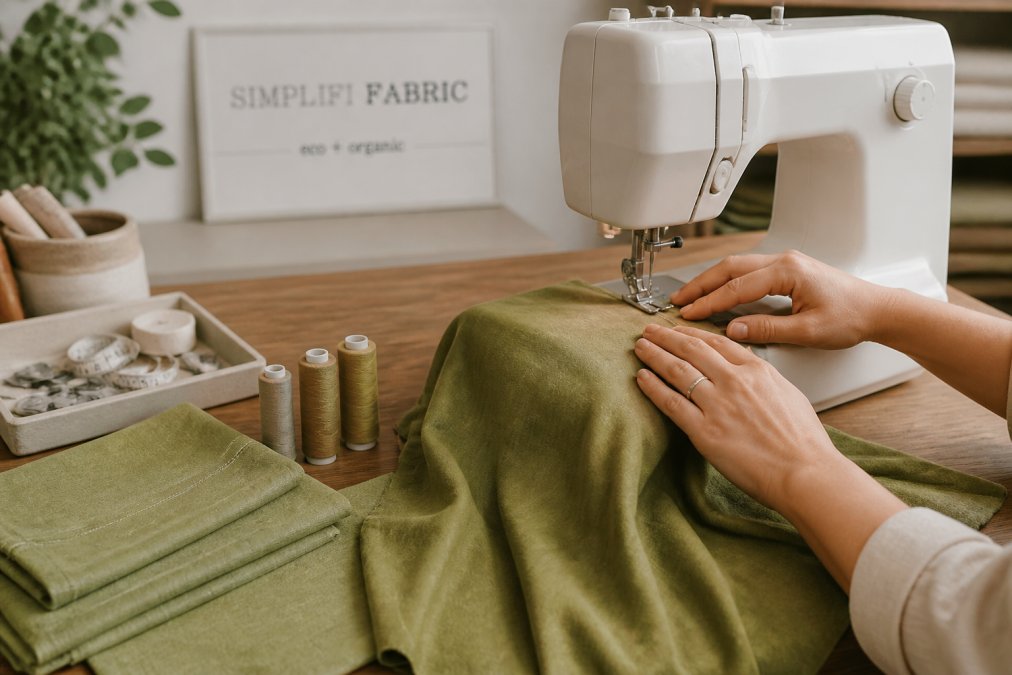
Bamboo's smooth surface and slight stretch require a ballpoint or stretch needle (size 75/11 or 80/12) rather than a universal needle. Use polyester or cotton-wrapped polyester thread in a weight that matches your fabric. Lightweight thread (40-50 wt) works for garment sewing; heavier thread (30 wt) suits topstitching. Test your needle and thread combination on fabric scraps before sewing seams.
Seam Allowances and Finishing Techniques
Raw edges deserve finishing. A 5/8-inch seam allowance works well with bamboo jersey and interlock; use a 1/2-inch allowance for thicker terry and waffle knits. Finish seams with a serger, zigzag stitch, or rolled hem. Necklines and armholes stretch easily in bamboo knits. Stabilize these areas with clear elastic, ballpoint pins, or a narrow strip of fusible interfacing sewn into the seam.
Common Sewing Mistakes to Avoid
Skipped stitches happen when the needle is too large or too dull. Switch to a fresh ballpoint needle (size 75/11) and test again.
Puckered seams result from tension that's too tight or a needle that's pushing fibers instead of slipping between them. Lower tension slightly and confirm you're using a ballpoint needle.
Stretched necklines and armholes occur because bamboo has inherent stretch and lacks the stability of woven fabrics. Always stabilize these areas, even if your pattern doesn't mention it.
Bamboo Organic Cotton Spandex Jersey →
Uneven hems appear when fabric has curled or stretched during sewing. Lay finished garments flat for 24 hours before hemming to allow fibers to settle.
Certifications and Sustainability: What Actually Matters
Not all "organic" labels are equal, and not all certifications guarantee environmental responsibility. Understanding third-party verification separates genuine sustainable choices from marketing language.
Certified Organic means the bamboo was grown without synthetic pesticides, herbicides, or fertilizers. Look for GOTS (Global Organic Textile Standard) certification on the product page. GOTS verifies both the organic fiber and the processing steps, dyes, chemicals, and water use that follow. Many Simplifi Fabric bamboo options carry certified organic status, confirming fiber integrity from field to finished textile.
Lyocell vs. Viscose Processing matters more than most shoppers realize. Bamboo fiber starts as woody pulp and must be processed into usable thread. Lyocell uses a closed-loop process where solvents are recycled, reducing chemical waste by up to 99%. Viscose (also called rayon) uses more open-loop processes, releasing more solvents into water systems. If environmental impact drives your choice, lyocell-processed bamboo costs more but delivers genuine lower impact.
Oeko-Tex Certification tests finished textiles for harmful substances, heavy metals, dyes, and formaldehyde, ensuring the fabric is safe for skin contact. This matters especially for baby clothing and sensitive-skin garments. Prioritizing these rigorous standards remains the most effective way to identify safe fabrics for sensitive skin when selecting materials for children.
According to Business Research Insights market data, sustainable fashion initiatives are increasingly influenced by demand for biodegradable fabrics, with approximately 72% of such initiatives incorporating these materials. This demand has pushed certification standards higher, making it easier to find genuinely sustainable options today than five years ago.
The Greenwashing Debate: Understanding Bamboo Processing
Bamboo pulp requires chemical processing to convert into usable thread, and viscose processing releases solvents into water systems.
Lyocell processing solves this by recycling 99% of solvents in a closed-loop system, carrying genuine environmental advantages over conventional viscose.
The greenwashing risk: a retailer can label fabric "organic bamboo" and "eco-friendly" without mentioning that viscose processing still creates environmental impact.
When evaluating bamboo fabric, ask: Is this lyocell or viscose?
Care and Longevity: Washing and Storing Bamboo Textiles
Bamboo fabric lasts longer when cared for properly.
Machine Wash Cold. Use a gentle cycle and avoid overloading the washer.
Use Mild Detergent. Choose a gentle, enzyme-free detergent.
Bamboo vs. Alternatives: Making the Right Choice
Bamboo isn't the only sustainable fabric option. Understanding how bamboo compares to linen, hemp, and organic cotton helps you make an informed decision.
Frequently Asked Questions
What makes organic bamboo fabric different from conventional bamboo fabric?
Organic bamboo fabric is grown without synthetic pesticides or fertilizers and processed in environmentally and socially-aware facilities. The bamboo is certified organic, meaning it meets strict standards for sustainable cultivation. When you buy organic bamboo fabric online, you're choosing textiles that reduce environmental impact throughout the supply chain, from cultivation through manufacturing.
How do I know if bamboo fabric is truly organic and ethically sourced?
Look for third-party certifications like OEKO-TEX. Organic bamboo fabric should come with documentation of certification, fiber content percentages, and details about where and how it was processed. When shopping, ask sellers for proof of organic certification and processing details before you buy.
Can I use bamboo fabric for quilting projects?
Yes. Bamboo batting blends work exceptionally well for quilting. Bamboo batting combines softness, breathability, and strength. For piecing, bamboo quilting cotton blends offer excellent drape and color retention. Some quilters prefer 100% bamboo jersey or interlock for modern quilt designs. Batting products like Quilters Dream Bamboo Batting provide a luxurious blend suitable for both hand and machine quilting.
What is the environmental benefit of choosing organic bamboo fabric?
Organic bamboo fabric reduces pesticide use, supports sustainable farming practices, and offers biodegradability at end-of-life. Bamboo grows rapidly without requiring pesticides or fertilizers, making it a renewable resource.
How should I care for bamboo fabric to make it last longer?
Machine wash bamboo fabric in cold water on a gentle cycle and air dry or use a cool dryer setting. Turn garments inside out before washing to protect the surface. Use mild detergent and skip fabric softeners. Proper care extends the life of your bamboo textiles significantly.
When you're ready to start your next sustainable sewing project, explore the diverse range of organic bamboo fabrics available at Simplifi Fabric. From soft jersey knits to absorbent terry and textured waffle weaves, you'll find the perfect material to bring your creations to life.