

Table of Contents
- Why Bamboo Fabric Belongs in Your Sewing Room
- Moisture Wicking, Breathability, and Thermal Regulation
- Skin-Friendly Comfort: Hypoallergenic and Odor-Resistant
- Bamboo Fabric vs Cotton for Sewing: A Maker's Comparison
- Sewing With Bamboo Jersey Tips for Smooth Results
- Best Needles for Sewing Bamboo Knit
- Common Mistakes to Avoid With Bamboo Projects
- Frequently Asked Questions
Last Updated: September 11, 2026
Why Bamboo Fabric Belongs in Your Sewing Room
The benefits of sewing with bamboo fabric start with what it does after the garment is finished: it manages moisture, regulates temperature, and stays soft against sensitive skin. For makers who care about both the planet and the person wearing the finished piece, that combination is hard to match. This guide from Simplifi Fabric walks through the properties that matter, where bamboo beats cotton, and the technical adjustments that separate a clean result from a puckered seam.
Bamboo fabric is a textile made from the cellulose of the bamboo plant, most often processed into a semi-synthetic fibre through either a rayon or a lyocell method. The fibre itself is naturally smooth, which is why bamboo jersey drapes the way it does and why it resists the scratchiness that puts some people off wool.
Here's the part most guides skip. Bamboo is not one fabric. Rayon and lyocell behave differently on the cutting table, shrink differently in the wash, and carry very different environmental profiles. Treating them as interchangeable is the first mistake.
- Moisture-wicking and fast evaporation keep the wearer dry
- Thermal regulation makes it work across seasons
- Hypoallergenic and odor-resistant properties suit sensitive skin
- A sustainable textile profile that depends heavily on the processing method
Below, we break down each benefit and show you exactly how to sew with it.
Moisture Wicking, Breathability, and Thermal Regulation
Bamboo fabric's moisture-wicking performance comes from the fibre's natural cellulose structure, which pulls sweat away from the skin and releases it quickly. That fast evaporation rate is what keeps bamboo activewear from feeling clammy during a workout, and it's why the fabric stays comfortable in humid conditions.
Breathability works alongside wicking. Bamboo knit allows air to move through the fabric, so heat escapes instead of building up. The result is thermal regulation: the same garment feels cool in summer and less chilly in shoulder seasons than a comparable cotton piece.
For anyone sewing activewear, this matters more than the marketing copy suggests. A bamboo jersey base layer wicks and dries, while a heavy cotton tee soaks and stays wet. If you're making leggings, sports tops, or summer dresses, bamboo's absorbency rate and airflow give you a functional garment, not just a pretty one.
There's a caveat worth knowing. Breathability depends on the knit, not just the fibre. A dense bamboo interlock breathes far less than an open single jersey. Match the fabric weight to the job.
Skin-Friendly Comfort: Hypoallergenic and Odor-Resistant
Bamboo fabric is naturally hypoallergenic because its smooth fibre surface creates less friction against the skin than rougher fibres, which reduces the irritation that triggers chafing. For makers sewing for children, eczema-prone family members, or anyone with skin sensitivity, that smoothness is the headline benefit.
The mechanism is worth understanding because it affects how you sew. Bamboo cellulose fibres are extruded with a rounded cross-section and no natural scales, unlike wool or even cotton, whose fibres have irregular edges that catch on skin. That smooth profile is why bamboo jersey feels cool and slightly slick against the body, and it's also why the fabric slides under the presser foot more than cotton does.
The fibre also carries mild anti-bacterial properties in its natural form. Bacteria that cause odor need moisture to thrive, and bamboo's fast evaporation rate removes that moisture. The upshot is a fabric that stays fresher between washes, an odor-resistant quality that makes bamboo a smart choice for travel clothing and workout gear.
A word of honesty: the anti-bacterial effect is strongest in raw bamboo fibre and diminishes somewhat through processing. Treat it as a helpful extra, not a medical claim. If a customer asks whether bamboo will cure a skin condition, the answer is no, it simply reduces the friction and moisture that aggravate one.
Where bamboo really earns its place is in next-to-skin garments. Camisoles, baby onesies, and base layers all benefit from the combination of softness and moisture management. For makers, that means choosing the right seam finish: a flatlock or coverstitch on a bamboo camisole eliminates the raised seam ridge that would otherwise cancel out the fibre's smoothness against skin. A standard serged seam with a bulky thread tail can create exactly the kind of pressure point bamboo is supposed to avoid.
One practical caveat: bamboo rayon can pill, and pills create friction. If you're making a garment for someone with eczema, choose lyocell over rayon where possible, its higher wet strength and better abrasion resistance mean fewer pills over the garment's life, so the smooth surface stays smooth.
Bamboo Fabric vs Cotton for Sewing: A Maker's Comparison
Bamboo fabric versus cotton for sewing comes down to what you're making. Bamboo wins on drape, softness, and moisture handling; cotton wins on stability, ease of sewing, and predictable shrinkage. Neither is universally better.
Here's how the two compare on the properties that affect both the wearer and the maker.
Property |
Bamboo (Rayon/Lyocell) |
Cotton |
|---|---|---|
Moisture handling |
Wicks and dries fast |
Absorbs, dries slowly |
Drape and fabric hand |
Fluid, soft, heavy |
Crisp to soft, more body |
Sewing stability |
Slippery, curls at edges |
Stable, minimal stretch |
Shrinkage |
Moderate to high, pre-wash |
Low to moderate |
Pilling resistance |
Lower in rayon, better in lyocell |
Higher, more durable |
Environmental profile |
Depends on process |
Depends on farming method |
The organic cotton comparison is where things get interesting. Organic cotton avoids synthetic pesticides, which is a genuine win. But cotton farming is water-intensive, and bamboo grows quickly with far less irrigation. That said, conventional bamboo rayon processing uses harsh chemicals, which is why lyocell, made in a closed-loop production system that recaptures solvents, is the more responsible choice.
Water, Land, and Processing: The Sustainability Gap
The environmental impact of bamboo is genuinely complicated. Bamboo as a plant is a sustainability star: it grows fast, needs little water, and regenerates from its own root system without replanting.
Processing is the weak link. Bamboo rayon (also called viscose) breaks the plant down with chemical solvents, and unless the mill recaptures them, those chemicals become waste. Lyocell processing uses a closed-loop method that recovers and reuses the solvent, which is why it carries a lighter footprint.
So when you see "eco-friendly bamboo," ask which process made it. A sustainable textile claim without that detail is incomplete. For makers who want the full picture, Textile Exchange's materials guidance tracks how fibre processing affects environmental outcomes.
Sewing With Bamboo Jersey Tips for Smooth Results
Sewing with bamboo jersey tips boil down to controlling a slippery, stretchy, curl-prone fabric. The single biggest fix is a walking foot, which feeds the top and bottom layers together and prevents the stretching that ruins knit seams.
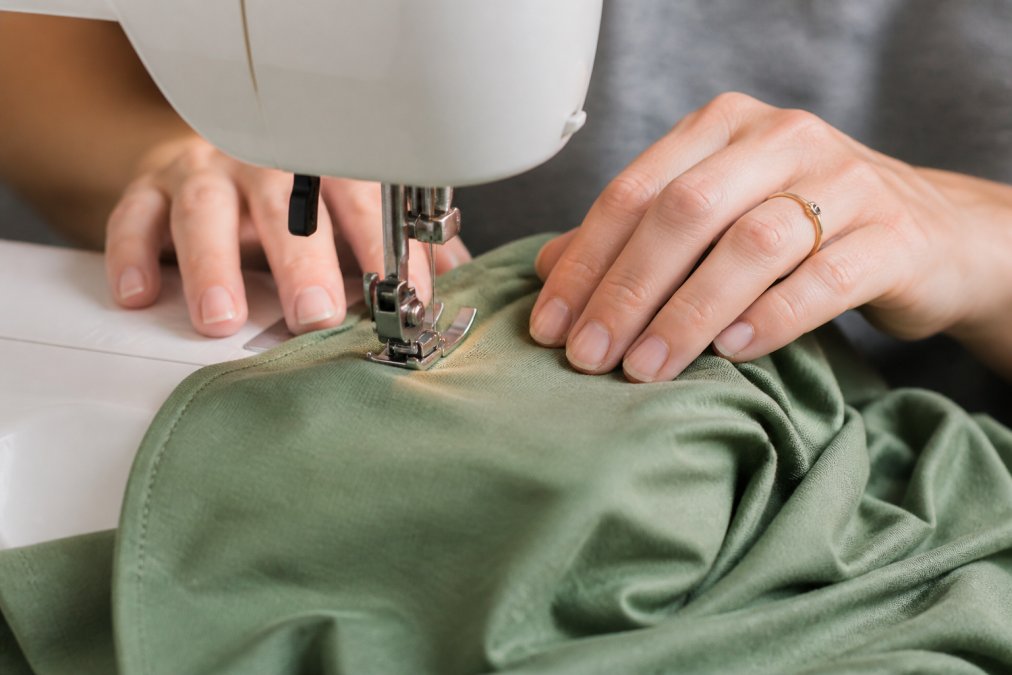
The fabric's drape and fabric hand are what make it lovely to wear and tricky to sew. Bamboo jersey has a fluid, weighty fall, so it shifts as you cut. A few habits make the difference:
- Pre-wash and dry the fabric before cutting to manage shrinkage
- Cut on a single layer or use pattern weights instead of pins
- Use a stretch stitch or serger for seams that move with the fabric
- Stabilize shoulders and necklines with clear elastic or stay tape
- Lower your presser foot pressure to avoid stretching the knit
A common mistake is treating bamboo jersey like woven cotton. It isn't. It stretches, it curls, and it will pucker if you sew it with a standard straight stitch and too much tension.
Best Needles for Sewing Bamboo Knit
The best needle for sewing bamboo knit is a ballpoint or jersey needle in a size 70/10 to 80/12, depending on fabric weight. Ballpoint needles have a rounded tip that slips between the knit loops instead of piercing them, which prevents runs and skipped stitches.
For lighter bamboo jersey, reach for a 70/10 ballpoint. For heavier bamboo French terry or interlock, move up to an 80/12 or 90/14. If you're working with a bamboo blend that has some spandex, a stretch needle is the better pick because its scarf and eye are shaped to handle elastic fibres.
Tensile strength and garment longevity both depend on getting this right. The wrong needle, a sharp universal, cuts the knit fibres instead of separating them, and those small cuts become holes after a few wears.
Pair the needle with the right thread. A polyester or cotton-wrapped polyester thread has enough give to move with the knit without snapping.
Common Mistakes to Avoid With Bamboo Projects
The most common bamboo sewing mistakes all trace back to treating a knit like a woven. Skip these and your projects will come together cleanly.
- Skipping the pre-wash. Bamboo rayon can shrink noticeably, so wash and dry it before cutting or your finished garment won't fit.
- Using a straight stitch on seams. It has no stretch and will pop the first time the garment is pulled on.
- Ignoring pilling resistance. Lower-quality bamboo rayon pills with wear, so choose lyocell or a quality blend for garments that get heavy use.
- Over-handling the fabric. Bamboo jersey curls at the edges, so finish seams promptly rather than letting raw edges sit.
- Skipping a test swatch. Always test your stitch, tension, and needle on a scrap first. Bamboo behaves differently from cotton, and five minutes of testing saves a ruined project.
For guidance on fibre care and textile standards, the Canadian General Standards Board's textile resources and Natural Resources Canada's materials information offer reference material for makers who want to understand what's behind a fabric label.
Bamboo fabric rewards makers who respect its quirks: pre-wash it, match your needle to the knit, and let a walking foot do the hard work. At Simplifi Fabric, we've spent 13 years curating sustainable textiles for makers of every skill level, from organic fabrics to indie sewing patterns and the notions that make a project come together. If you're ready to sew with bamboo, explore our collection, add your favourites to your wishlist, and start your next project with a fabric that's as responsible as it is beautiful.
Frequently Asked Questions
What are the downsides of bamboo fabric?
Bamboo fabric can shrink more than cotton, so pre-wash and dry before cutting. It pills with friction, especially in high-wear areas like underarms and thighs. Rayon and viscose versions use chemical-heavy processing, so check for lyocell if you want a closed-loop option. It also costs more than conventional cotton. For sewing, the slipperiness and curl of bamboo jersey demand patience and the right needle.
Is bamboo fabric healthier than cotton?
Bamboo fabric is hypoallergenic and breathable, which helps with skin sensitivity and chafing prevention. It wicks moisture faster than cotton, keeping you drier during wear. However, no fabric is inherently medicinal. If you have sensitive skin, bamboo's smooth fiber surface reduces friction. Look for OEKO-TEX certified bamboo to avoid processing chemical residue. For sewing, the health benefit is comfort in the finished garment, not the sewing process itself.
How do you sew bamboo fabric?
Use a ballpoint or stretch needle for knits, or a sharp needle for woven bamboo. Lower your presser foot pressure and use a walking foot to prevent stretching. Sew with a narrow zigzag or overlock stitch for seams that move with the fabric. Pre-wash to control shrinkage. Test on a scrap first. For bamboo jersey tips, avoid pulling the fabric and let the feed dogs do the work. Finish hems with a twin needle or coverstitch.
Does bamboo fabric require special care after the garment is sewn?
Wash bamboo garments in cold water on a gentle cycle to reduce shrinkage and pilling. Avoid fabric softeners, which coat the fibers and reduce moisture-wicking. Tumble dry low or hang to dry. If ironing, use a low setting with steam. Bamboo rayon can lose strength when wet, so handle gently. Proper care extends garment longevity and keeps the fabric hand soft. Always check the care label from your fabric supplier.