

Table of Contents
- Understand What Makes Quilting Cotton Sustainable
- How to Choose Fabric for a Quilt: Fiber Content First
- Verify Organic Cotton Fabric Certifications
- Assess Quilting Cotton Quality and Thread Count
- Prewash Organic Quilting Cotton Properly
- Check Supply Chain Transparency and Sourcing
- Evaluate Environmental Impact and Long-Term Value
- Frequently Asked Questions
Last Updated: October 20, 2026
Understand What Makes Quilting Cotton Sustainable
Choosing sustainable quilting cotton starts with understanding what "sustainable" means in fabric production. Growing methods, processing techniques, and supply chain transparency make a dramatic difference in environmental impact.
Sustainable quilting cotton prioritizes practices that reduce water consumption, eliminate harmful pesticides, and support fair labor standards, a difference that begins in the field and extends through every step of production.
Organic cotton growing practices
Organic cotton is grown without synthetic pesticides or fertilizers. Farmers use natural methods like crop rotation, composting, and beneficial insects to maintain soil health and manage pests.
The organic certification process requires rigorous standards. According to the Canadian Organic Standards under the Organic Products Regulations, certified organic operations must follow strict guidelines for land management, pest control, and record-keeping.
Organic farming also builds soil carbon and improves moisture retention, reducing irrigation needs over time, a benefit for quilters whose fabric choices reflect genuine environmental responsibility.
Natural fibers and recycled materials
Beyond organic cotton, sustainable quilting options include recycled cotton, which transforms post-consumer or post-industrial waste into new yarn, reducing landfill burden and the need for virgin fiber.
Tencel and bamboo are emerging alternatives made from sustainably managed tree farms and processed in closed-loop systems that recycle water and chemicals.
Linen and hemp require less water than cotton, grow without heavy pesticide use, and biodegrade completely.
How to Choose Fabric for a Quilt: Fiber Content First
Reading the fiber content label is your first step in selecting sustainable quilting cotton, it tells the story of what you're purchasing and how the fabric will perform.
100% organic cotton vs. conventional cotton
Pure organic cotton is the gold standard for environmentally conscious quilters: no synthetic chemical residue, and farming practices that regenerate soil.
Conventional cotton uses synthetic pesticides and fertilizers extensively. It's cheaper and more available, but the environmental cost is significant: substantial water usage and chemical pollution.
Organic fabric costs more upfront, but its durability and performance often justify the investment for quilters committed to sustainable choices.
Blends and alternative natural fibers
Cotton blends combine organic cotton with other materials to cut cost or add performance.
Tencel blends with organic cotton are softer and more lustrous than pure cotton, and bamboo-cotton blends offer similar benefits with excellent breathability, good for quilters seeking specific hand feel or drape without compromising environmental values.
When evaluating blends, check the percentage breakdown. A fabric labeled "organic cotton blend" should contain at least 50% organic cotton to meaningfully reduce environmental impact.
| Fiber Type | Sustainability Profile | Best For |
|---|---|---|
| 100% Organic Cotton | Highest environmental benefit | Heirloom quilts, traditional projects |
| Organic Cotton Blend | Good balance of performance and impact | Everyday quilts, mixed-fiber projects |
| Recycled Cotton | Diverts waste, reduces virgin production | Budget-conscious quilters |
| Tencel/Bamboo Blend | Lower water use, closed-loop processing | Modern designs, specialty projects |
Verify Organic Cotton Fabric Certifications
Not all fabric labeled "organic" meets the same standards; certifications independently verify that cotton was grown and processed according to established guidelines.
Recognized certification standards
Look for certifications from organizations that conduct rigorous audits.
The Canadian Organic Standards recognize organic cotton that meets requirements under the Organic Products Regulations, backing organic claims with government oversight.
Fair Trade certification goes beyond environmental standards to worker welfare, guaranteeing farmers received fair prices and worked in safe conditions, meaningful assurance for quilters prioritizing social responsibility.
How to read certification labels
Certification labels on fabric bolts or product pages should display the organization's name and logo plus a certification number you can verify independently. Reputable suppliers provide this transparently.
When shopping for sustainable quilting cotton, ask the retailer for certification documentation. Simplifi Fabric curates a collection of certified organic and ethically sourced fabrics, making it easier to verify sustainability claims before purchasing.
Assess Quilting Cotton Quality and Thread Count
Thread count measures threads per square inch. Higher counts generally mean denser, more durable fabric, though thread fineness matters too.
Fine threads create smooth surfaces and precise print clarity; coarser threads produce more texture and visible weave. Finer threads typically perform better during piecing and quilting.
Quilters Dream Bamboo Batting 121" - Made in USA - Sold Per Half Meter →
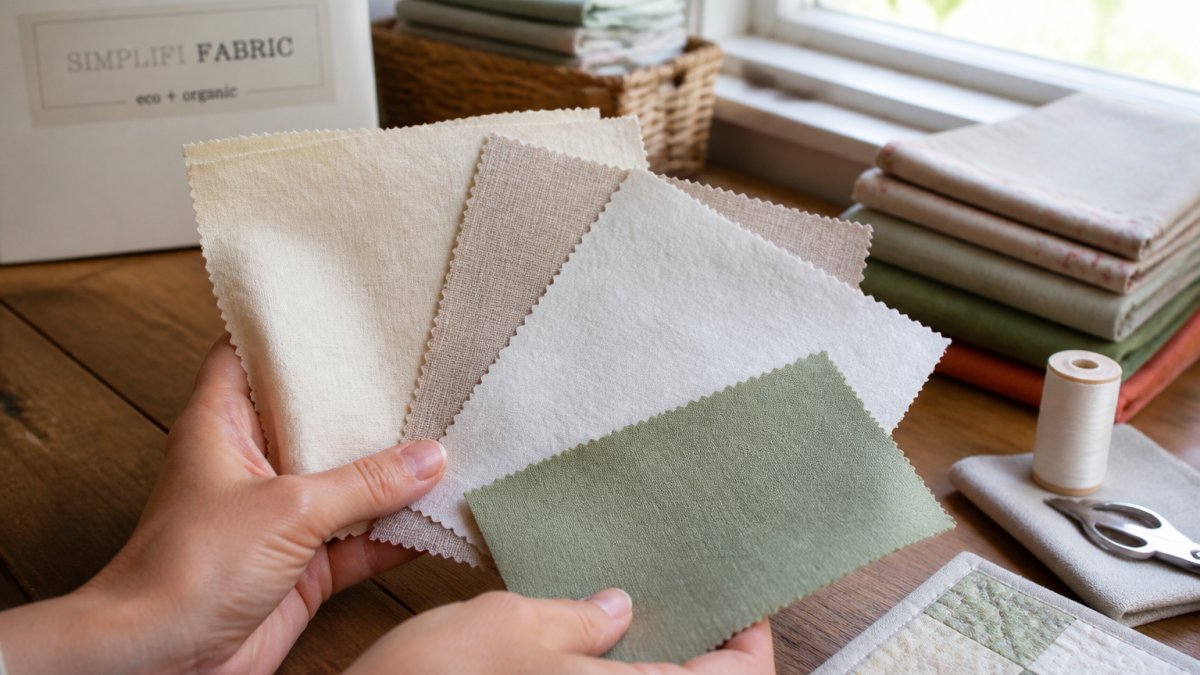
Quilting-specific performance tests before you commit
Thread count alone won't tell you how a fabric will behave in a finished quilt. Run these simple checks on a swatch before cutting into a project:
- Shrinkage test: Measure and mark a 10 cm square, wash and dry it the way you plan to care for the quilt, then re-measure. Most quilting cottons shrink in the range of 2-5%; natural and recycled fibers can vary more. Buy extra yardage to account for the measured shrinkage.
- Colorfastness test: Dampen a corner and press it against a white cotton scrap for a minute. Any transfer means the dye will likely bleed in a finished quilt, prewash with a color catcher before piecing.
- Fray test: Rub a cut edge between your fingers or run it lightly over a seam. Excessive fraying signals a loose weave that will shed during piecing and weaken seam allowances.
- Opacity test: Hold the fabric up to a window. If you can clearly see your hand through it, dark backing or batting may show through light quilt tops; choose a denser weave for light-colored projects.
- Seam-strength test: Sew a short seam on a scrap, press it open, and tug gently. A seam that pulls apart or shows gaps indicates the weave is too loose for the seam allowance you plan to use.
Durability, hand feel, and print quality
Durability matters for heirloom quilts. Quality organic quilting cotton holds up through decades of use and washing. Quilting-weight cotton should feel substantial but not heavy; squeeze a swatch and quality fabric springs back quickly rather than staying compressed.
Color vibrancy and print clarity indicate good dyeing and finishing. Colors should be consistent across the bolt without fading or bleeding, and prints should register sharply without fuzzy edges, signs the fabric will keep its appearance through the quilt's lifetime.
Prewash Organic Quilting Cotton Properly
Prewashing organic quilting cotton prevents surprises after your quilt is finished, and it's particularly important for dark colors and natural dyes.
When and why to prewash
Prewash if the fabric contains natural dyes or dark colors that might bleed, red, navy, and black benefit from prewashing to set color. Light or medium solids typically don't require it.
Test first by dampening a small corner and pressing it against white fabric. If color transfers, prewash the entire piece. Prewashing also allows you to assess shrinkage before cutting pieces.
Shrinkage, colorfastness, and care instructions
Organic cotton typically shrinks 2-5% in warm water. Prewash using the same temperature and method you'll use for the finished quilt, by hand if you'll hand wash, by machine if you'll machine wash.
Use gentle detergent without bleach or optical brighteners. Rinse thoroughly until water runs clear. Air dry or tumble dry on low heat, depending on your planned care method.
Proper prewashing stabilizes natural and reactive dyes and prevents future bleeding, so your fabric is ready for cutting and piecing with confidence.
Check Supply Chain Transparency and Sourcing
Transparent supply chains allow you to trace fabric from field to bolt.
Ask your fabric retailer for sourcing information. Where was the cotton grown? Which facilities processed it? Were workers treated fairly?
Many sustainable fabric companies publish supply chain reports. These documents show the countries and regions involved in production, labor practices, and environmental monitoring.
Simplifi Fabric maintains detailed sourcing information for their sustainable collection.
Evaluate Environmental Impact and Long-Term Value
Sustainable quilting cotton delivers value that extends far beyond the initial purchase price. Consider the fabric's environmental footprint across its entire lifecycle, and be willing to compare trade-offs rather than treating organic or natural fibers as automatically sustainable.
Water, pesticides, and dyeing trade-offs
Conventional cotton production consumes enormous quantities of water. Organic cotton uses significantly less water due to improved soil retention and reduced irrigation needs.
Dyeing and finishing often carry a larger footprint than growing. Reactive dyes are common and require significant water to rinse; natural dyes can be lower-impact but are less colorfast and more variable.
A practical checklist for verifying sustainability claims
Vague marketing language is common. Use this checklist to separate verified claims from greenwashing:
- Look for a certification name and number, not just the word "organic." GOTS is the most widely recognized textile standard; the Canadian Organic Standards under the Organic Products Regulations provide government-backed oversight for organic claims. Record the certification number and verify it with the issuing body.
- Check the fiber percentage. A fabric labeled "organic cotton blend" should state how much is certified organic, a blend with a small organic share delivers little environmental benefit.
- Ask where each step happened. Where was the cotton grown, spun, dyed, and finished? Suppliers who can answer indicate genuine traceability; vague answers are a warning sign.
- Distinguish "natural" from "sustainable." Bamboo and Tencel can be processed in closed-loop systems, but not all are; ask about the processing method, not just the fiber source.
- Request documentation. Reputable suppliers publish supply chain reports or provide certification documents on request.
Heirloom quilts and lasting quality
The best measure of sustainability is longevity. A quilt made from quality organic cotton can last generations, providing value that justifies the higher initial cost. Each year of use spreads the environmental impact across more time, reducing the per-year footprint.
For your next project, consider our Quilters Dream Bamboo Batting, a luxurious blend of bamboo, Tencel, cotton, and silk, perfect for creating an elegant quilt.

Frequently Asked Questions
What makes quilting cotton sustainable?
Sustainable quilting cotton is grown and processed with minimal environmental harm. Organic cotton uses natural farming methods without synthetic pesticides or fertilizers, reducing water pollution and soil degradation. The fabric is often dyed with low-impact dyes and produced by companies with transparent supply chains. Look for certifications like GOTS (Global Organic Textile Standard) or OEKO-TEX to verify sustainability claims. Recycled cotton and natural fibers like Tencel also count as sustainable options when sourced responsibly.
How do I verify that quilting cotton is ethically sourced?
Check for third-party certifications on the product label or seller's website. GOTS certification confirms organic farming and fair labor practices. Fair Trade certification ensures workers are paid fairly. Ask the seller about their supply chain: where cotton is grown, who processes it, and how workers are treated. Reputable sellers like Simplifi Fabric provide detailed sourcing information. Be cautious of vague claims like 'eco-friendly' without supporting certifications or transparency.
Does organic quilting cotton shrink more than conventional cotton?
Organic cotton can shrink slightly more than conventional cotton, typically 3-5% depending on how it's processed and dyed. Prewashing before cutting reduces shrinkage and prevents color bleeding. Wash in cool water and air dry to minimize further shrinkage. Check the manufacturer's shrinkage specifications before purchasing. High-quality organic quilting cotton that's been properly finished shrinks predictably, so accounting for this in your pattern sizing ensures your quilt maintains its intended dimensions.
What thread count should I look for in sustainable quilting cotton?
Quilting-weight cotton typically has a thread count that provides a good balance of durability and workability for piecing and quilting. Higher thread counts can create denser, more durable fabric suitable for heirloom quilts, while lower counts may be softer but less long-lasting. Check the product specifications for exact thread count. Fine threads contribute to better print clarity and color vibrancy. Combine thread count with fabric weight to assess overall quality and how well the fabric will hold up to repeated washing and use.