

Last Updated: November 1, 2026
Quick Summary
Mettler Silk-Finish Cotton 50 is the best eco-friendly thread for sewing organic cotton, a 100% mercerized Egyptian cotton certified according to STANDARD 100 by OEKO-TEX. For stretch seams, Mettler Seracycle recycled polyester is the pick. Both are stocked at Simplifi Fabric.
- Silk-Finish Cotton 50 comes on 150 m spools and Seracycle on 200 m spools.
- Seracycle is made from 100% post-consumer recycled PET bottles with a recycled polystyrene spool.
- Silk-Finish Cotton 50 is mercerized, making it stronger, heat resistant and low-shrink.
- Seracycle suits knits, activewear and lingerie but comes in a limited color range.
- Match thread weight to fabric weight first, then check colorfastness before you commit.
Table of Contents
- Quick Comparison: Eco-Friendly Thread Options at a Glance
- How We Evaluated These Eco-Friendly Thread Brands
- Mettler Seracycle: Recycled Polyester Thread for Stretch and Durability
- Mettler Silk-Finish Cotton 50: The Best Thread for Organic Cotton Fabric
- Organic Cotton Sewing Thread: What Certifications Actually Mean
- Cotton Thread vs Polyester Thread: Which Is More Eco-Friendly?
- How to Choose Thread for Quilting with Organic Cotton
- Choosing Your Eco-Friendly Thread at Simplifi Fabric
- Frequently Asked Questions
Quick Comparison: Eco-Friendly Thread Options at a Glance
Choosing thread for organic cotton comes down to fiber, finish, and what the fabric will do after it's sewn. The two Mettler lines below cover most organic cotton projects a home sewer will tackle.
| Thread | Fiber | Spool Length | Price | Best For |
|---|---|---|---|---|
| Mettler Silk-Finish Cotton 50 | 100% mercerized Egyptian cotton | 150 m | $3.55 | Quilting, garment seams, heirloom sewing |
| Mettler Seracycle | 100% recycled polyester | 200 m | $4.49 | Stretch fabrics, activewear, high-abrasion seams |
Both are certified according to STANDARD 100 by OEKO-TEX, which matters more than a "natural" label when you're judging how safe a thread is against skin. Below, the guide breaks down how each one behaves, what certifications actually prove, and how to match thread to organic cotton fabric.
How We Evaluated These Eco-Friendly Thread Brands
Every thread here was judged on four things: fiber origin, certification, how it sews on a standard machine, and whether the spool itself avoids virgin plastic. Fiber origin is the first filter. A cotton thread grown and finished under recognized ecological standards earns more weight than a synthetic labeled "green" with no paperwork behind it.
Certification comes second. A visible OEKO-TEX STANDARD 100 claim can be checked against the certification number, while vague "eco" language on a spool cannot. Third is performance: thread that breaks, shrinks, or bleeds dye wastes fabric, and wasted fabric is the least sustainable outcome of all. Last, packaging. A recycled thread wound on a virgin plastic spool is only half the story.
The evaluation deliberately skips brands that market sustainability without naming a certification body. If a manufacturer won't tell you which standard it meets, assume it meets none.
Mettler Seracycle: Recycled Polyester Thread for Stretch and Durability
Seracycle is the pick when the seam has to move. The thread is made from 100% post-consumer recycled PET bottles, and the spool is made from 100% recycled polystyrene.
The thread is iron-proof, does not shrink, and stands for maximum colour fastness. It is suitable for the sewing machine, and needle size runs Nm 70-80.
Watch out: Seracycle comes in a limited color range. If a project needs an exact shade match to organic cotton, check the available colors before planning the garment.
Best for: knits, activewear, lingerie, and any seam that stretches. Skip if: you need a wide color palette for a quilting project.
Browse the recycled polyester sewing thread in 200 m spools.
Mettler Silk-Finish Cotton 50: The Best Thread for Organic Cotton Fabric
Silk-Finish Cotton 50 is the best thread for organic cotton fabric in most garment and quilting work. It's 100% mercerized cotton, with a subtle sheen and a smooth, silk-like feel. The listing describes the cotton as long-staple Egyptian cotton, and the mercerization process makes the thread stronger, heat resistant and reduces shrinkage.
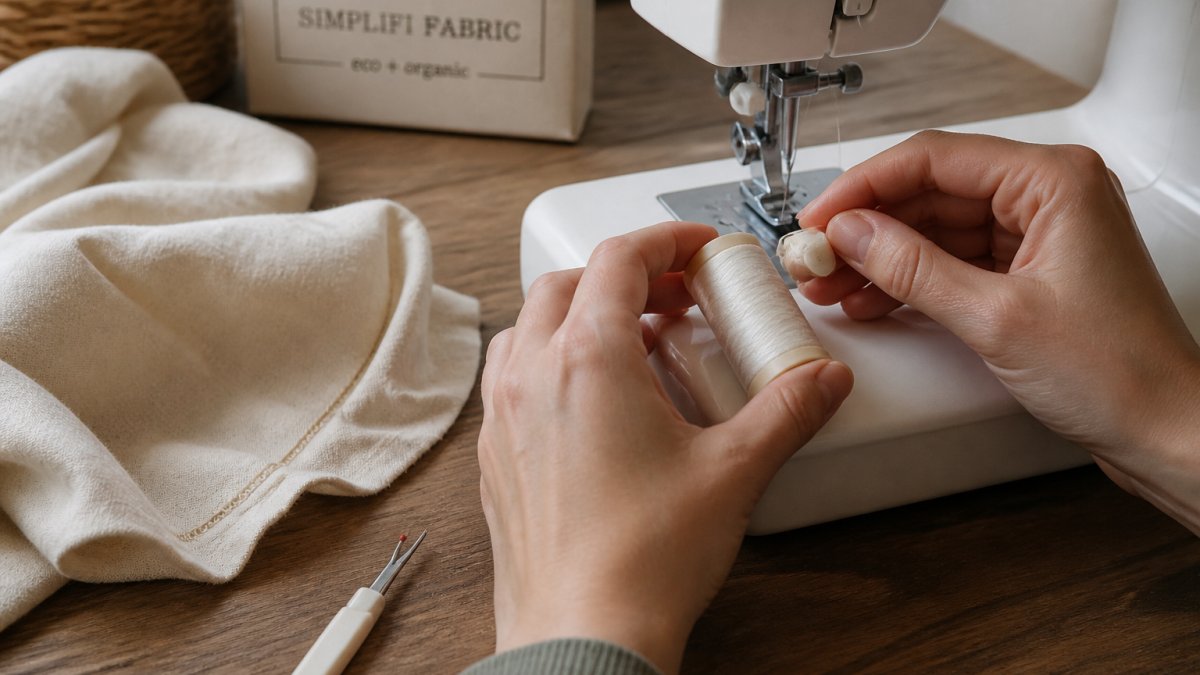
The 150 m spool is priced at $3.55. The listing describes the thread as suitable for quilting and sewing, with long running lengths suited to longarm quilting. Mercerization makes the thread more tearproof, low-shrink and iron-proof. It is certified according to STANDARD 100 by OEKO-TEX.
Shop Mettler Silk-Finish Cotton 50 in 150 m spools, or browse the organic cotton thread range in various colors if you're still choosing a shade.

Organic Cotton Sewing Thread: What Certifications Actually Mean
A certification is only useful if you know what it covers. STANDARD 100 by OEKO-TEX is a certification for textile articles tested for harmful substances (OEKO-TEX® STANDARD 100). The listing for Silk-Finish Cotton 50 states it is certified according to STANDARD 100 by OEKO-TEX.
Labels like "organic" and "natural" are not certifications. They describe a fiber, not a test result. When a spool claims eco-friendly status, look for a named standard and a certification number you can verify through the certifying body's own database.
For Canadian sewers, there's a second layer. Textiles sold here fall under the Canada Consumer Product Safety Act, which prohibits manufacturers from selling products that pose a danger to health, and the Competition Act requires environmental claims to be substantiated. A brand that can't back up an eco claim is exposed on both fronts. The Competition Bureau's guidance on environmental claims sets out what "green" marketing must be able to prove.
Mettler Seracycle® 100% Recycled Polyester Thread - 200M Spool (various colours) →
The practical rule: trust the standard, not the slogan.
Cotton Thread vs Polyester Thread: Which Is More Eco-Friendly?
Neither fiber wins outright. Cotton is renewable and biodegradable, but conventional cotton is a thirsty, pesticide-heavy crop, which is why organic cotton thread carries more weight than standard cotton. Polyester is petroleum-derived, yet recycled polyester diverts existing plastic from landfill and lasts far longer in a garment that gets heavy wear.
The honest comparison is lifespan against origin:
- Cotton thread: renewable, biodegradable, gentler on skin, best for natural-fiber garments that will be washed and worn for years
- Recycled polyester thread: keeps bottles out of landfill, resists abrasion and stretch, best for garments that would otherwise fail at the seam
A cotton shirt sewn with cotton thread can be composted at end of life. The same shirt sewn with recycled polyester thread lasts longer but can't be composted. Neither choice is wrong; they trade durability against end-of-life.
If you're weighing fabric alongside thread, to compare how different suppliers handle fiber sourcing.
How to Choose Thread for Quilting with Organic Cotton
Match thread weight to fabric weight first. Silk-Finish Cotton 50 is a 50-weight cotton thread suited to sewing and quilting.
Second, decide between cotton and polyester for the quilting stitch itself.
Third, check colorfastness before you commit. Silk-Finish Cotton 50 is mercerized and certified according to STANDARD 100 by OEKO-TEX, and its listing describes highest colour fastness.
Fourth, buy enough for the whole project.
For a wider look at supplies beyond thread, the eco-friendly quilting supplies guide covers batting, needles, and notions that pair with organic cotton.
Choosing Your Eco-Friendly Thread at Simplifi Fabric
The right eco-friendly thread comes down to one question: does the seam need to stretch? If yes, Seracycle's recycled polyester handles it. If the project is organic cotton garments or quilts, Silk-Finish Cotton 50 is the stronger match.
Simplifi Fabric stocks both Mettler lines alongside a curated range of organic fabrics and indie patterns, and ships worldwide from Canada. The Silk-Finish Cotton 50 spool at $3.55 and the Seracycle spool at $4.49 make it easy to keep both on hand, since most sewists end up needing each for different projects. The Silk-Finish Cotton 50 listing states OEKO-TEX certification.
Start with the fabric, then match the thread. Get started with Simplifi Fabric and build a thread drawer that covers cotton garment work and stretch seams without compromise.
Frequently Asked Questions
What is the most eco-friendly thread for sewing?
There is no single answer, because it depends on your fabric and project. For sewing organic cotton, a mercerized cotton thread like Mettler Silk-Finish Cotton 50 is a strong match: it is made from 100% long-staple Egyptian cotton and certified to STANDARD 100 by OEKO-TEX. For stretch fabrics, recycled polyester such as Mettler Seracycle, made from post-consumer PET bottles, keeps plastic out of landfills while giving seams the elasticity they need.
Can you sew organic cotton with regular thread?
Yes. Regular all-purpose thread will hold an organic cotton seam together, but the mismatch matters over time. Cotton and polyester threads behave differently, so it helps to match thread to fabric for the seams you plan to sew.
Is cotton thread better for the environment than polyester thread?
It is not that simple. Conventional cotton is a thirsty crop, while polyester is petroleum-based and does not biodegrade. Recycled polyester thread, like Mettler Seracycle made from 100% post-consumer PET bottles, is made from recycled plastic. Mercerized cotton is renewable and biodegradable. The greener choice depends on how long the item will last and whether the thread is certified under a recognized standard such as OEKO-TEX.
What thread weight is best for sewing organic cotton?
A 50-weight thread is the standard all-purpose choice for garment sewing and quilting on organic cotton. It is fine enough for a smooth seam on lightweight to medium-weight fabric and strong enough for everyday wear. Mettler Silk-Finish Cotton 50 is a 50-weight mercerized cotton thread that works with a Nm 70-80 needle, and is suited to sewing and quilting.
Does thread need to be organic to sew organic cotton sustainably?
Not necessarily. The thread does not have to carry an organic certification for your project to be more sustainable, but look for third-party verification of low chemical use. STANDARD 100 by OEKO-TEX certifies that a thread has been tested for harmful substances, and Mettler Silk-Finish Cotton 50 is certified according to this standard. Pairing certified thread with organic fabric gives you a defensible claim about the whole garment.
