

Table of Contents
- Why Eco Friendly Quilting Supplies Online Are Worth the Switch
- Quick Comparison: Sustainable Quilting Supplies at a Glance
- Organic Cotton Quilting Fabric: What to Look For
- Eco-Friendly Quilt Batting: Wool, Cotton, and Beyond
- GOTS Certified Fabric Online: How to Verify What You Buy
- Eco-Friendly Notions and Tools Most Shoppers Overlook
- Reducing Textile Waste: Disposal, Shipping, and Zero-Waste Sewing
- Conclusion
- Frequently Asked Questions
Last Updated: September 13, 2026
Why Eco Friendly Quilting Supplies Online Are Worth the Switch
The global quilting fabric market hit $4.8 billion in 2025 and is projected to reach $7.6 billion by 2034, growing at 5.3% annually, according to Dataintelo's Global Quilting Fabric Market Report. That growth is being driven partly by makers who want eco friendly quilting supplies online rather than conventional cotton and synthetic options. Simplifi Fabric has watched this shift firsthand since 2012.
The case for switching is concrete. Organic and recycled materials now account for over 35% of the quilting fabric market, per LinkedIn's 2026 Quilting Fabric Market analysis, and roughly 38% of customers say they prefer quilts made with sustainable materials like organic cotton and natural fibers, according to Reanin's quilt market trend report.

What most buying guides get wrong is treating "eco-friendly" as a single label. It covers fiber origin, dye chemistry, certification, and end-of-life disposal, and a fabric can score well on one and badly on another. This guide breaks down what actually matters when shopping online.
Quick Comparison: Sustainable Quilting Supplies at a Glance
| Supply |
|---|
| --- |
| --- |
| Colonial Organic Cotton Thread |
| Gütermann rPET Thread 100m |
| Gütermann Mara 100 rPET 1000m |
| Quilters Dream Wool Batting |
A common mistake is buying eco-certified fabric, then finishing the quilt with conventional polyester thread and synthetic batting. The fiber content of the thread and batting affects how the finished quilt washes, drapes, and eventually breaks down.

Organic Cotton Quilting Fabric: What to Look For
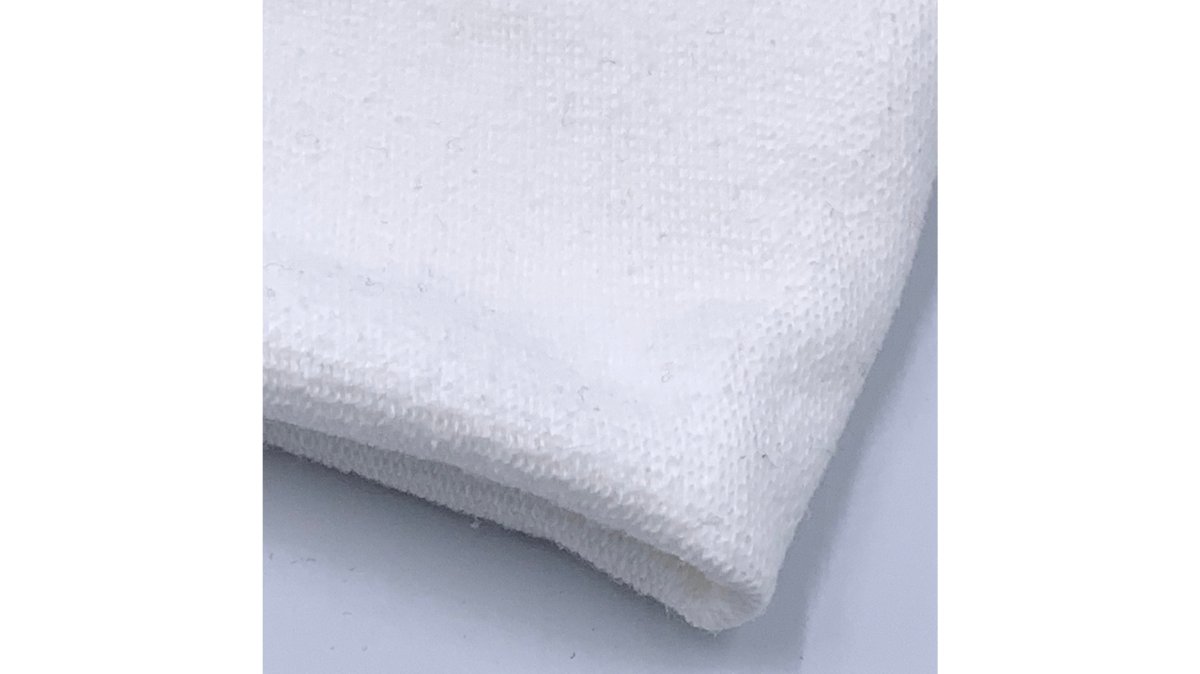
Organic cotton quilting fabric is cotton grown without synthetic pesticides or fertilizers and processed without toxic chemical finishes, which makes it the starting point for most sustainable quilts. The market reflects that demand: the quilting fabric segment alone is estimated at $1,338.9 million in 2026, per Market Reports World's industry outlook.
Weight, Weave, and Why They Matter
Quilting cotton typically runs 4 to 4.5 oz per square yard, a weight that holds a crisp press and feeds evenly under a walking foot. Lighter weaves (3 oz and under) tend to distort when pieced; heavier canvas weights fight the needle on dense quilting. For garment-adjacent projects, a fabric like Lightweight Organic Cotton Terry at 8.25 oz per square yard offers a different hand entirely, so match the weight to the project rather than assuming one cotton suits everything.
Eco-Friendly Quilt Batting: Wool, Cotton, and Beyond
Eco-friendly quilt batting is the inner layer that determines warmth, loft, and drape, and it is the most overlooked part of a sustainable quilt. Wool batting holds loft longer than cotton, resists creasing, and comes from a renewable source. Quilters Dream Wool, sold by Simplifi Fabric, blends merino and domestic wool thermally bonded without chemical resin binders, and allows stitching up to 8 inches apart.
For cooler-weather quilts, a wool-Tencel blend like Worsted Merino Wool TENCEL Lyocell Stretch Jersey adds breathability and moisture management, since merino fibers are naturally porous. Cotton batting suits warmer climates and washes predictably. Bamboo batting sits between the two on warmth and drapes softly.
GOTS Certified Fabric Online: How to Verify What You Buy
GOTS certified fabric online means the entire supply chain, from harvest through dyeing and finishing, meets the Global Organic Textile Standard, including wastewater treatment and social criteria. Verification is straightforward: every certified batch carries a license number you can check against the certifier's public database, and reputable retailers list the certifying body on the product page.
Comparing Certifications: GOTS, OEKO-TEX, and Fair Trade
Most buying guides list these three logos side by side and leave it there. They are not interchangeable, and knowing what each one actually regulates tells you which questions it answers and which it ignores.
| Certification | Who issues it | What it actually regulates | What it does NOT cover | Best for |
|---|---|---|---|---|
| GOTS | Independent accredited certifiers (e.g., Control Union, Ecocert, CU) | Organic fiber content (minimum 70% organic for the 'made with organic' label, 95% for 'organic'), processing chemistry, wastewater treatment, and social criteria | Fiber origin for non-organic inputs; end-of-life disposal | Fabric and thread where fiber origin and processing both matter |
| OEKO-TEX Standard 100 | OEKO-TEX Association member institutes | Harmful substance testing on the finished textile (formaldehyde, heavy metals, azo dyes, pesticide residues) | Organic origin, labor conditions, or how the fiber was grown | Any textile or finished good where skin-contact safety is the concern |
| Fair Trade (Fairtrade International / Fair Trade USA) | Fairtrade International or Fair Trade USA | Labor conditions, wages, and community premiums at the farming or production level | Fiber content, dye chemistry, or processing emissions | Worker welfare assurance on cotton and other farmed inputs |
GOTS is the strongest single indicator for quilting fabric because it covers both environmental and labor standards in one audit. OEKO-TEX confirms a textile is free of harmful residues but says nothing about organic origin; a conventionally grown cotton can carry OEKO-TEX Standard 100 and still be pesticide-intensive. Fair Trade addresses wages and working conditions but not fiber, so a Fair Trade cotton can be conventionally grown.
How to Read a Certificate in Under Two Minutes
A legitimate GOTS claim on a product page should give you four things: the certifier's name, the license or scope certificate number, the certification body's country, and the product's certification category (organic vs. made with organic). Cross-check the number against the certifier's public database; GOTS maintains a searchable public register of certified entities. If a page shows a logo but no license number, treat the claim as unverified. Verifying these credentials ensures that your quilting projects remain rooted in transparency, a principle that extends naturally to the selection of ethically sourced fibers.
A common pattern is a fabric labeled 'organic cotton' with no certification at all. That is a marketing claim, not a verified one. The same applies to 'eco-friendly' and 'natural'; neither is a regulated term in textile labeling, so neither tells you anything about fiber origin, dye chemistry, or labor.
What Certification Does Not Tell You
Certification covers how a fiber was grown and processed. It does not cover how far the fabric traveled to reach you, how the quilt will be disposed of, or whether the thread and batting you pair with it carry the same standard. The next sections cover the parts of the supply chain certification leaves out.
Eco-Friendly Notions and Tools Most Shoppers Overlook
Thread is where most eco-conscious quilters lose ground. Conventional polyester thread is petroleum-derived, but recycled alternatives perform identically. Gütermann rPET 100m spools at $2.75 are made from recycled drinking bottles and resist tear and abrasion, and the 1000m Mara version at $12.75 suits quilters working through multiple projects. For a fully organic option, Colonial 100% Organic Cotton Thread at $8.75 per 300-yard spool is GOTS certified and made in Europe.

Beyond thread, the overlooked items are needles, pins, and cutting tools. Metal notions last decades and are recyclable at end of life, unlike plastic templates and disposable rotary blades. Buying once and maintaining well beats replacing cheap tools repeatedly.
Reducing Textile Waste: Disposal, Shipping, and Zero-Waste Sewing
Textile waste is the part of sustainable quilting most guides skip. Research on traditional quilting practices shows repurposing and waste management deliver measurable environmental benefits, per a systematic review of Godhadi quilts. The same principle applies to modern quilting, but the practical question is what to do with each size of scrap, and what happens to the quilt at the end of its life.
A Disposal Hierarchy for Quilting Scraps
Not every scrap belongs in the same bin. Working from highest to lowest value:
- Over 2 inches square: crumb-pieced blocks, string quilts, or foundation-pieced projects. This is the highest-value use because it keeps the fiber in circulation as a functional textile.
- Under 2 inches: stuffing for pincushions, pet beds, draft stoppers, or quilted ornaments. Small scraps can also be carded into batts for small projects.
- Frayed or unusable cotton and wool: compost. Untreated, undyed, or naturally dyed cotton and wool are compostable in a home or municipal compost stream. Synthetic blends, polyester thread, and resin-bonded batting are not.
- Usable yardage you will not use: donate to a local maker group, school art program, or guild.
The Carbon Footprint of Shipping: What Actually Moves the Needle
Carbon footprint is the other hidden cost, and it is where online shopping has the most room to improve. The dominant variable is not the box, it is how the fabric travels.
- Air freight vs. sea freight: Air freight emits roughly 40 to 50 times more CO2 per tonne-kilometer than sea freight. A fabric shipped by air from overseas carries a far larger footprint than the same fabric shipped by sea, even though the customer sees identical packaging.
- Consolidating orders: Two orders shipped separately roughly double the last-mile emissions of one combined order. Batching a project's fabric, thread, and batting into a single shipment is the highest-use change most quilters can make.
- Regional warehousing: A supplier that ships from a single regional warehouse cuts the domestic leg of the journey and avoids cross-border air freight. This is why buying from a supplier with domestic stock, rather than a drop-shipper routing from overseas, matters more than the fabric's origin alone.
- Local sourcing vs. international imports: A domestically grown and milled organic cotton can have a lower total footprint than an imported certified organic cotton shipped by air, even though the imported fabric carries a stronger certification. Certification and carbon footprint are different axes; a fabric can score well on one and badly on the other.
A ScienceDirect study on green textile production found that sustainable manufacturing approaches significantly reduce resource consumption and emissions across the supply chain. The shipping leg is the part of that supply chain the buyer controls most directly.
Conclusion
Building a genuinely sustainable quilt means thinking past the top fabric to thread, batting, notions, and disposal. Simplifi Fabric stocks GOTS-certified organic cotton thread, recycled rPET sewing thread, and wool batting that together cover the full supply chain, backed by 13 years of sourcing experience and worldwide shipping. Get started with Simplifi Fabric and build quilts that are as responsible as they are beautiful.
Frequently Asked Questions
What makes quilting fabric eco-friendly?
Eco-friendly quilting fabric is made from natural or recycled fibers grown and processed with fewer chemicals. Organic cotton avoids synthetic pesticides, while hemp, linen, and TENCEL Lyocell use less water. Certifications like GOTS and OEKO-TEX confirm that no harmful substances were used. The global quilting fabric market was valued at $4.8 billion in 2025 and is projected to reach $7.6 billion by 2034, driven partly by demand for sustainable options.
Where can I buy organic cotton quilting fabric online?
Look for retailers that stock GOTS certified fabric online and list full fiber content, weight, and certification details on each product page. Simplifi Fabric carries organic cotton quilting fabric, including GOTS-certified options, with worldwide shipping from Ontario. Check that the store provides clear product images and a return policy before ordering, especially if you are buying several meters for a large project.
Are there sustainable alternatives to polyester quilting thread?
Yes. Recycled polyester (rPET) thread is made from recycled drinking bottles and performs like standard polyester, with good resistance to tear and abrasion. Organic cotton thread is another option, ideal for quilting and machine sewing. Both are available in multiple colors and spool sizes, so you can match thread to any quilt project without relying on newly manufactured polyester.
What certifications should I look for in sustainable textiles?
GOTS (Global Organic Textile Standard) is the most comprehensive, covering organic farming, processing, and social criteria. OEKO-TEX Standard 100 verifies that a fabric is free from harmful substances. Fair Trade certification confirms ethical labor practices. When shopping for eco friendly quilting supplies online, check product descriptions for these labels and verify them on the certifying body's website.
Is organic fabric better for long-term quilt preservation?
Quilts made with organic materials and durable construction are more likely to last for generations.