

Table of Contents
- Why Sustainable Linen Needs a Different Washing Approach
- How to Wash Linen Fabric for the First Time
- Choosing the Best Detergent for Linen
- How to Dry Linen Without Shrinking
- How to Remove Wrinkles from Linen
- Water Hardness, Wash Load, and Machine Settings
- Treating Stains on Linen Before You Wash
- Troubleshooting: Shrinkage, Fading, and Stiffness
- Frequently Asked Questions
Last Updated: October 7, 2026
Why Sustainable Linen Needs a Different Washing Approach
Sustainable linen is a natural fiber made from the flax plant, and it needs gentler handling than cotton because its long fibers break down under heat and harsh chemicals. This guide from Simplifi Fabric shows how to wash sustainable linen fabric so it stays soft, strong, and true to color for years. Linen is one of the oldest and most eco-friendly textiles in the world, and how you wash it decides whether it lasts five years or fifteen. Maintaining the integrity of these natural fibers requires a similar level of attention to detail as caring for printed textiles to ensure that patterns and weaves remain vibrant over time.
The good news: linen gets softer with every careful wash. The bad news: one hot cycle can shrink a garment beyond saving.
Below, we walk through temperature, detergent, drying, and stain care step by step. You'll also learn how to identify quality linen and read a care label before you buy.

Linen & Stitch guide to sustainable linen fabric notes that cool washing, gentle detergent, and air-drying keep linen in good shape.
How to Wash Linen Fabric for the First Time
Wash new linen on a gentle cycle in cool water with mild detergent, then air-dry flat. This first wash relaxes the fibers and prevents uneven shrinkage later.
Follow these steps:
- Check the care label for temperature limits
- Sort lights from darks to stop color transfer
- Keep the wash load loose, never packed
- Use cool water, around 30 degrees
- Add mild liquid detergent, not powder
- Run a gentle or delicate cycle
- Skip the spin at full speed
- Air-dry flat and away from direct sun
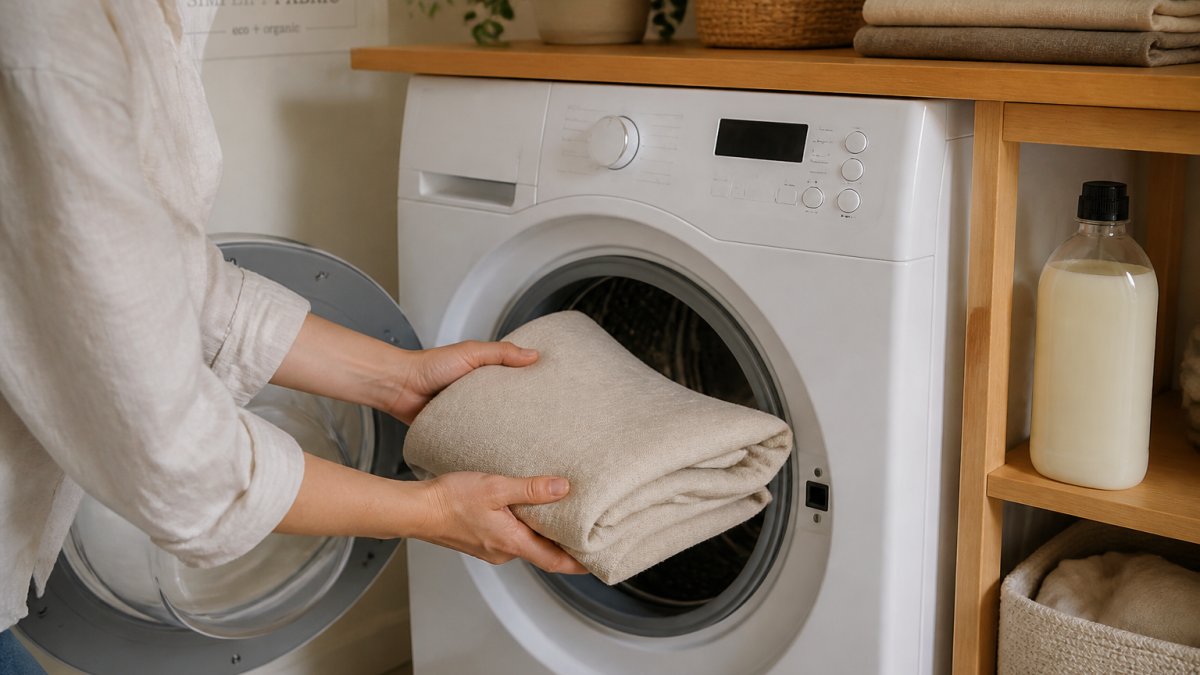
Pre-Washing Your Linen Before Sewing
Pre-wash yardage before you cut. Linen can shrink on its first wash, and pre-washing means your finished garment keeps its size.
Wash the full length the same way you'll wash the finished piece. Then press it while slightly damp.
Choosing the Best Detergent for Linen
The best detergent for linen is a mild, liquid, non-bio formula with no optical brighteners or bleach. These additives weaken natural fibers and dull plant-dyed color over time.
Powder detergents often leave residue in the weave. Liquid formulas rinse out more cleanly.
Why Non-Bio and Eco-Friendly Options Work Best
Non-bio detergents skip the enzymes that break down protein stains. Those same enzymes can nibble at natural fiber over repeated washes.
Eco-friendly formulas also cut what goes down the drain. Look for:
- Plant-based surfactants
- No optical brighteners
- No synthetic fragrance
- Concentrated dosing
- Recyclable packaging
Add half the recommended dose for soft water. More soap does not mean cleaner linen.
How to Dry Linen Without Shrinking
Air-drying is the safest way to dry linen without shrinking, but how you air-dry matters as much as the decision to skip the dryer. Heat is what shrinks linen, and mechanical tumbling is what breaks fibers and sets hard creases. The goal is to remove moisture gently while the fabric still has enough weight to hang smoothly.
Start by shaking the piece out firmly. This relaxes the weave and prevents the fiber from drying in a crumpled shape. Then choose a drying method based on the item:
| Linen item | Best drying method | Why |
|---|---|---|
| Clothing (shirts, dresses, trousers) | Hang on a padded or wide hanger, or dry flat on a rack | Preserves shape at shoulders and seams |
| Bedding (sheets, duvet covers) | Line-dry or lay flat over two rack bars | Prevents stretching under its own wet weight |
| Towels and bath linen | Hang full length, not folded over a bar | Fold lines can dry into permanent creases |
| Loosely woven or hand-dyed pieces | Dry flat on a towel, reshaping edges while damp | Reduces distortion and color pooling |
| Blends (linen-cotton, linen-viscose) | Dry flat or hang in shade | Blends can shrink differently than pure linen |
Keep linen out of direct sun. Ultraviolet light fades plant dyes and weakens the fiber over time, so a shaded line or an indoor rack is better than a bright balcony. If you dry indoors, leave space between pieces so air can move through the weave; damp linen packed together can develop a musty smell.
If you must use a tumble dryer, choose the lowest heat setting and remove the linen while it is still slightly damp. High heat causes shrinkage and weakens fibers. Never wring or twist wet linen. That stress breaks fibers and leaves permanent creases.
Finishing and Storing Linen After It Dries
The best time to iron or steam linen is while it is still damp. Dry linen wrinkles fast, so press it before it fully dries, or mist it lightly with water first. Press on the wrong side to protect the surface sheen. For dark colors, use a pressing cloth to avoid shine marks.
If you prefer not to iron, hang the piece in a steamy bathroom, mist with water and smooth by hand, or use a handheld steamer on low. Linen is meant to have a lived-in look, so a few soft creases are part of the fabric's character.
Store linen clean and completely dry. Fold rather than hang heavy pieces, and avoid plastic bags, which trap moisture and encourage mildew. A cotton pillowcase or a breathable storage box works well. If linen has been stored damp, wash it again with mild detergent before wearing.
How to Remove Wrinkles from Linen
Iron linen while it is still damp on a medium setting with steam. Dry linen wrinkles fast, so press it before it fully dries.
Linen 185gsm - Milk - European Import - Merchant & Mills →
Press on the wrong side to protect the surface sheen. For dark colors, use a pressing cloth to avoid shine marks.
No iron? Try these:
- Hang the piece in a steamy bathroom
- Mist with water and smooth by hand
- Use a handheld steamer on low
Linen is meant to have a lived-in look. A few soft creases are part of the fabric's character.
Water Hardness, Wash Load, and Machine Settings
Most linen care guides tell you to use cool water and a gentle cycle, then stop. The variables that actually decide whether your linen comes out soft or stiff are water hardness, load size, and the type of washing machine you own. Adjusting for these is the difference between linen that lasts a decade and linen that pills in a year.
Water Hardness
Hard water contains dissolved calcium and magnesium. These minerals bind with detergent and leave deposits in the weave, which is why linen washed in hard water often feels stiff and looks dull even after a gentle cycle. If you live in an area with hard water, you have two practical options:
- Add a water softener designed for laundry, following the package dose.
- Use slightly less detergent and run an extra rinse, because hard water reduces how well soap rinses out.
Soft water is the opposite problem. It lathers easily, so the full recommended detergent dose can leave residue. Start with half the recommended amount and add more only if the load still smells or looks unclean.
Wash Load Size
Overloading is the most common mistake. Crammed linen cannot rinse clean, and trapped detergent stiffens the weave. As a rule, fill the drum about two-thirds full and leave enough room for your hand to move between the fabric and the drum wall. Small loads are fine, but very small loads can cause the machine to spin unevenly; add a couple of towels if you are washing one or two linen pieces.
Machine Settings by Washer Type
| Setting | What to Choose | Why It Matters |
|---|---|---|
| Cycle | Gentle or delicate | Reduces friction on fibers |
| Temperature | Cool, around 30 degrees | Prevents shrinkage |
| Spin speed | Low | Avoids wringing stress |
| Load size | Two-thirds full | Lets fabric move freely |
| Extra rinse | On, if available | Removes soap residue |
Front-loading machines are generally gentler on linen than top-loaders because they tumble rather than agitate. If you have a top-loader with a central agitator, use a mesh laundry bag for smaller pieces and choose the most delicate cycle available. High-efficiency machines need high-efficiency detergent; using a regular formula can create too much suds and leave residue.
For fabric that keeps its shape and color, start with quality material. Simplifi Fabric carries Oeko-Tex certified European linen from Merchant & Mills, sold by the half meter. The recommended care is simple: wash at 30 degrees with non-bio detergent, do not tumble, shake out, and dry flat.
Treating Stains on Linen Before You Wash
Blot fresh stains with a clean cloth, then treat before washing. Rubbing spreads the stain deeper into the weave.
For most food and drink stains:
- Blot, never rub
- Flush the back of the stain with cool water
- Dab with mild liquid detergent
- Let it sit for 15 minutes
- Wash as normal
For grease, sprinkle a little cornstarch on the spot first. Let it sit, then brush it off before washing.
Troubleshooting: Shrinkage, Fading, and Stiffness
Most linen problems trace back to heat, harsh detergent, or rough handling. Here is how to fix each one.
| Problem | Likely Cause | Fix |
|---|---|---|
| Shrinkage | Hot water or dryer heat | Wash cool, air-dry flat |
| Fading | Sun drying or bleach | Dry in shade, skip bleach |
| Stiffness | Hard water or soap residue | Add softener, extra rinse |
| Weak spots | Overloading or wringing | Wash smaller loads, handle gently |
Stiff linen often relaxes with wear. The fibers loosen as the garment moves with your body.
Moonchild's linen washing guide recommends a gentle cycle with cool or lukewarm water and a mild detergent free of optical brighteners.
For fabric that keeps its shape and color, start with quality material. Simplifi Fabric carries Oeko-Tex certified European linen from Merchant & Mills, sold by the half meter. The recommended care is simple: wash at 30 degrees with non-bio detergent, do not tumble, shake out, and dry flat.
Frequently Asked Questions
Can you machine-wash sustainable linen fabric?
Yes, most sustainable linen can be machine-washed on a gentle or delicate cycle. Use cool or lukewarm water up to 40°C and a mild, non-bio detergent. Avoid overloading the drum and separate light and dark colors. Always check the care label first, as some finishes or blends may need hand washing. Machine washing is fine for OEKO-TEX certified linen like the 185gsm Merchant & Mills range, which recommends a 30-degree wash.
What temperature should you use to wash linen?
Wash linen at 30°C for everyday cleaning, or up to 40°C for items that need a deeper clean. Cool water protects the natural fiber from shrinkage and color fading. Hot water can weaken linen fibers over time and cause lasting damage. If you are washing linen for the first time, start with cold water to test how the fabric responds before moving to a warmer setting.
How should you dry linen to prevent shrinkage?
Air-dry linen by laying it flat or hanging it in the shade. Avoid tumble drying, which causes shrinkage and breaks down fibers. If you must use a dryer, choose the lowest heat setting and remove the item while slightly damp. Shake the linen out firmly before drying to relax the fibers and reduce deep creases. Linen will feel stiff after air-drying but softens as you wear or use it.
What detergent is best for washing linen?
A mild, liquid, non-bio detergent without optical brighteners is best for linen. Powder detergents can leave residue in the fiber, and harsh chemicals weaken the fabric over time. Eco-friendly formulas are a good choice because they break down more easily in wastewater. For white or light-colored linen, avoid bleach unless the care label explicitly allows it.
Linen rewards patience. Wash it cool, dry it flat, and it will outlast almost anything else in your closet. Simplifi Fabric has spent 13 years sourcing ethically made, eco-friendly textiles, including Oeko-Tex certified European linen and a curated range of indie sewing patterns for makers at every skill level. Shop the collection and create something that lasts.