

Last Updated: October 30, 2026
Quick Summary
To sew a capsule wardrobe in 2026, audit your closet, map 10 to 14 sewn pieces across four categories, and choose patterns whose views mix and match. Sew in modules, test real outfit combinations, adjust fit with a toile, and plan zero waste cuts.
- Spend three days on a closet audit, photographing each garment and sorting it into categories.
- Sewing.com's 2026 plan suggests 10 to 14 sewn pieces across tops, bottoms, a layer, and one occasion item.
- Add 10 to 15% extra yardage for layout waste, matching, and shrinkage.
- Megan Nielsen's Protea Capsule Wardrobe Set offers five views, sizing 0-20, skill level 2/5.
- Sew one module at a time and finish all its pieces before starting the next.
Table of Contents
- Step 1: Audit Your Closet and Set Style Goals
- Step 2: Map Your Capsule With a Wardrobe Planning Worksheet
- Step 3: Pick Capsule Wardrobe Sewing Patterns That Mix and Match
- Step 4: Choose Fabric Choices for a Capsule Wardrobe
- Step 5: Sew in Modules and Test Outfit Combinations
- Step 6: Fit Adjustments and Alterations That Keep Pieces Wearable
- Step 7: Apply Zero Waste Garment Sewing to Every Cut
- Shop Patterns and Organic Fabric for Your Capsule
- Frequently Asked Questions
Step 1: Audit Your Closet and Set Style Goals
Learning how to sew a capsule wardrobe in 2026 starts with what you already own, not what you plan to make. A capsule wardrobe is a small, coordinated set of garments that mix and match to create many outfits. The sewing-focused version of that idea swaps store-bought pieces for finished garments you cut and stitch yourself.
Before buying a single pattern, spend three days on a closet audit. Clueless Clothing's 2026 capsule planning guide recommends photographing each garment and sorting it into categories. This shows what you actually wear on repeat.
Then set style goals. Ask three questions:
- Which pieces do you reach for every week?
- What gaps force you to buy ready-to-wear?
- Which fabrics and silhouettes suit your everyday wear?
Write the answers down. They become the brief for your sewing plan.
Step 2: Map Your Capsule With a Wardrobe Planning Worksheet
A wardrobe planning worksheet turns your closet audit into a piece count and a shopping list. Sewing.com's 2026 wardrobe capsule plan suggests 10 to 14 sewn pieces across four categories: tops, bottoms, a transitional layer, and one occasion item. That framework is a starting point, not a rule.
A review of more than 6,700 capsules found a midpoint of 30 clothing and shoe pieces, according to Cladwell's capsule wardrobe report. Your own number depends on climate, laundry habits, and how often you dress up.
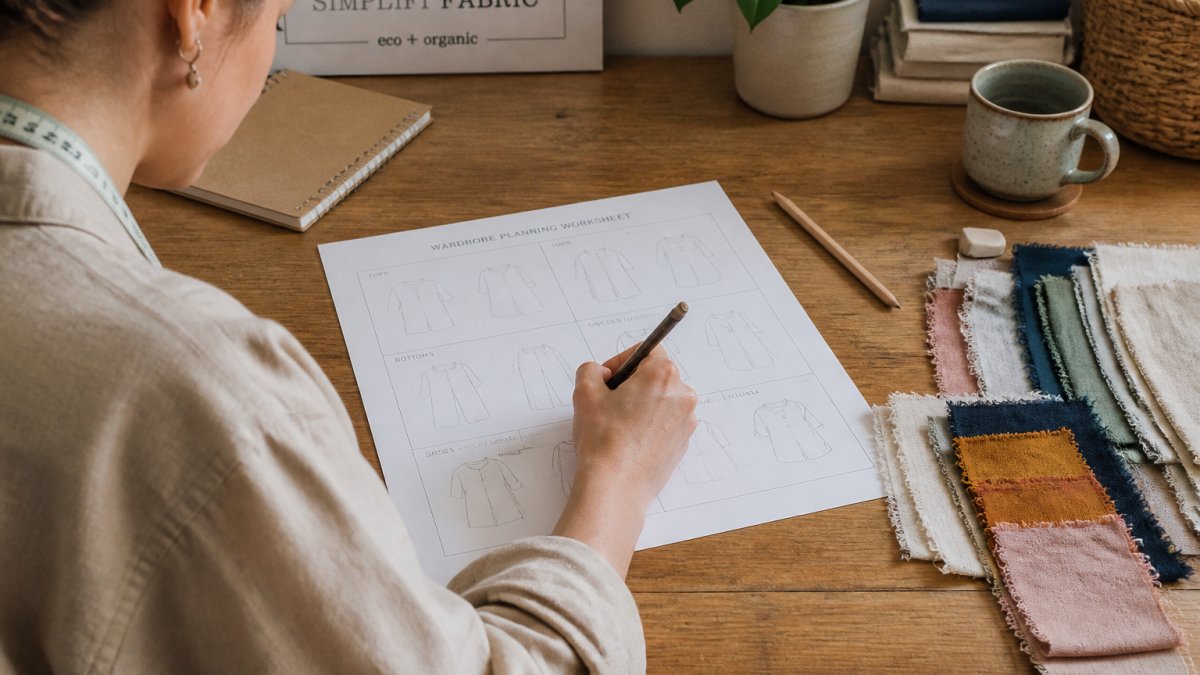
Map your capsule in four columns:
- Tops (tees, blouses, knit layers)
- Bottoms (pants, skirts, shorts)
- Transitional layer (jacket, cardigan, overshirt)
- One occasion piece
For structured planning help, Building The Pattern by Named Clothing is a capsule wardrobe sewing book.

Here are the piece counts and planning figures the article cites for mapping a capsule.
| Item | Value | Note |
|---|---|---|
| Sewn pieces per capsule | 10 to 14 | Across tops, bottoms, layer, occasion item |
| Capsule categories | Four | Tops, bottoms, transitional layer, occasion piece |
| Capsules reviewed | More than 6,700 | Midpoint of 30 clothing and shoe pieces |
| Planning worksheet columns | Four | Tops, bottoms, transitional layer, occasion piece |
| Extra yardage allowance | 10-15% | For layout waste, matching, shrinkage |
Step 3: Pick Capsule Wardrobe Sewing Patterns That Mix and Match
The best capsule wardrobe sewing patterns share one trait: every view works with the others. A pattern with five views gives you a mini wardrobe from one envelope.
Megan Nielsen's Protea Capsule Wardrobe Set is built for exactly this. It includes two necklines, two sleeve options, and two skirt options across five views, from a woven tee to a tiered dress. Sizing runs 0-20 and the skill level is 2/5, so confident beginners can start here.

When choosing patterns, check three things:
- Do the views share a silhouette family?
- Can each top pair with at least two bottoms?
- Does the size range cover your measurements?
The Closet Core Azure pattern offers a dress, skirt, and top in five views. The Wardrobe by Me T-shirt pattern offers a range of neckline, sleeve, and body length options.
Step 4: Choose Fabric Choices for a Capsule Wardrobe
Fabric choices for a capsule wardrobe decide whether pieces get worn. A tight color palette is the fastest route to mix-and-match success. Pick a color base of two neutrals plus two accent shades, then buy woven fabric that suits each garment type.
For tops and dresses, light to midweight wovens work well: linen, cotton poplin, double gauze, and Tencel twill. If you plan to sew with organic cotton, these tips for sewing with organic cotton cover what to know. For layering pieces, choose a midweight that holds shape through repeat wear. For bottoms, look for a stable woven with enough body to hold a crease, such as cotton canvas, linen blend, or a midweight twill.
Most capsule sewists find that a fabric plan prevents both overspending and unused yardage. Build a simple fabric-and-notions worksheet before you buy:
- List each planned garment and its required yardage for your size and view.
- Note the main fabric, lining or interfacing, thread, buttons, zippers, and any specialty notions.
- Add 10-15% extra yardage for layout waste, matching, and shrinkage.
- Check your stash first and mark what you can use before shopping.
A common pattern is to assign one neutral fabric family to your bottoms and one to your tops, then use accent fabrics for the pieces you wear closest to your face. This keeps the palette cohesive without making every garment look the same.
Practical rules to follow:
- Buy enough yardage for the largest view you plan to sew
- Prewash everything so shrinkage happens before cutting
- Keep a swatch card of your palette in your sewing supplies
- Record the fabric weight, fiber content, and care instructions for each piece
Simplifi Fabric stocks organic and ethically sourced textiles.
Protea Capsule Wardrobe Set - Megan Nielsen Patterns - Sewing Pattern →
Step 5: Sew in Modules and Test Outfit Combinations
Sewing in modules beats sewing garment by garment. A module is a small group of pieces that work together, such as one top, one bottom, and one layer. TomKat Stitchery's fall 2026 capsule describes a maker building three mix-and-match modules across seven new sewing projects.
Here is a workable order:
- Sew the module you will wear soonest.
- Finish all pieces in that module before starting the next.
- Test outfit combinations on real days, not in front of the mirror.
- Note which pairings felt off, then adjust the next module.
This workflow catches problems early. If two tops only work with one skirt, you know before you cut the third.
Step 6: Fit Adjustments and Alterations That Keep Pieces Wearable
Fit adjustments are what separate a handmade wardrobe from a pile of finished garments. A piece that pulls at the shoulder or gaps at the back will not get repeat wear, no matter how good the fabric is.
Start with a toile for any new pattern. Then adjust in this order:
- Length (hem and sleeve)
- Bust or chest ease
- Waist position
- Shoulder slope
Indie pattern sizing varies between designers, so measure the finished garment, not just your body. This guide to how to read indie pattern sizing helps you make fit adjustments so capsule pieces stay wearable.
For inclusive fit, work from your own measurements rather than a single size label. Most patterns include a finished-garment measurement chart; compare that to your body plus the ease you want. If your bust and hip fall into different sizes, choose the size that fits your upper bust and then adjust the bust and waist. Common adjustments include:
- Full bust adjustment: adds width and length over the bust without changing the shoulder fit.
- Swayback adjustment: removes excess fabric at the center back for a closer fit.
- Thigh or seat adjustment: adds room through the hip and thigh on pants and skirts.
- Bicep adjustment: adds circumference to sleeves for comfort and mobility.
For comfort and mobility needs, consider elastic waistbands, side-seam pockets, and closures that are easy to reach. A garment you can put on independently is more likely to stay in rotation.
Keep alterations simple. Let out a seam, shorten a hem, or reshape a neckline. Small fixes keep a garment in rotation for years. After wearing a new piece two or three times, note any pull points or gaping, then adjust the pattern before you sew it again.
Step 7: Apply Zero Waste Garment Sewing to Every Cut
Zero waste garment sewing means planning your layout so offcuts stay minimal. It is the step most capsule guides skip, and it changes both your fabric bill and your scrap bin.
Try these techniques:
- Nest pattern pieces before cutting, not after
- Use scraps for pockets, facings, and drawstrings
- Save small offcuts for patchwork or repairs
- Choose patterns with simple, rectangular cuts
A year-round capsule built this way also cuts how often you buy new material.
Watch out: cutting before you check grainline and nap wastes more fabric than any layout mistake. Mark direction on every piece first.
Shop Patterns and Organic Fabric for Your Capsule
A capsule wardrobe that lasts comes down to three choices: patterns that mix, fabric that wears well, and cuts that waste little. Get those right and the sewing plan runs itself.
Simplifi Fabric offers organic textiles, indie sewing patterns, and notions, shipping worldwide from Ontario. The shop carries the Protea capsule set and the Named Clothing capsule book.
Ready to start your sewing plan? Shop patterns and organic fabric at Simplifi Fabric and build a wardrobe you will wear on repeat.
Frequently Asked Questions
How many pieces should a capsule wardrobe have?
There is no single number that works for everyone. A 2026 capsule plan from Sewing.com suggests 10 to 14 sewn pieces split across tops, bottoms, a transitional layer, and one occasion item. A separate review of more than 6,700 capsules found a midpoint of 30 clothing and shoe pieces. Start with a piece count you can actually sew and wear, then adjust after your first module.
How do I plan a capsule wardrobe before sewing?
Audit your closet first, photographing and categorizing what you already wear, then set style goals and a color base. Build a wardrobe planning worksheet that lists each garment, its pattern, and its fabric so you avoid duplicates. Choose capsule wardrobe sewing patterns that share fabric types and silhouettes, and sew one small module at a time so you can test outfit combinations before committing to the next set of projects.
What fabrics are best for a sustainable capsule wardrobe?
Pick fabrics that suit the garment and hold up to repeat wear. Light to midweight wovens such as linen, cotton poplin, chambray, and double gauze work well for dresses, skirts, and tops, while medium-weight jersey with 15 to 20 percent stretch suits tees. For fabric choices for a capsule wardrobe, favor organic and ethically sourced textiles in a tight color palette so every piece mixes with the rest.
How do I reduce fabric waste when sewing clothes?
Plan your cutting layout before you buy fabric, nest pattern pieces closely, and keep scraps for facings, pockets, or patchwork. Zero waste garment sewing starts at the pattern stage: choose designs with simple shapes and few pieces, and check the yardage for your size before ordering. Leftover pieces can become bias binding, drawstrings, or small accessories rather than landfill.
Start with one module and one fabric order. Simplifi Fabric offers ethically sourced organic textiles, a curated range of indie sewing patterns, and notions for all skill levels, with worldwide shipping. Get started with Simplifi Fabric and sew a capsule wardrobe that earns its place in your closet.
