

Last Updated: November 7, 2026
Quick Summary
You can finish raw edges on linen without a serger using a zigzag stitch, which is the fastest option for everyday seams. For lightweight linen where the inside may show, a French seam fully encloses the raw edge. For necklines, armholes and hems, bias binding gives a tidy, durable finish.
- Use a medium zigzag stitch of about 2 mm wide and 2 mm long on a scrap of the same linen first.
- Stitch close to the raw edge so the zigzag catches all loose threads.
- Trim a French seam allowance to about 3 mm before folding and sewing the second seam.
- Stretch bias binding slightly on curves so it lies flat without ripples.
- Pre-wash fabric before cutting, because linen shrinks.
Table of Contents
- Why Linen Frays and Why It Needs Finishing
- What You'll Need Before You Start
- Choosing the Right Seam Finish for Linen
- Step-by-Step: Zigzag Stitch Seam Finish
- Step-by-Step: French Seam Tutorial for Linen
- Binding Raw Edges with Bias Tape
- Common Mistakes and How to Fix Them
- Finish Your Next Linen Project with Confidence
- Frequently Asked Questions
Why Linen Frays and Why It Needs Finishing
Linen is a strong fibre, but its raw edges fray quickly. Each cut exposes loose threads that unravel with every wash and wear. Learning how to finish raw edges keeps seams neat and garments lasting longer.
Linen twill, like the Linen Organic Cotton Twill in Pistachio, still frays along cut edges, so the same finishing methods apply.

Finishing matters most on seams that take daily stress, such as side seams, armholes and crotch seams. Without a finish, these edges can fray and weaken the seam over time.
What You'll Need Before You Start
You do not need a serger to finish linen neatly. Most finishes work with a standard home sewing machine and a few simple tools.
- A standard sewing machine with a zigzag stitch
- Matching thread, cotton or polyester
- Sharp fabric scissors
- Scalloped pinking shears for trimming seam allowances
- Pins or clips
- A bias binding for enclosed edges
The Midnight Edition Lightweight Scalloped Pinking Shears from LDH Scissors are a good choice for trimming seam allowances.

For edges that need a clean, enclosed look, a 2cm Popette Indian Handloom Cotton Bias Binding from Merchant & Mills works well. It is 100% cotton and sold per meter.
Wash your fabric before cutting. Linen shrinks, and pre-washing prevents surprises after the garment is finished.
Choosing the Right Seam Finish for Linen
Pick a seam finish based on how much the seam will be washed and stressed and whether the inside of the garment will be visible.
- Zigzag stitch: Best for everyday seams on midweight linen, linen twill, and linen-cotton blends. It adds almost no bulk, works on straight and gently curved seams, and survives frequent washing. It is the fastest finish and the most forgiving for beginners.
- French seam: Best for lightweight, soft, or sheer linen where the inside of the garment may show. It fully encloses the raw edge, so there is nothing to fray. It adds bulk and is difficult to sew on tight curves, so avoid it on heavy linen, thick twill, and curved armholes or crotch seams.
- Bias binding: Best for edges that will be seen or that need extra strength, such as necklines, armholes, hems, and unlined jackets. It encloses the raw edge and can be decorative, but it adds the most bulk and takes the longest to sew.
- Overcasting by hand: A slow but effective option for small areas, curved seams, or fabrics too delicate for a dense machine zigzag. A simple whip stitch over the raw edge holds loose linen threads in place without adding stiffness.
A practical decision order for linen: if the seam is straight and hidden, zigzag it. If the seam is straight and the inside will show, use a French seam. If the edge is curved, visible, or takes heavy stress, bind it. If the area is small or the fabric is too delicate for a dense zigzag, overcast by hand.

Fiber and construction change the answer. Pure linen and linen twill fray aggressively and benefit from a finish that fully catches the loose threads, so stitch close to the raw edge. Linen-cotton blends fray slightly less and tolerate a wider zigzag. Hand-dyed or garment-dyed linen can bleed during the first washes, so pre-wash a test scrap with the finish applied before committing to the garment. Delicate seams, such as those on lightweight blouses, favor French seams because they enclose rather than compress the edge.
Test the finish on a scrap of the same fabric before sewing the real project.
Each finish suits a different seam, so match the method to the fabric weight, seam shape and whether the inside will show.
| Finish | Best for | Key difference |
|---|---|---|
| Zigzag stitch | Everyday seams on midweight linen and blends | Adds almost no bulk and is the fastest finish |
| French seam | Lightweight, soft or sheer linen | Fully encloses the raw edge but adds bulk |
| Bias binding | Necklines, armholes, hems and unlined jackets | Encloses the edge and can be decorative, but takes the longest |
| Overcasting by hand | Small areas, curves and delicate fabric | Slow, but avoids stiffness from a dense zigzag |
Step-by-Step: Zigzag Stitch Seam Finish
This is the quickest way to finish raw edges on linen without a serger.
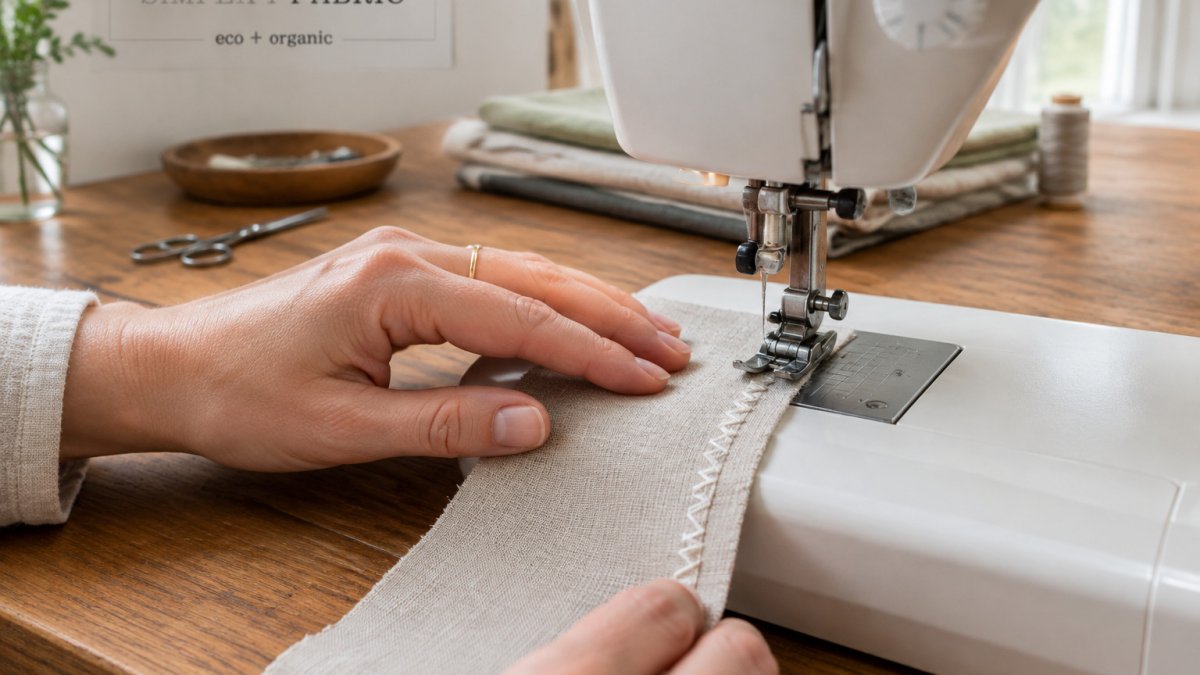
- Set your machine to a medium zigzag stitch, about 2 mm wide and 2 mm long.
- Test the stitch on a scrap of the same linen.
- Sew the seam with a standard seam allowance, then press it open.
- Stitch close to the raw edge, catching all loose threads, so the zigzag covers the edge.
- Trim any loose threads close to the stitching.
Expected result: A flat, durable edge that stops fraying.
Watch out: If your zigzag is too wide, the fabric can pucker.
Step-by-Step: French Seam Tutorial for Linen
A French seam encloses the raw edges inside the seam. It is ideal for soft linen garments.
- Place the wrong sides of the fabric together and sew a seam about 6 mm from the raw edge.
- Trim the seam allowance to about 3 mm.
- Press the seam, then fold the fabric so the right sides face together, enclosing the trimmed edges.
- Sew a second seam at the standard seam allowance, about 9 mm from the first.
- Press the seam to one side.
Expected result: A clean, enclosed seam with no raw edges showing.
Watch out: French seams add bulk. Avoid them on heavy linen or curved seams.
Binding Raw Edges with Bias Tape
Bias binding gives linen a neat, finished edge. It works well on necklines, armholes and hems.
- Cut a strip of bias tape slightly longer than the edge.
- Open one fold of the binding and pin it to the right side of the fabric, aligning the raw edges.
- Stitch along the fold line.
- Fold the binding over the raw edge to the wrong side and pin it.
- Topstitch close to the folded edge to secure the binding.
Expected result: A tidy, bound edge that resists fraying.
Watch out: Stretch the binding slightly on curves so it lies flat without ripples.
Common Mistakes and How to Fix Them
Most problems with linen finishes come from a few common errors, and the fix usually depends on the fiber and construction rather than on the machine alone.
- Puckering: Usually caused by a stitch that is too wide or tension that is too tight. Reduce the stitch width and adjust tension. On lightweight linen, a shorter zigzag (about 1.5 mm wide) lies flatter than a wide one.
- Fraying through the finish: Caused by stitching too far from the edge. Stitch closer to the raw edge so the zigzag catches every loose thread. On heavily fraying linen twill, trim the seam allowance to about 6 mm before stitching.
- Bulky seams: Often from skipping the trim step in a French seam. Trim the seam allowance to about 3 mm before folding. On thick linen or twill, a French seam may simply be too bulky, so switch to a zigzag or bound finish.
- Uneven binding: Caused by pinning carelessly. Pin every few centimetres and stitch slowly. On curves, stretch the binding slightly so it lies flat without ripples.
- Color bleeding onto the finish: Hand-dyed and garment-dyed linen can release dye during the first washes. Pre-wash a test scrap with the finish applied, and wash the finished garment separately the first few times.
- Stiff or scratchy edges: A dense zigzag or heavy binding can make linen feel stiff against the skin. On garments worn next to the body, choose a lighter finish or overcast by hand.
A common pattern is to test the finish on a scrap, wash it two or three times, and check that the edge still holds before sewing the garment. Linen softens with washing, and a finish that looks right when new should still hold up after repeated laundering. If a finish fails the wash test, move to a more enclosing option such as a French seam or bias binding rather than patching the failed edge.
Finish Your Next Linen Project with Confidence
Finishing raw edges on linen does not require a serger. A zigzag stitch, a French seam or bias binding can all give clean, durable results with a standard machine.
Start with a test scrap, choose the finish that suits your garment, and take your time with each seam. Simplifi Fabric carries the Linen Organic Cotton Twill in Pistachio and Shiraz, along with the bias binding and pinking shears used in this guide.
Frequently Asked Questions
How do you stop linen from fraying without a serger?
A zigzag stitch run along the raw edge, a French seam, or a bias-bound edge will all stop linen from fraying without a serger. Set your machine to a narrow zigzag, stitch about 3 mm from the edge, and trim the excess fabric close to the stitching. For seams, the French seam encloses the raw edges entirely. Each method works well on linen, and you can choose based on the garment and how much time you want to spend.
What is the easiest seam finish for linen?
The zigzag seam finish is usually the quickest option because it needs only your regular sewing machine and one pass along each raw edge. It works well for lightweight and medium-weight linen. A French seam takes longer but gives a neater, fully enclosed finish that suits garments worn against the skin. Start with zigzag on a test scrap to check the stitch width before finishing your project.
Is a zigzag stitch good for finishing linen seams?
Yes. A zigzag stitch is one of the most practical ways to finish linen seams at home. Use a stitch width of about 3 mm and a length of around 2 mm so the thread holds the weave without puckering the fabric. Sew close to the raw edge but not over it, then trim away any loose threads. This method is especially useful when you want a finish that lies flat and does not add bulk.
How do you make a French seam in linen?
Place the wrong sides of the fabric together, sew a seam about 6 mm from the raw edge, and trim the seam allowance to about 3 mm. Press the seam flat, then fold the fabric so the right sides face each other, enclosing the trimmed edges. Sew again at a 9 mm seam allowance, which traps the raw edges inside. Press well before continuing. French seams suit lightweight linen that needs a clean, enclosed finish.
