

Quick Summary
Natural fibers are not automatically healthier to wear, and the research does not support a blanket claim either way. Skin reactions depend more on physical and chemical factors such as friction, trapped moisture, and dyes or finishes than on whether a fiber is natural. Judge fabrics by fiber, finish, and how your own skin responds.
- Wool's scaly surface can create friction that triggers itching, especially in people with eczema.
- Synthetic fibers like polyester repel water, so sweat can sit on the skin and raise humidity.
- Dyes, wrinkle-resistant resins, and antimicrobial finishes can remain on natural fabrics after manufacturing.
- Wash new fabric before sewing, preferably twice, to remove sizing, dyes, and finishing residues.
- Test a small piece against your skin for a day before cutting a full garment.
Table of Contents
- What the Evidence Says About Natural Fibers and Health
- Natural Fibers vs Synthetic Fibers: Where Each Performs Better
- The Most Breathable Fabrics for Clothing
- Cotton vs Polyester for Skin: What Changes Next to Your Body
- Best Fabrics for Sensitive Skin, Allergies and Eczema
- Chemical Finishes, Dyes and Microfibers: The Trade-Offs Labels Miss
- Choosing Your Next Garment: Matching Fiber to Skin and Season
- Frequently Asked Questions
What the Evidence Says About Natural Fibers and Health
Natural fibers are not automatically healthier to wear, and the research does not support a blanket claim either way. A 2021 review in Skin Research and Technology reported that wool and synthetic fibers such as polyester and nylon can worsen atopic dermatitis symptoms, but the review does not establish that every natural fiber is better for every skin type (Future of Functional Clothing for an Improved Skin Microenvironment in Atopic Dermatitis). That distinction matters: a fiber's origin tells you little on its own about how it will feel against sensitive skin.
The mechanism behind most skin reactions is physical and chemical, not botanical. Wool's scaly surface can create friction and micro-abrasions that trigger itching, especially in people with eczema. Synthetic fibers like polyester are hydrophobic, they repel water, so sweat can sit on the skin surface, raising humidity and temperature in the microclimate next to your body. That trapped moisture can soften the skin barrier and make it more vulnerable to irritants. Cotton and linen, by contrast, absorb moisture and allow air to move through the weave, which helps keep that microclimate drier and cooler.
But natural origin does not guarantee a chemically clean garment. Dyes, wrinkle-resistant resins, antimicrobial finishes, and formaldehyde-based treatments can remain on fabric after manufacturing, and reporting on natural-fiber clothing has noted that such chemicals can penetrate skin at sufficient exposure (The Wall Street Journal's coverage of natural-fiber clothing and chemical concerns). The specific chemicals and exposure levels are not established in the available sources, so treat that concern as a reason to ask questions about finishing, not as proof of harm.
Consumer perception often runs ahead of the evidence. One survey reported that 83% of consumers consider cotton and other natural fibers safe for the environment, but that figure measures environmental perception, not skin health (Cotton Incorporated Global Lifestyle Monitor survey). Environmental safety and skin safety are separate questions, and neither is settled by a fiber's name alone.
The practical takeaway: judge a fabric by its fiber, its finish, and how your own skin responds, rather than by the word "natural" alone. If you have a diagnosed skin condition, a dermatologist can help you identify which specific fibers and finishes to avoid, general guidance cannot replace that individual assessment.
Natural Fibers vs Synthetic Fibers: Where Each Performs Better
Natural fibers generally perform better on breathability and moisture handling, while synthetics tend to offer durability and stretch. Which matters more depends on what you are making and how you will wear it.
Cotton, linen and hemp allow air to move through the weave and absorb moisture, which helps during warm weather or active wear. Polyester and nylon hold their shape, resist wrinkling and dry quickly, which suits activewear, outerwear and garments that need to survive frequent washing.
Synthetics can trap heat and moisture against the skin, which some wearers find uncomfortable in summer. Natural fibers can stretch out or shrink, and they may take longer to dry.
For a sewing project, pick the fiber for the job. A cotton jersey suits a relaxed everyday tee, while a polyester blend may suit a performance layer. Blends combine both sets of traits and are common in ready-to-wear clothing.
The Most Breathable Fabrics for Clothing
Linen and lightweight cotton are among the most breathable everyday fabrics, with hemp and open-weave cottons close behind. You can see how hemp performs in garment making on our Sustainable Hemp Fabric for Garment Making page. Breathability depends on weave and weight as much as fiber, so a tightly woven heavy cotton can feel warmer than a loose linen.
Good choices for warm-weather garments include:
- Linen: Strong, airy and quick to release moisture. It softens with washing and suits summer shirts and trousers.
- Double gauze cotton: Two fine layers of cotton create an airy, crinkled texture. The 120 GSM weight suits blouses, dresses and sleepwear.
- Hemp: Durable and breathable, with a slightly crisp hand that softens over time. A 12 oz hemp canvas is better for structured bags or home décor than for next-to-skin wear.
- Cotton jersey: Stretchy and soft, with good moisture absorption for everyday tops.
Simplifi Fabric carries several of these options, including our Organic Cotton Double Gauze at 120 GSM ($9.50) and our Natural Stonewashed Linen at 340 GSM ($55.20). Check each listing's weight and fiber content against the garment you have in mind.
Cotton vs Polyester for Skin: What Changes Next to Your Body
Cotton is typically softer and more breathable against the skin, while polyester is more resistant to wrinkling and stretch-related wear. For sensitive skin, many people find cotton more comfortable, though this is a general pattern rather than a rule for everyone.
Polyester does not absorb moisture the way cotton does. Sweat can sit on the surface, which some wearers find clammy. Cotton absorbs moisture but can stay damp longer, which can be a problem during intense exercise.
Neither fiber is ideal for every situation. A cotton-polyester blend often balances softness, shape retention and moisture handling. If skin irritation is your main concern, start with a 100% cotton test piece before committing to a full garment.
Oragnic Cotton Jersey Knit - Natural →
Best Fabrics for Sensitive Skin, Allergies and Eczema
People with sensitive skin, allergies, or eczema usually do best with soft, breathable, low-irritant fabrics that have been washed thoroughly before wear. But "natural" is not a single performance category, cotton, wool, linen, and silk behave very differently against reactive skin, and the finish on a garment can matter as much as the fiber itself.
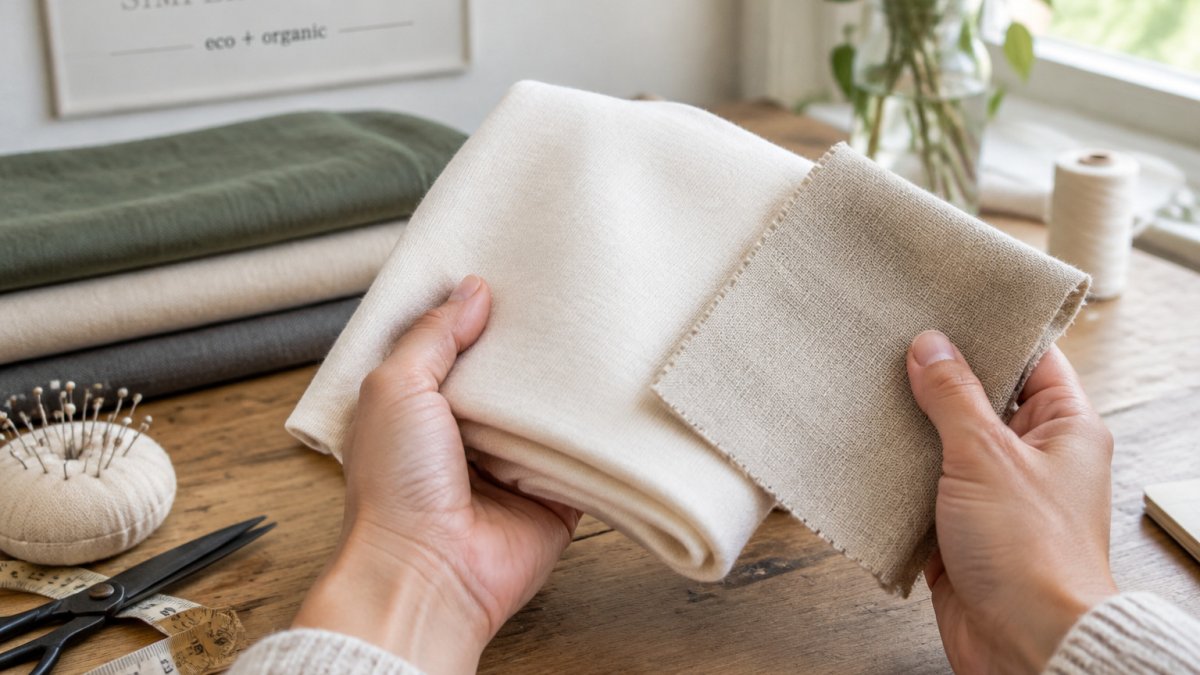
Cotton is the most common starting point because it is soft, breathable, and absorbs moisture without much friction. Long-staple and organic cottons tend to have smoother surfaces and fewer residual processing chemicals. Linen is highly breathable and quick-drying, which helps in heat and humidity, but its crisp hand can feel abrasive until it softens with washing. Silk is smooth and low-friction, which some eczema sufferers find comfortable, though it requires gentle detergents and may not tolerate hot washing. Wool is the most divisive: fine merino can be tolerable for some, but coarse wool fibers commonly trigger itching and should be avoided next to the skin if you have a history of wool sensitivity.
Dyes and finishes are frequent culprits. Dark and saturated dyes, wrinkle-resistant treatments, and antimicrobial finishes can leave residues that irritate skin. Choosing undyed, naturally colored, or low-impact-dyed fabrics reduces that exposure. Our Best Organic Fabrics for Sensitive Skin guide walks through the gentlest options. Certification can help: GOTS (Global Organic Textile Standard) and OEKO-TEX Standard 100 are standards that some of our listed fabrics carry. Neither certification proves a fabric suits every skin type, but both give more information than a fiber name alone.
Practical steps that matter as much as fiber choice:
- Wash new fabric before sewing, preferably twice, to remove sizing, dyes, and finishing residues.
- Choose unfinished or minimally finished fabrics where possible, and avoid wrinkle-resistant or stain-repellent treatments for next-to-skin garments.
- Avoid wool next to the skin if it has caused itching before; use it in outer layers instead.
- Test a small piece against your skin for a day before cutting a full garment.
- Wash finished garments with fragrance-free, dye-free detergent and skip fabric softeners, which can leave irritating residues.
Watch out: a fabric labeled "organic" can still carry reactive dyes or finishes, so check the full certification and ask the supplier about processing if your skin is highly reactive.
If you have a diagnosed skin condition, check with a dermatologist about specific fibers rather than relying on general guidance.
Chemical Finishes, Dyes and Microfibers: The Trade-Offs Labels Miss
A fiber label tells you the material, not the finishing. Textile finishes such as wrinkle resistance, stain repellence and flame retardancy, along with dyes, can affect how a fabric feels and how it interacts with skin. A natural fiber with heavy finishing may behave differently from an untreated one.
Microfibers add another layer. Synthetic microfibers shed during washing, and that shedding is an environmental concern even where skin contact is not an issue. Natural fibers are generally described as biodegradable and do not release microplastics as they break down, according to a University of San Francisco sustainability blog (University of San Francisco, Why are People Switching to Natural Fiber Clothing?). That is a general statement, not a measured study, so weigh it accordingly.
Look for certifications that address processing. GOTS (Global Organic Textile Standard) covers organic fiber content and restricts certain processing chemicals. OEKO-TEX certification tests finished textiles for harmful substances. Neither certification proves a fabric suits every skin type, but both give more information than a fiber name alone.
Choosing Your Next Garment: Matching Fiber to Skin and Season
Start with the fabric's job, then the fiber. For hot weather and sensitive skin, a lightweight organic cotton or linen is usually the safest bet. For a soft, layered everyday top, cotton jersey with a little stretch works well. For a structured bag or home project, hemp canvas holds its shape.
Some simple matching rules:
- Summer, sensitive skin: Organic cotton double gauze or linen.
- Everyday stretch tops: Organic cotton jersey.
- Structured items: Hemp canvas.
- Active wear: Consider a synthetic or blend for stretch and quick drying, and test it on skin first.
Simplifi Fabric's range covers these fiber types, with listings that state fiber content, GSM and width so you can compare before you buy. Check each product page for current availability.
Whatever you choose, wash it before sewing, test it against your skin, and let the fiber's behavior, not its label, decide the garment.
Frequently Asked Questions
Are natural fibers better for your skin than synthetic fibers?
Not automatically. Research has linked wool and some synthetic fibers such as polyester and nylon with worsened atopic dermatitis symptoms in some people, which suggests fiber type matters for certain skin conditions. However, a natural origin alone does not guarantee comfort. Natural fibers can still cause irritation, and textile finishes or dyes can affect skin regardless of fiber. The most reliable approach is to notice how your own skin responds to a fabric and choose soft, breathable options that suit your condition.
Is cotton or linen better for sensitive skin?
Both are commonly chosen for sensitive skin because they are breathable and tend to feel gentle against the body. Cotton is soft and easy to care for, which makes it a good everyday choice. Linen is more textured and absorbs moisture well, which can help in warm weather. Look for untreated or low-finish versions if you react to chemicals, and test a small piece first, since individual reactions vary.
Can wool cause allergies or skin irritation?
Yes. Wool can irritate some people, and research has associated wool with worsened atopic dermatitis symptoms in some people. Coarser wools are more likely to cause itching than fine or processed wools. If you suspect wool is the problem, try a fine merino or a wool blend in a lightweight knit against bare skin, and watch for redness or itching over several wears.
What is the healthiest fabric to wear?
There is no single healthiest fabric for everyone. Untreated cotton and linen are widely chosen for breathability and comfort, while fine merino suits many people who tolerate wool. Synthetics can be useful for activewear that moves moisture away from the skin. The healthiest choice depends on your skin, the climate and how the garment is made and finished.
