

Table of Contents
- What Makes Indie Sewing Patterns Beginner-Friendly
- How to Read Indie Sewing Patterns and Understand Difficulty
- Independent vs. Commercial Pattern Designers
- Essential Sewing Skills for Beginner Garment Construction
- Best Online Stores for Indie Patterns That Support Beginners
- Beginner Sewing Pattern Tips and Common Pitfalls to Avoid
- Digital vs. Paper Patterns for Beginner Sewers
- Frequently Asked Questions
- Conclusion
Last Updated: September 25, 2026
What Makes Indie Sewing Patterns Beginner-Friendly
Indie sewing patterns beginner collections have transformed how beginners approach garment construction. Unlike mass-produced patterns from established companies, indie sewing patterns often feature design choices specifically tailored for newer sewists: elastic-waist bottoms, pull-on dresses without zippers, and simple gathered silhouettes that forgive minor fit inconsistencies. According to Sewing.com's 2026 collection analysis, 26 distinct indie sewing pattern collections have been specifically filtered by skill level to assist new sewists, signaling a deliberate shift toward accessibility within the indie design community.
The rise of indie designers creating beginner-friendly patterns reflects a broader industry trend. Winslets' 2026 digital pattern guide documents how many indie PDF patterns are considered beginner-friendly because they include step-by-step instructions, visual illustrations, and clearly marked skill levels. This democratization of pattern design means beginners now have access to modern, thoughtfully constructed garments that rival commercial offerings in quality while often exceeding them in design creativity.
The beginner-friendliness of any indie sewing pattern depends on clear instructions and thoughtful design choices. Understanding what to look for when evaluating indie patterns helps you build a collection that grows with your skills.
Clear Instructions and Visual Diagrams
Instruction quality separates patterns that work from those that don't. Indie designers who prioritize beginner success include detailed step-by-step instructions paired with clear diagrams showing seam construction, placement, grain lines, and assembly order.
Strong indie patterns include photographs or illustrations demonstrating techniques like inserting sleeves, binding necklines, or setting in zippers. Patterns lacking these visuals force sewists to guess, leading to mistakes and abandoned projects.
Skill Level Labeling and Size Ranges
Reputable indie designers clearly label patterns with skill levels: beginner, confident beginner, intermediate, or advanced. A pattern marked "confident beginner" typically assumes the maker has completed one or two garments and understands basic techniques like seam finishing and sleeve insertion.
Patterns offered in sizes XS through 3XL accommodate different body types and allow sewists to find their true measurements. Limited size ranges sometimes indicate patterns designed for experienced sewists who can draft custom fit adjustments.
How to Read Indie Sewing Patterns and Understand Difficulty
Rather than relying solely on designer-assigned skill labels, beginners benefit from a standardized difficulty assessment framework they can apply to any pattern, indie or commercial.
Decoding Pattern Envelope Information
The pattern envelope back lists required materials, finished measurements, and sewing level. Beginners should focus on: the number of pattern pieces, the presence of closures like zippers or buttons, and whether the pattern requires fit adjustments.
Patterns with fewer than eight pieces typically involve simpler construction. Garments with elastic waists or drawstring closures require less precision than fitted waistbands. If the envelope mentions "fitting" or "alterations," the pattern assumes intermediate skills.
Building a Standardized Difficulty Checklist
Instead of trusting a single skill-level label, use this framework to objectively assess pattern difficulty:
Construction Complexity (0-3 points)
- 0 points: Fewer than 6 pattern pieces; straight seams only; no closures
- 1 point: 6-10 pieces; one closure type (elastic, drawstring, or simple button band)
- 2 points: 11-15 pieces; multiple closure types or one complex closure (zipper, buttonholes)
- 3 points: 16+ pieces; multiple complex closures; curved seams or set-in sleeves
Fit Precision Required (0-3 points)
- 0 points: Generous ease (2+ inches); loose, forgiving silhouette
- 1 point: Moderate ease (1-2 inches); minor fit adjustments possible
- 2 points: Close fit (under 1 inch ease); requires accurate measuring and basic alterations
- 3 points: Fitted garment; requires pattern grading or significant alterations for non-standard measurements
Technique Demands (0-3 points)
- 0 points: Straight seaming, hemming, elastic insertion only
- 1 point: One intermediate technique (gathering, simple darts, bias binding)
- 2 points: Two intermediate techniques or one advanced technique (set-in sleeves, buttonholes, slip stitching)
- 3 points: Multiple advanced techniques (tailoring, complex shaping, specialized finishes)
Instruction Clarity (0-2 points deducted)
- Deduct 2 points if the pattern lacks step-by-step diagrams or photos
- Deduct 1 point if instructions are vague about seam placement or assembly order
- Deduct 0 points if instructions include detailed visuals and clear sequencing
Scoring Guide:
- 0-4 points: True beginner (first or second project)
- 5-7 points: Confident beginner (completed 2-3 garments)
- 8-10 points: Early intermediate (comfortable with basic techniques)
- 11+ points: Intermediate or advanced
This framework isolates the specific demands of each pattern. A pattern marked "beginner" might score 6 points if it includes a zipper, while one marked "intermediate" might score only 4 points if it's simply a large garment with minimal technical demands.
Identifying Seam Allowances and Notions Requirements
Most indie patterns use 1.5 cm seam allowances, standard in North American sewing. Some use 1.25 cm allowances, which require slightly more precision when cutting and sewing.
The notions list reveals hidden complexity. A pattern requiring a zipper, bias binding, or interfacing demands techniques beyond basic straight seaming. Beginners should prioritize patterns with minimal notions and confirm they've practiced required techniques.
Independent vs. Commercial Pattern Designers
Commercial patterns have undergone extensive testing with diverse body types and skill levels, with standardized grading systems and thoroughly vetted instructions refined across decades.
Whitcomb Top PDF Pattern - Sew Love →
Indie designers, by contrast, often test patterns with smaller groups and may adjust instructions based on direct feedback. This approach can yield highly personalized, thoughtfully designed patterns that reflect the designer's specific aesthetic and construction philosophy. The downside: some indie patterns suffer from inconsistent drafting or unclear written instructions compared to commercial standards, as noted in PatternReview's 2026 community discussions.
The best indie designers invest heavily in instruction clarity and pattern testing, building loyal followings by prioritizing beginner success and responsiveness to sewist feedback.
Essential Sewing Skills for Beginner Garment Construction
Certain foundational skills determine whether a beginner can successfully complete a garment. Understanding these skills helps sewists choose patterns that match their current abilities.
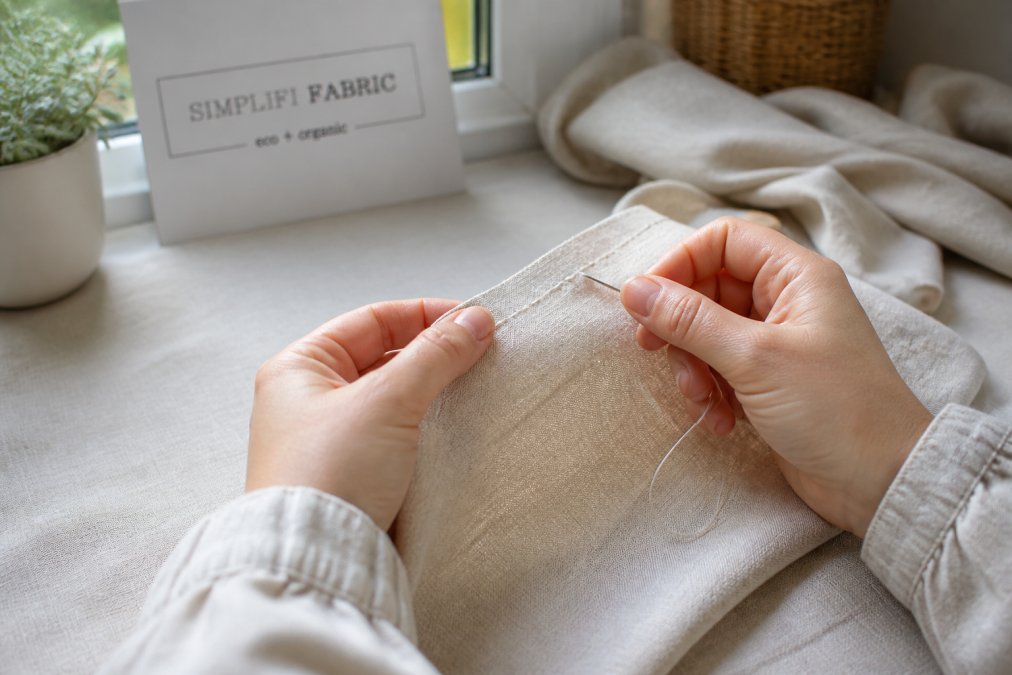
Straight seaming forms the foundation of garment construction.
Best Online Stores for Indie Patterns That Support Beginners
Simplifi Fabric curates a thoughtfully selected collection of indie sewing patterns, stocking patterns from respected indie designers who prioritize clear instructions and modern design.
Beginner Sewing Pattern Tips and Common Pitfalls to Avoid
Successful garment construction depends on preparation and realistic expectations. Many beginners rush into projects without adequate planning, leading to frustration and abandoned garments.
Choosing the Right Fabric for Your Skill Level
Natural, stable fabrics like cotton, linen, and viscose behave predictably and forgive minor sewing imprecision, producing professional-looking garments even if seams aren't perfectly straight.
Making a Test Garment Before Final Fabric
A muslin, a test garment sewn in inexpensive fabric, reveals fit issues, construction problems, and whether the pattern truly suits the maker's measurements.
Digital vs. Paper Patterns for Beginner Sewers
The format of your pattern affects the sewing experience and your likelihood of completing the project successfully. Digital PDF patterns and printed paper patterns each offer distinct advantages and friction points for beginners.
Digital PDF Patterns: Flexibility and Hidden Friction
PDF patterns print at home or at a copy shop, offering flexibility and immediate access. Home printing allows sewists to print only the sizes they need, reducing paper waste. Copy shop printing produces large format sheets that require minimal taping.
Paper Patterns: Familiarity and Immediate Usability
Paper patterns arrive as tissue pieces in a printed envelope, resembling commercial patterns from established companies. They're ready to use immediately without printing, taping, or scale verification. Paper patterns feel tactile and familiar to sewists accustomed to commercial offerings, reducing the learning curve for pattern layout and cutting.
Choosing the Right Format for Your Situation
Choose digital PDF patterns if:
- You have access to a reliable copy shop for professional printing
- You plan to sew the pattern only once or twice
- You want to customize sizing or make pattern modifications
- You prefer instant access and don't want to wait for shipping
- You have limited storage space for paper pattern envelopes
Choose paper patterns if:
- You lack convenient access to large-format printing or prefer to avoid the taping process entirely
- You plan to sew the same pattern multiple times over months or years
- You value the tactile, traditional sewing experience
- You're uncomfortable with digital file management or printing troubleshooting
- You want a pattern that feels like a finished product rather than a DIY assembly project
Hybrid approach: Many experienced beginners purchase their first pattern as a PDF (to test the designer's instruction quality before committing), then buy paper versions of patterns they love for repeated use. This strategy minimizes waste while allowing you to discover your preferred format through experience.
Frequently Asked Questions
What is the easiest indie sewing pattern for a complete beginner?
Pull-on dresses without zippers, elastic-waist bottoms, and simple gathered designs are the most beginner-friendly indie sewing patterns. The Whitcomb Top by Sew Love Patterns is a confident beginner option that works in woven or knit fabrics with multiple sleeve and length choices, making it adaptable to different preferences. Look for patterns marked 'confident beginner' or 'easy' with step-by-step illustrated instructions and video tutorials included.
How do I know if an indie sewing pattern is beginner friendly?
Check for clear skill-level labeling (beginner, confident beginner, intermediate), detailed illustrated instructions with step-by-step guidance, and a comprehensive notions list. The best indie patterns include finished measurements, seam allowance information, and video tutorials. Review user feedback on pattern sites, sewers often note whether fit adjustments are needed. Patterns with PDF layering for print-at-home options and multiple size ranges are typically more beginner-accessible than those requiring complex alterations.
Are indie sewing patterns actually better than commercial patterns for beginners?
Indie patterns can be excellent for beginners when well-drafted, but quality varies. Unlike established commercial standards, some indie patterns may have sloppy drafting or unclear instructions. However, many indie designers now prioritize beginner accessibility with detailed illustrations and step-by-step guidance. The advantage is personalization and modern design; the trade-off is needing to research reviews and skill-level ratings carefully.
What sewing skills should I have before starting an indie pattern?
Confident beginner patterns typically require basic skills: sewing straight seams, understanding seam allowance, pressing fabric, and simple hemming. Many indie patterns teach additional skills like gathering, bias binding, inserting sleeves, and slip stitching through their instructions. Start with patterns labeled 'easy' or 'confident beginner' that feature elastic waists or simple construction. Practice on muslin (a test garment) before cutting into your final fabric to build confidence and identify fit adjustments needed.
Conclusion
Navigating the world of indie sewing patterns as a beginner can seem daunting, but with the right approach, it's an incredibly rewarding experience. By understanding what makes a pattern beginner-friendly, learning to critically assess difficulty, and choosing wisely, you can build a sewing repertoire that is both modern and achievable. Simplifi Fabric offers a curated selection of indie patterns designed with sewists of all levels in mind, providing clear instructions and contemporary styles to inspire your creative journey. Remember to always consider your current skill level, choose fabrics that will forgive minor errors, and don't hesitate to make a test garment. Happy sewing!