

Last Updated: October 22, 2026
Quick Summary
Sustainable fabric costs more because it requires smaller production volumes, advanced processing techniques, stricter labor standards, and certification processes that conventional textiles avoid. These genuine differences in production practices, from environmental protection to fair wages, are reflected directly in the price you pay.
- Organic cotton produces lower yields per acre than conventional cotton, requiring more land and labor to achieve the same volume
- GOTS, Oeko-Tex, and FSC certifications require rigorous testing and documentation at every production stage
- Sustainable fabric production uses low-impact dyes and careful water management instead of chemical shortcuts
- The sustainable-fabrics market is projected to grow from $9.20 million in 2026 to $24.71 million by 2035
- Blended fabrics mixing sustainable and conventional fibers offer a more affordable entry point to sustainable materials
Table of Contents
- Why Sustainable Fabric Costs More Than Conventional Textiles
- Why Is Organic Cotton More Expensive Than Conventional Cotton
- Sustainable Fabric vs Conventional Fabric: What You're Actually Paying For
- Understanding Sustainable Fabric Certifications
- How to Choose Sustainable Fabric for Sewing Without Overspending
- Will Sustainable Fabric Prices Come Down
- Frequently Asked Questions
Why Sustainable Fabric Costs More Than Conventional Textiles
Sustainable fabric costs more because it requires fundamentally different production methods, stricter labor standards, and smaller manufacturing volumes than conventional textiles. When you buy sustainable fabric, you're paying for environmental responsibility and ethical practices that conventional production skips. Understanding these cost drivers helps makers make informed choices about where to invest in quality materials.
The sustainable-fabrics market is projected to grow from $9.20 million in 2026 to $24.71 million by 2035, at a compound annual growth rate of 11.60%, according to Market Research Future's sustainable fabrics market projection. This growth reflects increasing demand from conscious consumers, but supply constraints keep prices elevated. Fast fashion accounts for 10% of global CO2 emissions, according to Earth.org's analysis of fashion's environmental impact, which is why many makers are shifting toward sustainable alternatives despite the premium.
At Simplifi Fabric, we've curated a collection of organic textiles and eco-friendly materials specifically for makers who refuse to compromise on ethics. The price difference between sustainable and conventional fabrics isn't arbitrary, it reflects real differences in how materials are sourced, processed, and certified.
Lower Production Volumes and Scale
Sustainable fabrics are produced in smaller quantities than conventional textiles, which eliminates the economies of scale that drive down conventional fabric prices. Mass-production facilities can spread fixed costs across millions of meters of fabric. Sustainable producers, by contrast, work with limited demand and smaller batch sizes. This means each meter carries a higher portion of the overhead.
Conventional cotton production operates at industrial scale. A single facility might produce thousands of tons annually. Sustainable operations often produce hundreds of tons. The cost per unit naturally rises when production volumes are lower. Additionally, sustainable manufacturers frequently invest in specialized equipment designed to minimize environmental impact, equipment that conventional producers don't need and therefore don't purchase.
Advanced Processing and Labor Standards
Sustainable fabric production requires advanced processing techniques that conventional manufacturing avoids. These processes reduce chemical use, minimize water consumption, and ensure proper waste management. Each of these improvements adds cost.
Labor standards also differ significantly. Sustainable producers typically pay fair wages, provide safe working conditions, and offer benefits that conventional manufacturers in lower-cost regions don't. These practices are ethically necessary but economically expensive. Workers in sustainable facilities earn more than workers in conventional mills, and that cost is reflected in the final fabric price.
Why Is Organic Cotton More Expensive Than Conventional Cotton
Organic cotton costs substantially more than conventional cotton because certification requires proof of sustainable practices, reduced yields require more land and labor, and crop rotation practices take time and resources to implement correctly.
Certification and Testing Costs
Organic certification isn't free. Farms must undergo rigorous testing and documentation to prove they meet organic standards. These certifications verify that no synthetic pesticides, herbicides, or genetically modified seeds have been used. The testing process itself, soil analysis, water testing, third-party audits, costs money that gets passed to fabric manufacturers and eventually to consumers.
Certification bodies conduct regular inspections and maintain detailed records. Farmers and mills must document every step of production. This administrative burden increases operational costs. Conventional cotton producers skip these steps entirely, which is why their product costs less.
Reduced Yields and Crop Rotation Practices
Organic cotton produces lower yields per acre than conventional cotton. Without synthetic fertilizers and pesticides, organic farms harvest less cotton from the same amount of land. To produce the same volume of fiber, organic farmers need more acres, more labor, and more time. This scarcity drives up the price of organic cotton fiber at the source.
Additionally, organic farming requires crop rotation, alternating cotton with other crops to maintain soil health. This practice prevents soil depletion but means cotton isn't grown continuously on the same land. The result is reduced supply and higher costs. Conventional farming skips rotation, growing cotton year after year on the same fields (a practice that degrades soil over time but maximizes short-term output).
Sustainable Fabric vs Conventional Fabric: What You're Actually Paying For
The price difference between sustainable and conventional fabric reflects genuine differences in production practices, environmental impact, and labor conditions. Sustainable fabric costs more upfront, but that premium funds practices that conventional production ignores.
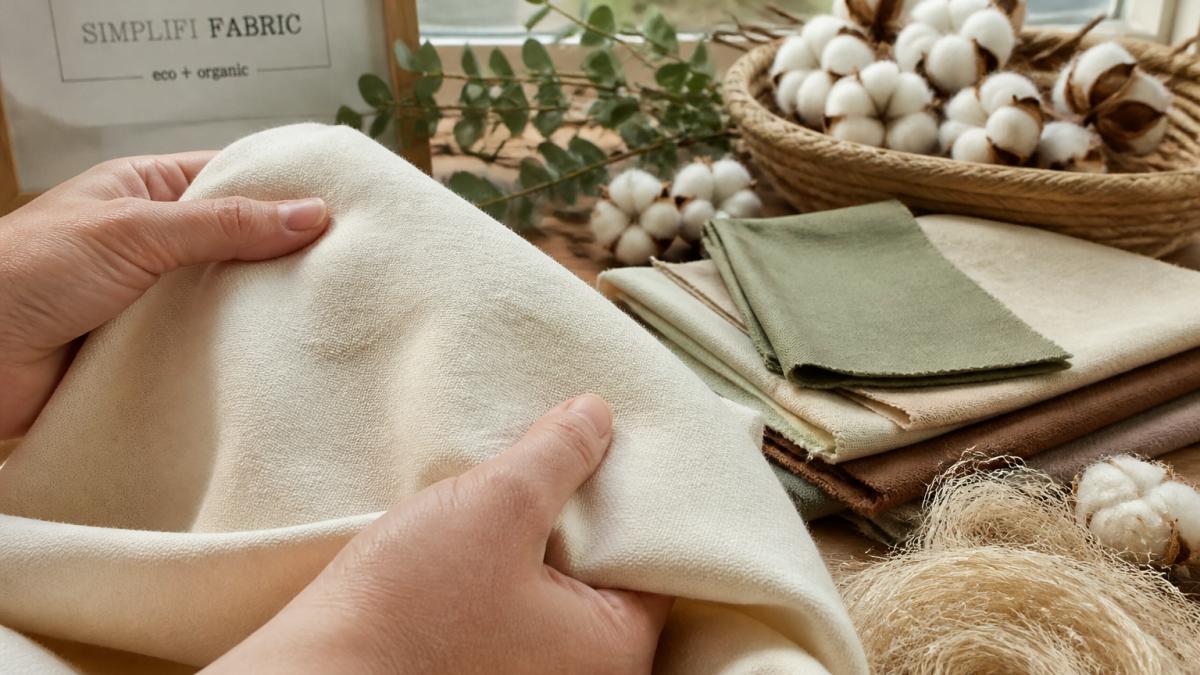
Conventional fabric production prioritizes speed and volume. Mills use synthetic dyes, high-temperature processing, and chemical finishing to achieve consistent results quickly. These shortcuts reduce costs but generate pollution and waste. Sustainable producers use low-impact dyes, careful water management, and natural finishes. These methods take longer and cost more but protect ecosystems.
The environmental cost of conventional fabric production is real, it's simply not reflected in the price tag. Sustainable pricing captures those environmental costs directly. When you buy sustainable fabric, you're paying for production methods that conventional manufacturers externalize as pollution and waste.
Richer countries produce 95.7 pounds of textile waste per person annually, according to UniformMarket's analysis of textile waste statistics, much of it from fast fashion made with conventional fabrics. Sustainable fabric production aims to reduce that waste through better materials and longer-lasting garments.
Quilters Dream Bamboo Batting 121" - Made in USA - Sold Per Half Meter →
Understanding Sustainable Fabric Certifications
Certifications validate that sustainable fabric actually meets environmental and ethical standards. They're not marketing labels, they're third-party verification of production practices. Understanding these certifications helps makers confirm they're paying for genuine sustainability, not greenwashing.
Key Certifications That Justify Higher Prices
GOTS (Global Organic Textile Standard) certifies that fabric is made from organic fibers and processed without harmful chemicals. GOTS certification requires testing at every stage of production. Mills must prove water use is minimized, wastewater is treated, and workers are treated fairly. This certification justifies a significant price premium because it's genuinely difficult and expensive to achieve.
Oeko-Tex Standard 100 certifies that fabric is free of harmful substances. Testing is rigorous and independent. The certification proves the fabric is safe for skin contact and won't off-gas chemicals. Conventional fabrics often contain residual chemicals from processing, Oeko-Tex certification eliminates that risk.
FSC (Forest Stewardship Council) certification applies to fabrics made from wood pulp, like Tencel and viscose. FSC verifies that the wood comes from responsibly managed forests. Without this certification, wood-pulp fabrics may come from forests cleared for agriculture. FSC certification costs more but ensures the material source is sustainable.
Each certification requires ongoing compliance, regular testing, and documentation. These administrative and technical costs are built into the fabric price. Certified sustainable fabrics cost more because certification itself is expensive.
How to Choose Sustainable Fabric for Sewing Without Overspending
Sustainable fabrics don't have to break your budget if you prioritize strategically. Most makers don't need every project in premium sustainable materials. Smart spending means choosing sustainable fabric for key pieces and conventional alternatives for less visible projects.
Blended Fabrics as an Affordable Alternative
Blended fabrics mix sustainable fibers with conventional ones, reducing cost while maintaining environmental benefits. A cotton-linen blend, for example, costs less than 100% organic linen but offers better durability than conventional cotton. Blends let makers access sustainable materials at lower price points.
Simplifi Fabric's Winter Cabin Organic Cotton Linen combines 47% linen, 11% recycled linen, and 42% organic cotton for $37.00 per half meter. This blend delivers sustainable fibers at a more accessible price than pure organic alternatives. The recycled linen component specifically reduces the need for new fiber production, lowering environmental impact and cost simultaneously.
Prioritize Your Spending on Key Projects
Not every project needs premium sustainable fabric. Reserve sustainable materials for garments you'll wear frequently and keep long-term. A dress you'll wear for years justifies premium sustainable fabric. A muslin test garment doesn't.
For quilting projects, consider sustainable batting as a core layer where it matters most. Simplifi Fabric's Quilters Dream Bamboo Batting blends bamboo, Tencel, cotton, and silk at $21.00 per half meter. This sustainable batting choice improves your finished quilt's quality without requiring premium fabric throughout the entire project.

Will Sustainable Fabric Prices Come Down
Sustainable fabric prices will likely decrease as production technology improves and market demand grows. LIM College notes that technological advances and efficient practices may reduce the price premium over time. As more mills invest in sustainable production, economies of scale will eventually kick in. Larger production volumes will spread fixed costs across more fabric, bringing prices down.
However, prices won't fall to conventional levels. Sustainable production will always cost more than the cheapest conventional alternatives because ethical labor practices and environmental protection have real costs. The gap will narrow, but it won't disappear.
The sustainable-fabrics market is expanding rapidly, which signals that more manufacturers will enter the space. Increased competition drives innovation and efficiency. Over the next five to ten years, expect sustainable fabric prices to become more accessible without sacrificing quality or certification standards.
Making sustainable choices in your sewing practice is an investment in both your craft and the planet. As the market grows and production scales, sustainable fabrics will become increasingly accessible. In the meantime, Simplifi Fabric offers a carefully curated selection of certified organic and sustainable textiles designed specifically for makers who prioritize quality and ethics. Our collection includes Prism #27980 Coral organic cotton barkcloth at $11.60 per half meter, Quilters Dream Bamboo Batting at $21.00 per half meter, and Polartec High Loft recycled fleece at $12.95 per half meter, all certified and responsibly sourced. Shop our sustainable collection today and create projects you'll wear with confidence for years to come.


Frequently Asked Questions
Why does sustainable fabric cost more than conventional fabric?
Sustainable fabric costs more due to several factors: lower production volumes increase per-unit manufacturing costs, stricter environmental and labor standards require more investment, and third-party certifications add testing and verification expenses. Additionally, sustainable materials like organic cotton and Tencel often have reduced crop yields compared to conventional alternatives, making the raw material itself more expensive. These factors combine to create a price premium that reflects the true environmental and social costs of ethical production.
Is organic cotton more expensive than regular cotton?
Yes, organic cotton typically costs significantly more than conventional cotton. Organic farming prohibits synthetic pesticides and fertilizers, which reduces yields by 20-30% and requires more labor-intensive practices. Farms must also maintain soil health through crop rotation, further limiting production efficiency. Certification processes add additional costs. However, the price difference reflects better soil health, reduced chemical exposure, and improved working conditions, making organic cotton a worthwhile investment for projects where fabric quality and environmental impact matter most.
What sustainable fabric certifications should I look for when sewing?
Key certifications include GOTS (Global Organic Textile Standard) for organic fibers and OEKO-TEX Standard 100 for harmful substance testing. These certifications verify that fabrics meet strict environmental and safety standards throughout production. When shopping for sustainable textiles, look for these labels to ensure you're buying genuinely eco-friendly materials rather than products using sustainability as marketing language alone.
Can I find affordable sustainable fabric for sewing projects?
Yes. Look for blended fabrics that combine organic fibers with conventional ones, they cost less than 100% organic options while still reducing environmental impact. European imports like linen blends offer good value, especially when bought in larger quantities. Consider investing in sustainable fabrics for visible garment pieces while using conventional materials for linings and interfacing. Simplifi Fabric offers options like Winter Cabin Organic Cotton Linen at $37.00 per half meter, providing quality sustainable choices at reasonable price points for budget-conscious makers.
