

Table of Contents
- What You'll Need Before You Start
- Fabric Layout Optimization: Plan Before You Cut
- Cutting Techniques That Reduce Fabric Waste in Sewing
- Zero Waste Sewing Patterns: Design That Eliminates Scraps
- How to Use Fabric Scraps: Projects for Every Size Remnant
- Storing, Recycling, and Composting What You Can't Sew
- Frequently Asked Questions
Last Updated: September 16, 2026
What You'll Need Before You Start
Fabric waste in sewing begins long before the first cut. According to OSC College of Fashion's production waste analysis, 15-25% of fabric can be wasted during production before a single garment is sewn. Reducing that waste starts with three essential items: a sharp pair of fabric scissors, a large flat cutting surface, and a plan.
Gather these before you touch your fabric:
- A flexible measuring tape and long straight ruler
- Chalk or a dissolvable fabric pen
- Pins or pattern weights
- Your chosen pattern and its cutting layout
- A scrap bag or bin for offcuts
Fabric Layout Optimization: Plan Before You Cut
Fabric layout optimization is the practice of arranging pattern pieces on your fabric to use the smallest possible area while respecting grain and stretch. A tight layout is the single biggest factor for reducing waste, and it costs nothing but a few extra minutes of planning.
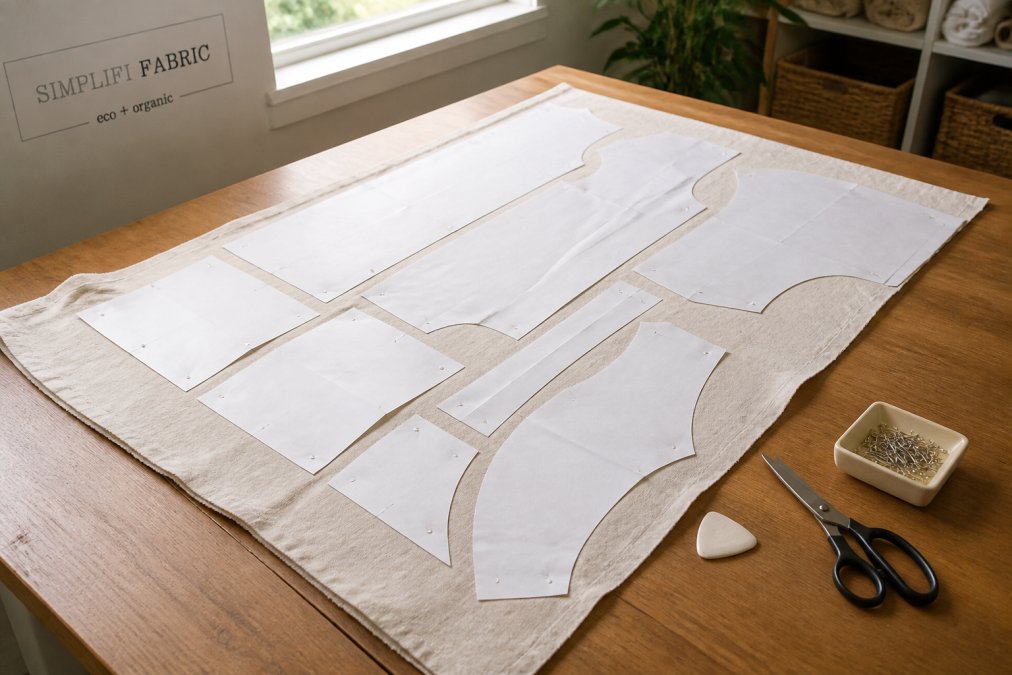
Reading the Grainline and Maximizing Your Marker
The grainline is the arrow printed on each pattern piece that indicates how to align it with the fabric's lengthwise threads. Ignoring it can lead to twisting and poor drape. Align every grainline parallel to the selvage, then focus on filling the space around each piece.
Cutting Techniques That Reduce Fabric Waste in Sewing
The techniques that reduce fabric waste in sewing come down to precision and patience. Cut with long, smooth strokes rather than short, choppy snips. Sloppy cutting forces you to trim later, and every trim is waste.
Rotating Pattern Pieces and Nesting Odd Shapes
Nesting means interlocking pattern pieces so their curves and angles share the same space. Flip a sleeve to see if its curve mirrors the curve of a bodice piece. Rotate a pocket to fit inside the triangle of waste left by a skirt panel. Maximizing the utility of every scrap through these thoughtful arrangements serves as the foundational practice for building sustainable wardrobes that prioritize longevity over excess. Learn more about sustainable wardrobes
Zero Waste Sewing Patterns: Design That Eliminates Scraps
Zero waste sewing patterns are designed so the pattern pieces tile the fabric completely, leaving no scraps at all. Instead of fitting pieces into whatever space remains, the pattern itself is built around the full width of the cloth.
How Zero Waste Pattern Drafting Works
Zero waste pattern drafting builds the garment shape directly onto the fabric rather than printing large pattern pieces to cut around. Many zero waste patterns come as cutting plans you draw straight onto your cloth, with only small templates to print.
| Approach | Fabric Used | Skill Level | Best For |
|---|---|---|---|
| Traditional layout | 75-85% | Beginner | Standard garments |
| Optimized marker | 85-92% | Intermediate | Fitting pieces tightly |
| Zero waste pattern | Near 100% | Intermediate+ | Waste-free construction |
How to Use Fabric Scraps: Projects for Every Size Remnant
Knowing how to use fabric scraps turns leftover cloth into finished projects instead of ending up in landfill. The problem most sewists encounter is not a lack of project ideas, but rather that unsorted scraps pile up until they become clutter, and clutter often gets tossed. The solution is a size-based sorting system that pairs every remnant with a project before it goes into storage.
Sort by Size, Then Assign a Project
Use a simple three-tier system based on the smallest dimension of each scrap:
- Large (30 cm or bigger in both directions): pockets, cuffs, collars, waistbands, bias binding, small bags, zipper pouches.
- Medium (10-30 cm): patchwork squares, quilt blocks, coasters, appliqué shapes, doll clothes, scrunchies, fabric buttons.
- Small (under 10 cm): stuffing for poufs and cushions, quilting crumbs, doll stuffing, rag rugs, and, for natural fibres, compost.
Storage That Keeps Scraps Usable
Sorting is only effective if you can find what you've sorted. Clear containers are preferable to opaque bins because you can see the contents without digging. A common and effective setup includes:
- One clear bin per size tier, clearly labeled with the size range.
- Within the large and medium bins, sort by colour family (neutrals, blues, reds, prints) so you can easily pull a matching scrap without emptying the entire bin.
- A small jar or tin near your sewing machine for thread ends and tiny snips, emptied into the small-scrap bin when full.
- A dedicated 'current project' bag or box so active scraps do not rejoin the general pile.
Patchwork, Quilting, and Small DIY Projects
Medium and small scraps are ideal for patchwork and quilting. Cut them into uniform squares or strips and piece them together for quilt blocks, tote bags, or cushion covers. A standard 6.35 cm (2.5 inch) square is a common patchwork unit because it nests efficiently and works well in most block patterns.
Track What You Actually Use
According to the UN Environment Programme's textile waste report, 92 million tonnes of textile waste are produced globally every year, so every scrap you keep out of the bin makes a difference. UN Environment Programme textile waste report
Storing, Recycling, and Composting What You Can't Sew
Storage, recycling, and composting are essential for handling scraps that are too small to sew. This part of the fabric lifecycle is often overlooked in sewing guides, which is why many well-intentioned scrap bags still end up in the bin. The goal is to assign a defined end destination for every scrap before it enters your storage system.
Storage That Prevents Clutter
Clear jars or clear bins allow you to see your inventory without digging, and sorting by color speeds up future projects. The storage system should align with the sorting tiers described previously:
- Large scraps: one clear bin, sorted by color family, stored flat.
- Medium scraps: one clear bin, sorted by color family, stored flat.
- Small scraps: one clear bin or jar, unsorted, as they will be used for stuffing or composting.
- Thread ends and tiny snips: a small jar near the machine, emptied into the small-scrap bin when full.
Composting Natural Fibre Scraps
Natural fiber scraps like cotton, linen, hemp, and wool can be added to a home compost bin, where they will break down over time. The practical guidelines are:
- Cut scraps into small pieces (under 5 cm) to accelerate decomposition.
- Avoid fabric with synthetic thread, elastic, interfacing, or zippers, as these will not compost and may leave residue.
- Avoid fabric treated with flame retardants, stain-resistant finishes, or heavy dyes if you intend to use the compost on food gardens.
- Blend scraps with brown material (dry leaves, cardboard) to maintain a balanced compost pile.
Textile Recycling: What Actually Happens
Textile recycling programs accept scraps that cannot be sewn or composted. The fate of these scraps depends on their fiber content:
- Natural fibers are often shredded and re-spun into new yarn, or downcycled into insulation, wiping rags, and industrial felt.
- Synthetic fibers are typically shredded and downcycled into padding, carpet underlay, or automotive insulation.
- Blended fibers are the most challenging to recycle because the fibers are difficult to separate, often resulting in low-grade filling.
The Full Lifecycle: A Decision Path
Run every scrap through this sequence before it leaves your studio:
- Can it be sewn into a project? → Sort it into the appropriate size tier and assign a project.
- Is it too small to sew but still a clean natural fiber? → Compost it.
- Is it synthetic or blended? → Route it to textile recycling.
- Is it soiled, wet, or moldy? → Check your local program's guidelines; if it's not accepted, it goes to general waste.
Frequently Asked Questions
How can I minimize fabric waste when cutting patterns?
Start by tracing your pattern pieces onto paper first, then rearrange them on your fabric before pinning. Rotate pieces to fill gaps and nest curved edges together. Choosing the right fabric width for your pattern size also makes a difference. Research from Harvard Business School shows that more than 25 percent of fabric can be wasted during production before a garment is even sewn, so careful layout planning at the cutting stage is where you gain the most ground.
What are the best ways to repurpose small fabric scraps?
Sort scraps by size and fiber content first. Pieces larger than 10 cm square work well for patchwork, quilt blocks, or pocket linings. Smaller remnants can become bias binding, hair accessories, or stuffing for cushions and poufs. The Zero Waste Poof PDF Pattern ($7.50) from Modern Sewing Co. is designed specifically to store fabric waste inside it as you sew, then zip closed when full. You can also search for scrap-busting projects online or join a local fabric swap.
What is the difference between zero waste sewing and scrap-busting?
Zero waste sewing patterns use the entire width of fabric in the cutting layout, so no scraps are created during garment construction. Scrap-busting happens after the fact, using leftover remnants from traditional patterns for smaller projects. Zero waste pattern drafting eliminates waste at the design stage, while scrap-busting manages waste that already exists. Both approaches reduce what ends up in landfill, but zero waste sewing prevents the waste from being generated in the first place.
Can I compost or recycle fabric scraps that are too small to sew?
Natural fiber scraps like 100 percent cotton, linen, hemp, and wool can be composted if they are free of synthetic thread, elastic, and interfacing. Cut away any synthetic components first. For blended or synthetic fabrics, look for textile recycling programs in your area that accept post-consumer fabric. The global textile waste management market was valued at USD 11.37 billion in 2025 and is growing, which means more recycling options are becoming available each year. Textile waste management market data
Reducing fabric waste requires planning, but the payoff is significant: less money spent on material you never use and less waste heading to landfill. Simplifi Fabric offers the tools to help you achieve this, including zero waste sewing patterns like the ZW Bell Jacket and the Zero Waste Poof, alongside organic fabrics designed to make every cut count. Explore the collection and begin your next project with materials chosen to minimize waste from the initial layout.