

Table of Contents
- Why Eco Friendly Notions Matter for Sustainable Sewing Supplies
- How We Evaluated These Eco Friendly Notions
- 1. Recycled Polyester rPET Sewing Thread (100m and 1000m Spools)
- 2. Mettler Seracycle Recycled Polyester Thread (200m Spool)
- 3. Hemp Webbing: A Plastic-Free Sewing Kit Staple
- 4. Organic Cotton RPET Webbing for Soft, Strong Straps
- 5. Biodegradable Cotton Labels for Project Tracking
- Organic Cotton Thread and Natural Fiber Choices
- Frequently Asked Questions
Last Updated: October 17, 2026
Why Eco Friendly Notions Matter for Sustainable Sewing Supplies
The thread, labels, webbing, and closures that hold a garment together carry more environmental weight than most makers expect. A 2024 review in Green and Smart Mining Engineering identifies cotton, flax, hemp, and jute as popular eco-friendly textiles, describing them as biodegradable and safe to wear (peer-reviewed textile review). The same logic applies to the small components: eco friendly notions are the trims, threads, labels, and straps chosen for lower impact and longer life, not just the fabric itself.
This guide from Simplifi Fabric ranks seven eco friendly notions for sewing by material, durability, sourcing, and end-of-life. Below, each pick gets a plain verdict, a real limitation, and a cost-per-use read, so the choice comes down to the project rather than the marketing.
How We Evaluated These Eco Friendly Notions
Each notion was scored on five criteria: fiber origin (recycled, organic, or natural), durability under real seam stress, end-of-life options, packaging, and cost per meter of use. A lower-impact material that frays or breaks early scores worse than a recycled option that holds.
The ranking weighs repairability and refillability heavily. A 1000m spool that serves a year of mending beats ten small spools in plastic cases. Sourcing transparency also counts: Organic Cotton Plus's organic notions range shows suppliers now list organic cotton batting, twill tape, and similar trims openly, which makes verification easier for buyers.
Material-by-Material Impact Comparison
Not all lower-impact materials are equal. The table below compares common notion materials on durability, end-of-life, and practical trade-offs so you can match the material to the project rather than the label.
| Material | Durability | End of Life | Best For | Watch-Out |
|---|---|---|---|---|
| Wood (buttons, tools) | Moderate; can crack | Biodegradable if untreated | Buttons, hand tools | Finishes may be synthetic |
| Metal (needles, pins, scissors) | High; resharpens | Recyclable | Cutting, pinning, machine work | Mining impact; buy durable |
| Recycled plastic (rPET thread, spools) | High | Recyclable where facilities exist | Thread, closures | Still sheds microfibers |
| Natural fibers (hemp, cotton, linen) | Moderate to high | Biodegradable | Webbing, labels, thread | May break under heavy stress |
| Conventional plastic | High | Landfill | Budget notions | No end-of-life plan |
A common pattern is that metal tools win on lifespan because they can be resharpened or repaired, while natural fibers win on end-of-life but may need replacing sooner. Recycled plastic sits in the middle: it keeps waste out of landfill at production but does not solve the microfiber question.
Where to Buy and How to Verify Claims
Sourcing guidance matters as much as material choice. Look for specific recycled-content percentages rather than vague "eco" language. Certifications such as STANDARD 100 by OEKO-TEX establish that a product has been tested for harmful substances, but they do not confirm recycled content or biodegradability. For organic fiber claims, third-party certification is the clearest signal. Ask suppliers whether packaging is plastic-free and whether spools or cards are recyclable. A supplier that lists fiber origin, certification, and packaging details openly is easier to verify than one that relies on marketing terms alone.
Repairability, Refillability, and Lifespan
Compare notions by whether they can be repaired, resharpened, refilled, or passed on. Metal scissors and needles can be sharpened; thread spools can be refilled or bought in bulk to cut packaging; wooden buttons can be re-used from worn garments. A notion that lasts through several projects and repairs has a lower cost per use than a cheaper one replaced often. This is the practical test behind the rankings below.
| Notion | Material | Best For | Price (CAD) | End of Life |
|---|---|---|---|---|
| rPET thread, 100m | 100% recycled polyester | Sampling, small repairs | $2.75 | Recyclable spool |
| rPET thread, 1000m | 100% recycled polyester | High-volume sewing | $12.75 | Recyclable spool |
| Mettler Seracycle, 200m | Recycled PET, recycled spool | All-round garment work | $4.49 | Recycled spool |
| Hemp webbing | 100% hemp | Bags, straps, pet gear | $2.75 per 1/2 m | Biodegradable |
| Organic cotton RPET webbing | 80% organic cotton, 20% rPET | Soft straps, activewear | $2.75 per 1/2 m | Blended, long-life |
| Cotton labels | 100% biodegradable cotton | Project tracking | $12.75 per pack | Compostable |
1. Recycled Polyester rPET Sewing Thread (100m and 1000m Spools)
The Gütermann rPET range is the strongest all-purpose pick for most makers. Both spools are made from 100% recycled polyester sourced from recycled drinking bottles, with resistance to tear and abrasion that suits everyday garment seams.

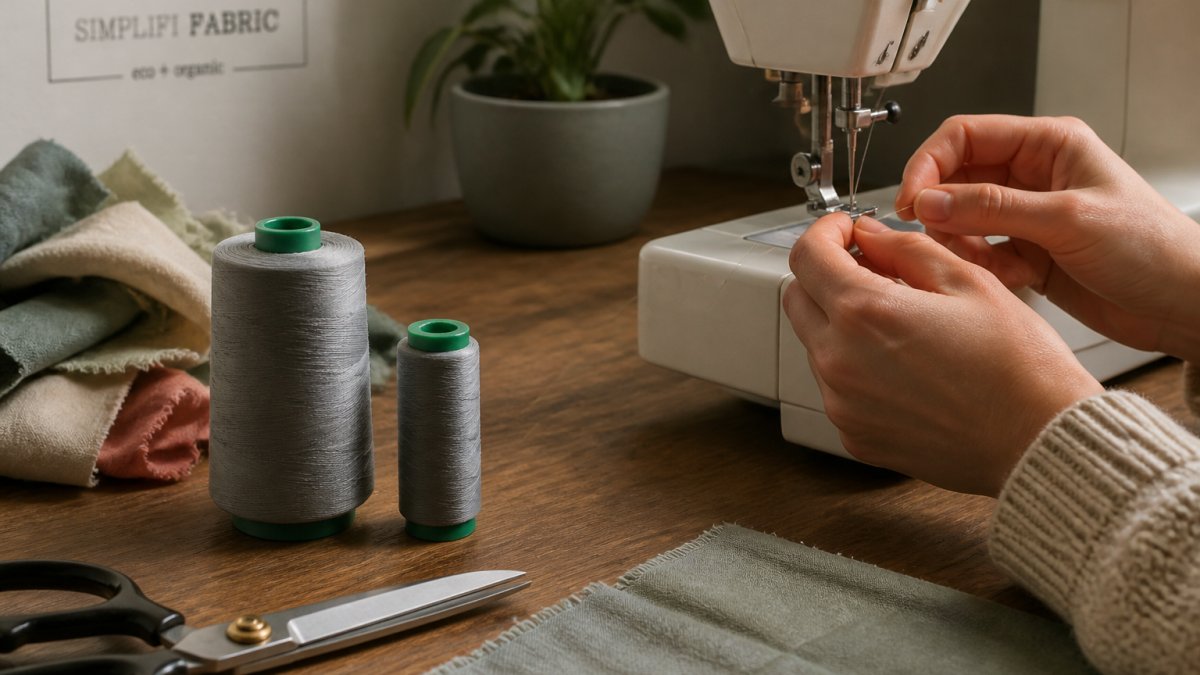
The 100m spool at $2.75 covers sampling and small repairs across 50 colors. The 1000m spool at $12.75 is the better buy for anyone sewing regularly, since it cuts packaging waste per meter dramatically. Both work on machines and by hand, through overlock and safety seams, buttonholes, and decorative stitching.
What works: The spool itself can be disposed of responsibly, and the thread handles universal needles in sizes NM 80-90 for the 100m and NM 70-80 for the 1000m.
What doesn't: Recycled polyester is still plastic. It sheds microfibers in the wash and will not biodegrade, so it suits makers who prioritize durability over compostability.
Cost and Value Over Time
The 1000m spool works out far cheaper per meter than buying 100m spools repeatedly. For a maker sewing a few garments a year, one 1000m spool in a neutral color covers most seams and mending for months, which lowers both cost and packaging waste.
2. Mettler Seracycle Recycled Polyester Thread (200m Spool)
Seracycle is the pick for makers who want certified credentials, not just recycled content. The thread and the spool are both made from recycled plastic, and the thread carries STANDARD 100 by OEKO-TEX certification for ecological safety.
At $4.49 for 200m, it sits between the two Gütermann options on price and volume. The core thread construction gives it strong abrasion resistance, stretch, and tear strength, and it is iron-proof, non-shrink, and colorfast. It handles cotton, synthetics, blends, linen, and silk, which makes it a genuine all-rounder for garment work.
What works: The recycled polystyrene spool and OEKO-TEX certification give it a verifiable sustainability story.
What doesn't: The color selection is limited, so makers chasing an exact match may need to compromise or mix brands.
3. Hemp Webbing: A Plastic-Free Sewing Kit Staple
Hemp webbing is the most convincing plastic-free option for straps and structure. This 3/4" undyed, unbleached webbing is 100% hemp, roughly 50mm wide and 2mm thick, with the matte finish and subtle slub that reads as natural rather than synthetic.

It suits bag straps, tote handles, belts, backpacks, pet accessories, and home decor. Hemp's natural breathability and antibacterial properties add comfort in wear, and the fiber biodegrades at end of life. Sold per half meter at $2.75, it lets makers buy only what a project needs, which keeps fabric scraps and offcuts low.
Recycled Polyester / rPET Sewing Thread - 100m - Various Colours →
What works: Fully biodegradable, undyed, and strong enough for load-bearing straps.
What doesn't: The natural color limits design options, and hemp can feel coarser against skin than cotton blends.
4. Organic Cotton RPET Webbing for Soft, Strong Straps
Where hemp is sturdy, this organic cotton RPET webbing is soft. The 1" Pop Orange webbing blends 80% certified organic cotton with 20% recycled PET fibers, giving comfortable skin contact with the strength of recycled polyester.
It holds shape without stiffness, which makes it the better choice for bag straps, belts, handles, and outdoor gear worn against the body. At $2.75 per half meter in a 2mm thickness, it balances cost and performance for everyday projects.
What works: Certified organic cotton content plus recycled fiber, with a soft hand feel.
What doesn't: The recycled PET share means it will not biodegrade, and the blend makes end-of-life recycling harder than a single-fiber strap.
5. Biodegradable Cotton Labels for Project Tracking
Labels are the forgotten notion, and most are synthetic. This Kylie And The Machine pack uses 100% biodegradable natural cotton, printed with bold black ink, in eco-conscious packaging made from recycled cardstock.
The pack holds 10 end-fold labels at 1cm by 5.5cm, with a 0.5mm seam allowance for easy topstitching. Sewn inside a garment or displayed outwardly, they let makers date and track projects, which supports repair and long-term care rather than replacement. At $12.75 per pack, the cost per label is modest for the record-keeping value.
What works: Fully biodegradable, with recycled cardstock packaging.
What doesn't: The fixed "CIRCA 2022" print dates the labels, so they suit makers tracking a specific year rather than undated projects.
Organic Cotton Thread and Natural Fiber Choices
Natural fiber thread is the right call when compostability matters more than raw strength. Organic cotton thread suits quilting, lightweight garments, and projects destined for home composting, though it breaks more easily under heavy seam stress than core-spun polyester.
A common mistake is assuming natural always beats recycled. A SustainableFashion discussion on eco-friendly sewing makes the case that using textiles already in existence, such as secondhand clothes and sheets, is more sustainable than buying new material of any kind. That reframes the whole notion aisle: the best eco friendly notions for sewing are the ones already in the drawer, supplemented only where durability demands it.
Pair natural thread with Sew Direct's sustainable sewing guidance on reusing old textiles, and the plastic-free sewing kit starts to build itself: hemp webbing, cotton labels, organic thread, and recycled tools.
The harder question is not which single notion is greenest, but whether the whole kit works together across a garment's life. Simplifi Fabric stocks the pieces that answer it: recycled rPET thread in 100m and 1000m spools, Mettler Seracycle for all-round garment work, hemp and organic cotton RPET webbing for straps that hold, and biodegradable cotton labels for tracking every make. Build a kit that mends rather than replaces, and shop the Simplifi Fabric notions range to start.

Frequently Asked Questions
What sewing notions are the most eco-friendly?
The most eco-friendly notions combine low-impact materials with long service life. Recycled polyester thread made from post-consumer bottles, undyed hemp webbing, organic cotton and recycled PET webbing, and biodegradable cotton labels all reduce reliance on virgin plastic. Look for items you can use down to the last metre, repair, or compost at end of life. Durability matters as much as material: a spool that lasts three years beats a compostable one that snaps after a month.
How can I make my sewing kit more sustainable?
Start by replacing the items you use most. Swap standard polyester thread for recycled rPET thread, choose hemp or organic cotton webbing over nylon strapping, and pick cotton labels instead of synthetic ones. Then focus on lifespan: buy 1000m spools rather than 100m if you sew often, store thread away from sunlight, and keep scraps for scrapbusting projects. A plastic-free sewing kit is a process, not a single purchase.
Are recycled polyester threads a sustainable choice?
Recycled polyester thread, such as rPET made from recycled drinking bottles, keeps plastic out of landfill and reduces demand for virgin polyester. It offers strong resistance to tear and abrasion, so seams hold up through repeated washing. The trade-off is that it is still plastic and will not biodegrade. Use it where strength matters, like bag straps and activewear seams, and reserve natural fibers for projects where compostability is the priority.
What can I use instead of plastic sewing notions?
For straps and handles, undyed hemp webbing is a 100% hemp alternative to nylon webbing, and it works for tote bags, belts, and pet accessories. Organic cotton and recycled PET webbing blends offer a softer feel for bag straps and outdoor gear. For labels, 100% biodegradable natural cotton labels replace synthetic tags. Small swaps like these cut plastic from your kit without changing how you sew.