

Last Updated: November 3, 2026
Quick Summary
Organic fabric durability depends on fiber staple length and weave density, not on whether you buy boutique or big-box. Boutique online stores usually list fabric weight in gsm and verifiable certifications, while big-box retailers often leave those specs out, so you cannot predict longevity before buying.
- Longer cotton staple length creates stronger yarn because each fiber has more contact points when twisted.
- A tight, balanced weave resists pilling better than a loose one, and gsm shows material density.
- Boutique organic fabric typically runs $25-$30 CAD per meter, sold in half-meter increments.
- Order a half-meter first, then wash a small square to check shrinkage and pilling.
- Cost-per-wear is purchase price divided by number of wears, which justifies paying more upfront.
Table of Contents
- What Organic Fabric Durability Really Depends On
- Boutique Online vs. Big-Box Retailers: A Durability Comparison
- The Benefits of Organic Cotton for Garment Making
- How to Test Fabric Quality for Sewing Before You Commit
- Why GOTS Certified Fabric in Canada Matters for Durability
- Cost-Per-Wear: The Math That Justifies the Price Gap
- Choosing Your Next Organic Fabric Project with Confidence
- Frequently Asked Questions
What Organic Fabric Durability Really Depends On
Organic fabric durability comes down to two measurable things: how long the cotton fibers are, and how tightly they are woven together. According to Cotton Incorporated's Global Lifestyle Monitor survey, 56% of consumers prefer to feel fabric in-store before buying, which suggests most shoppers still lack a reliable way to judge quality from a product photo. This guide from Simplifi Fabric breaks down what actually predicts how long a garment will last, so you can compare options with evidence instead of guesswork.
Fiber Length and Staple Length
Longer cotton fibers, called staple length, create stronger yarn because each fiber has more contact points when twisted. Short fibers slip apart under friction, which is why cheap cotton pills and thins out after a few washes. The Fabric Guide's fiber quality tiers rank natural fibers like cotton as A-tier for durability, while synthetics that require heavy chemical processing fall to C-tier or lower.
Weave, Fabric Weight, and Thread Count
Weave structure decides how a fabric handles abrasion. A tight, balanced weave resists pilling better than a loose one, and fabric weight in grams per square meter tells you how much material sits between your skin and the world. Thread count matters too, but only within reason. A 320 thread count sateen, like the Organic Cotton Sheeting/Sateen, gives a smooth, dense surface.

Boutique Online vs. Big-Box Retailers: A Durability Comparison
Boutique online stores and big-box retailers differ less in raw fiber quality than in what they can tell you about it. Neither model guarantees durability on its own.
| Factor | Boutique Online | Big-Box Retail |
|---|---|---|
| Certification visibility | GOTS, Oeko-Tex often listed | Rarely stated |
| Mill and origin detail | Named mills, country of origin | Generic sourcing |
| Fabric weight specs | Usually listed in gsm | Often missing |
| Price per meter | $25-$30 CAD typical | Lower, but variable quality |
| Minimum order | Half-meter increments | By the meter or bolt |
Pros and Cons of Boutique Online Stores
Pros: Detailed specs and certifications you can verify. The Havana Overdyed Organic Cotton Ticking lists 100% organic cotton at 237gsm with REACH-compliant dyes.

Cons: Shipping fees may apply.
Pros and Cons of Big-Box Retailers
Pros: Lower prices and immediate access. Cons: Sourcing transparency is thin, and fabric weight is often unlisted, so you cannot predict wash-fastness or garment longevity before you buy.
The Benefits of Organic Cotton for Garment Making
Organic cotton suits garment making because it skips the harsh chemical processing that weakens conventional fibers. The Good Trade's organic clothing guide notes that organic cotton is often cited as more durable because it retains the natural strength of fibers not broken down by chemical treatment. For makers, that translates to fabric that holds its shape through repeated wear and washing. The Organic Cotton Kora Corduroy is a GOTS-certified example built for structured garments.
How to Test Fabric Quality for Sewing Before You Commit
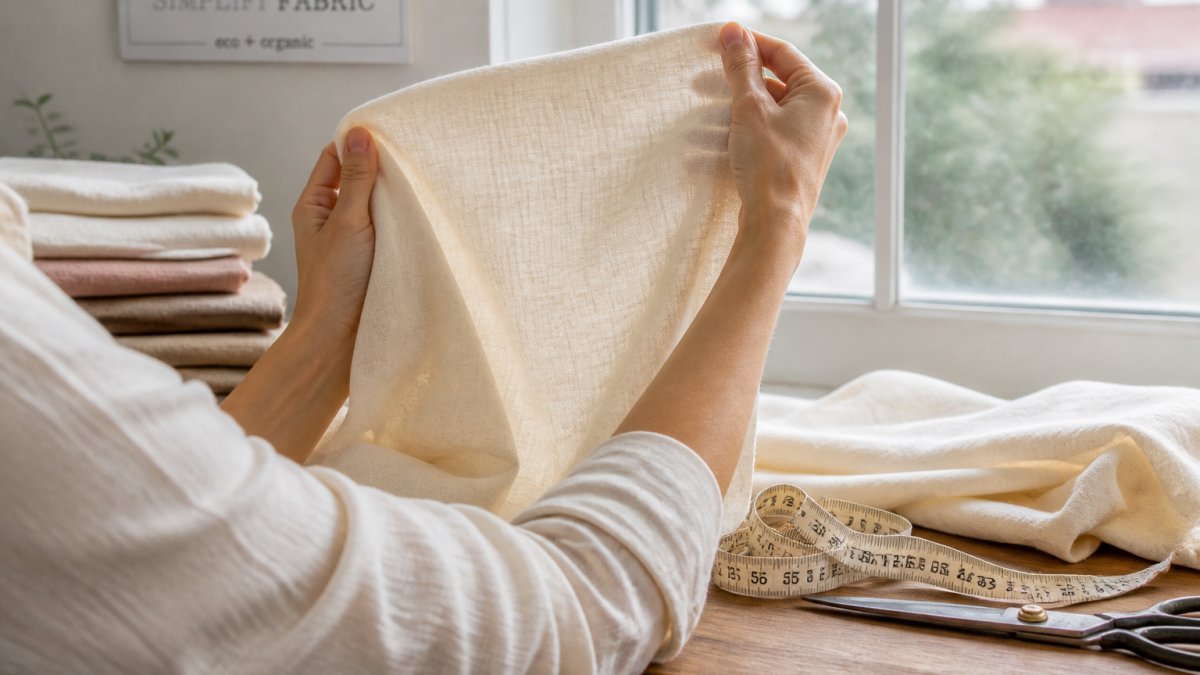
Test fabric quality before sewing by checking four things: staple length, weight, weave density, and wash behavior. Order a half-meter first. Hold it to light to spot thin spots, stretch it gently to check recovery, and wash a small square to see how it handles shrinkage and pilling.
Organic Cotton Sheeting / Sateen- extra wide →
A practical checklist for evaluating a sample:
- Fabric weight listed in gsm or oz
- Fiber content and staple length stated
- Certification named and verifiable
- Wash test shows minimal shrinkage
- No pilling after one wash cycle
Why GOTS Certified Fabric in Canada Matters for Durability
The Winter Cabin Organic Cotton Linen is Oeko-Tex certified, and its dyes are GOTS certified.
Pair any certification with a stated fabric weight in gsm before you treat it as a durability guarantee.
Cost-Per-Wear: The Math That Justifies the Price Gap
Cost-per-wear is the purchase price divided by the number of times you wear the finished garment. A meter of organic cotton that yields a shirt worn many times spreads its cost across each wear. A cheaper fabric that pills after 40 wears and gets retired costs more per wear despite the lower sticker price. That math is the strongest argument for paying more upfront.
Choosing Your Next Organic Fabric Project with Confidence
Confidence comes from matching fabric specs to your project, not from the price tag. Check weight, certification, and staple length before you commit, then build in a wash test. When you are ready to sew, the Fairfield Button Up Shirt Mens Pdf Sewing Pattern Thread Theory gives you a durable button-up project to put your chosen organic fabric to work.

Judging organic fabric durability takes a little homework, but the payoff is a garment that lasts for years instead of months. Simplifi Fabric stocks a curated range of organic textiles, indie sewing patterns, and notions, with worldwide shipping from Ontario. Browse the sustainable collection to find GOTS-certified cotton, linen blends, and patterns for makers at every skill level. Get started with Simplifi Fabric and sew something built to last.
Frequently Asked Questions
How can you tell if organic fabric is high quality?
Check the fiber length, weave density, and certifications before buying. Long-staple organic cotton feels smoother and resists pilling better than short-staple fiber. Hold the fabric up to light to spot thin spots or uneven weave. Look for GOTS certification, which verifies organic content and restricts chemical processing. A fabric weight that suits your project, such as 120gsm sheeting for bedding or 237gsm ticking for soft furnishings, signals the mill matched the cloth to its purpose.
Does organic cotton last longer than conventional cotton?
It can, but fiber length and finishing matter more than the organic label alone. Organic cotton avoids the harsh chemical processing that can weaken fibers, so the natural strength stays intact. However, a short-staple organic cotton will still pill and wear faster than a long-staple conventional one. Durability comes down to staple length, weave, and how you care for the garment. Wash cold, avoid tumble drying, and the fabric will hold up far longer.
Are there specific certifications to look for when buying organic fabric in Canada?
GOTS is the main one to look for. It covers organic fiber content, restricts chemical inputs, and requires supply chain transparency from farm to finished cloth. Oeko-Tex is another useful mark, confirming the fabric is free from harmful substances. Canadian shoppers can ask retailers for certification details directly. Reputable shops list the certification body and standard on the product page, so you can verify the claim rather than take marketing language at face value.
How does textile processing affect the durability of organic fabric?
Chemical processing can strip natural oils and weaken fibers, which shortens garment life. Organic cotton skips the harshest treatments, so the fiber keeps more of its natural strength. Finishing also plays a role: a wax finish like dry oilskin adds water resistance and protects the cloth, while heavy bleaching or resin treatments can make fabric brittle over time. Ask how the fabric was finished, not just whether it is organic, because finishing decides how the cloth ages.
